

Why Early Intervention Slows Aging: A Regenerative Guide
Elizabeth Vogstrom, PA-C
evoyouthful Clinical Team
Discover why early intervention slows aging and how proactive measures can improve your healthspan and appearance with personalized approaches.
Why Early Intervention Slows Aging: A Regenerative Guide
Early intervention slows biological and appearance-related aging by detecting and treating subclinical dysfunctions before irreversible damage accumulates. Rather than waiting for disease to appear, you shift your biology from a growth-and-hyperfunction mode toward active maintenance, which is where the real protection happens. NIH research confirms that targeting aging at its molecular root is a promising strategy, and tools like DunedinPACE now lets clinicians measure the pace of your biological aging years before any diagnosis. evoyouthful in Wayzata, MN applies exactly this model: baseline testing, personalized intervention, and ongoing monitoring to keep your healthspan and appearance ahead of the curve.
Key reasons early action matters:
- Upstream biology: Subclinical changes in blood pressure, insulin sensitivity, and inflammation precede visible aging by years.
- Compounding returns: Small corrections made early yield larger long-term gains than aggressive treatment later.
- Appearance and function together: Slowing biological aging protects skin quality, muscle mass, cognitive clarity, and energy simultaneously.
Pro Tip: Start with three baseline screens: blood pressure, fasting glucose/HbA1c, and a sleep-quality assessment. These three markers reveal the most common early drivers of accelerated aging and give your provider a concrete starting point.
Table of Contents
- How early action changes your biology
- What “early” actually means: timing, markers, and triggers
- Evidence-based interventions that slow aging
- Where regenerative and aesthetic therapies fit
- How to build a personalized early-intervention plan
- What results to expect, and what the limits are
- How evoyouthful designs early-intervention care
- Key Takeaways
- A clinician’s perspective on early intervention
- Ready to start your early-intervention plan at evoyouthful?
- Selected sources and further reading
How early action changes your biology
Five core mechanisms explain why intervening early slows aging so effectively.
- Cellular senescence: Aging cells stop dividing but stay active, releasing inflammatory signals. Clearing or suppressing them early limits the “bystander damage” they cause to surrounding tissue.
- Chronic low-grade inflammation: Often called “inflammaging,” this slow burn drives cardiovascular disease, metabolic decline, and skin degradation. Lifestyle and targeted therapies can reduce it before it becomes entrenched.
- Metabolic dysregulation: Rising insulin resistance and glucose variability accelerate cellular aging. Catching these trends early, when they are still subclinical, protects mitochondrial function and tissue integrity.
- Mitochondrial decline: Mitochondria are your cells’ energy source. Mitochondrial-targeted strategies like exercise-induced hormesis, NAD+ precursor support, and mitophagy activation preserve cellular energy and reduce oxidative damage.
- Hyperfunction signaling (mTOR/IGF): Research by Linda Partridge and colleagues describes aging partly as a maladaptive continuation of growth programs. When mTOR and IGF signaling remain chronically elevated past their developmental purpose, tissue damage accumulates. Interventions that modulate these pathways, including exercise, caloric balance, and certain targeted therapies, redirect biology toward repair.
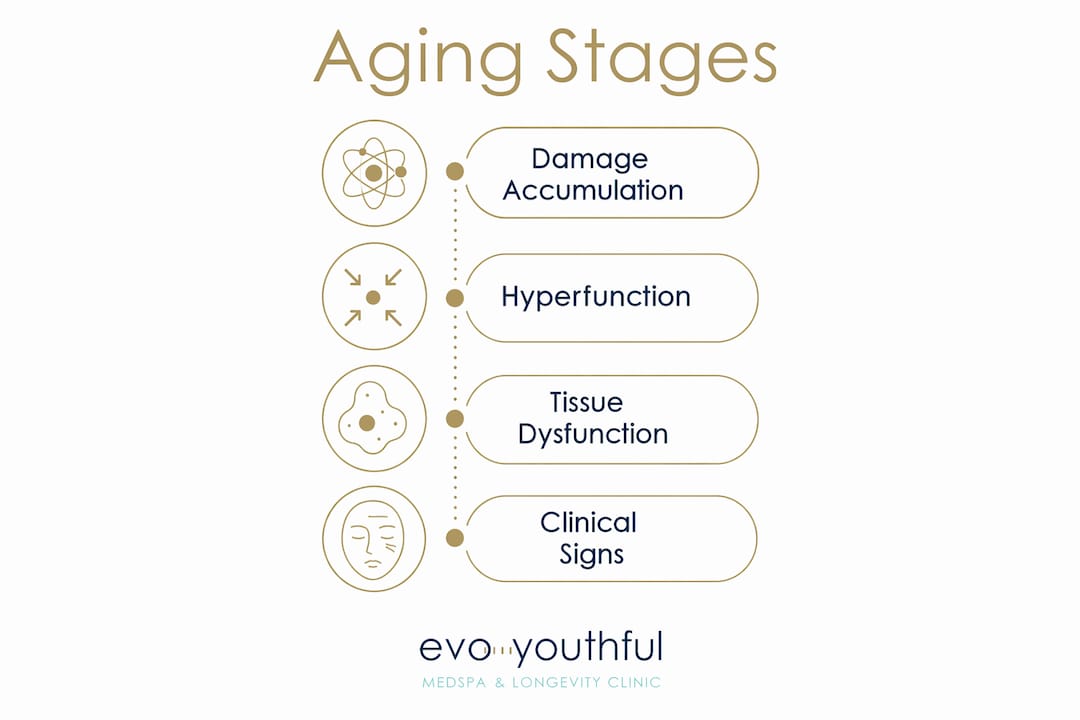
Think of it as a four-stage progression: damage accumulation → hyperfunction and inflammation → tissue dysfunction → clinical disease. Early intervention inserts detection and modulation at stages one and two, before the downstream consequences become fixed.
Pro Tip: Exercise is the most reliable mTOR modulator available without a prescription. Resistance training followed by a recovery period creates the hormetic signal that shifts cells toward maintenance rather than unchecked growth.

What “early” actually means: timing, markers, and triggers
“Early” in a clinical context does not mean your twenties by default. It means acting when biomarkers first deviate from optimal ranges, rather than waiting for a formal diagnosis.
For most adults, a meaningful baseline starts in the mid-30s, or earlier with a strong family history of cardiovascular disease, diabetes, or neurodegenerative conditions. Practical trigger markers include:
- Fasting glucose trending above 90 mg/dL or HbA1c above 5.4%
- Blood pressure consistently above 120/80 mmHg
- Waist circumference increases paired with declining grip strength or muscle mass
- Sleep duration dropping below 7 hours regularly, or worsening sleep quality scores
- Accelerated DunedinPACE or elevated biological-age signals on epigenetic testing when available
A proactive wellness approach treats these as action signals, not just numbers to watch.
| Marker | Optimal Range | Action Threshold |
|---|---|---|
| Fasting glucose | 90 mg/dL | >90 mg/dL — review diet and activity |
| Blood pressure | <120/80 mmHg | ≥120/80 mmHg — lifestyle + monitoring |
| HbA1c | <5.4% | above 5.4% — metabolic evaluation |
| Sleep duration | 7 hours | <7 hours regularly — sleep hygiene review |
| Waist circumference (men) | <40 inches | ≥40 inches — body composition assessment |
Evidence-based interventions that slow aging
The five pillars of longevity — movement, nutrition, sleep, stress reduction, and social connection — form the foundation. Ranked by expected population impact:
- Resistance and aerobic exercise combined. Exercise functions as a master signal for insulin sensitivity, brain health, and inflammation reduction. Aim for regular aerobic activity and resistance training sessions each week to support healthy aging.
- Sleep optimization. Adequate quality sleep supports cellular repair, hormone regulation, and memory consolidation. Chronically short sleep accelerates nearly every aging biomarker.
- Protein-adequate, whole-food nutrition. Targeted nutrition strategies, including adequate protein and collagen combined with resistance training, show the strongest human evidence for preserving muscle mass and metabolic resilience.
- Smoking cessation. No single lifestyle change produces a faster, more measurable reduction in biological aging pace.
- Stress management and social connection. Chronic psychological stress elevates cortisol and inflammatory markers. Structured stress reduction and maintained social bonds are independently associated with longer healthspan.
Clinical and medical interventions (by evidence level):
- Strong evidence: Treatment of hypertension, dyslipidemia, and insulin resistance with lifestyle and medication when indicated.
- Moderate/emerging: NAD+ precursors (NMN, NR) for mitochondrial support; well-being strategies for midlife adults that combine movement and recovery.
- Personalized, moderate evidence: Bioidentical hormone replacement therapy (BHRT) for selected endpoints; peptide therapy for metabolic and tissue-repair goals.
- Emerging, research context only: Senolytics and rapamycin — promising in animal models, not yet standard clinical practice.
Pro Tip: Before adding supplements, confirm your protein intake is adequate (0.7–1.0 g per pound of body weight for active adults). Protein is the most underutilized and evidence-backed longevity nutrient available.
Where regenerative and aesthetic therapies fit
Regenerative and aesthetic treatments are higher-level tools that work best once your lifestyle foundation is in place. They address localized concerns that systemic measures alone cannot fully resolve.
- PRF injections (platelet-rich fibrin): Uses your own growth factors to stimulate collagen remodeling and tissue repair. Moderate-to-strong evidence for skin quality and localized regeneration.
- Exion Clear RF microablation: Radiofrequency microablation that accelerates skin resurfacing and tightening. Moderate evidence for texture, tone, and collagen density improvement.
- Neuromodulators (Botox/Dysport/Daxxify): Strong evidence for reducing dynamic wrinkle formation; used early, they can slow the mechanical deepening of expression lines.
- Peptide therapy: Emerging-to-moderate evidence for tissue repair, metabolic support, and body composition when personalized to individual labs and goals.
- Hormone optimization (BHRT): Moderate evidence for symptom relief, metabolic benefits, and tissue quality when monitored appropriately.
- Body contouring adjuncts (Emsculpt NEO, Exion Body Shaping): Useful for sarcopenia prevention and body composition goals alongside resistance training.
A practical integrated example: a client in their early 40s optimizes sleep and protein intake first, then adds PRF for skin remodeling and BHRT for hormonal support, with labs reviewed every six months. Regenerative therapies complement systemic measures — they do not replace them.
Pro Tip: Skin quality often reflects internal health. Clients who optimize sleep, nutrition, and hormones first typically see better and longer-lasting results from aesthetic treatments.
How to build a personalized early-intervention plan
A longevity pyramid model places prevention and lifestyle at the base, with personalized medical and regenerative options above. Your plan follows the same logic.
- Baseline assessment: Fasting labs (glucose, HbA1c, lipids, hormones), blood pressure, body composition, and a functional movement screen.
- Risk stratification: Identify which markers are trending toward action thresholds and prioritize accordingly.
- Intervention bundle: Combine two to three high-impact lifestyle changes with any indicated clinical options.
- Short-term goals (3–6 months): Measurable targets — a specific HbA1c reduction, sleep duration goal, or body composition shift.
- Long-term monitoring: Annual labs, body composition reassessment, and optional biological-age testing every one to two years.
| Test | Frequency | Purpose |
|---|---|---|
| Fasting glucose + HbA1c | Every 6 months | Track insulin resistance trends |
| Lipid panel | Annually | Cardiovascular risk monitoring |
| Hormone panel | Every 6–12 months | Guide BHRT or peptide adjustments |
| Body composition | Every 6 months | Muscle mass and fat distribution |
| Blood pressure | Every visit | Ongoing cardiovascular baseline |
Questions to ask your provider: What is my biological age versus chronological age? Which markers are my highest priority? What is the monitoring plan for any hormone or peptide therapy? What measurable outcomes should I expect in six months?
What results to expect, and what the limits are
Lifestyle changes produce measurable biomarker shifts within 3–6 months. Appearance-related gains in skin texture and tone typically emerge over 3–12 months with adjunctive therapies. Healthspan indicators, including cardiovascular risk scores and metabolic markers, improve over years of consistent effort.
| Intervention | Typical Benefit | Main Safety Consideration |
|---|---|---|
| Exercise (resistance + aerobic) | Insulin sensitivity, muscle mass, inflammation | Injury risk — start supervised if deconditioned |
| Sleep optimization | Hormone regulation, cognitive function | Evaluate for sleep apnea if duration is adequate but quality is poor |
| BHRT | Symptom relief, metabolic support, tissue quality | Requires lab monitoring; not appropriate for all individuals |
| Peptide therapy | Tissue repair, body composition | Personalized dosing; medical supervision required |
| PRF / RF microablation | Skin remodeling, collagen density | Minimal downtime; multiple sessions typically needed |
Clear limits: There is no cure for aging. The goal is slowed progression, improved function, and better appearance, not reversal. Budget-conscious clients should prioritize exercise, sleep, and nutrition first — these deliver the largest return at the lowest cost. Clinical and regenerative options add meaningful value on top of that foundation, not instead of it.
How evoyouthful designs early-intervention care
evoyouthful in Wayzata, MN builds early-intervention plans around a structured clinical workflow grounded in root-cause health optimization.
- Intake and baseline testing: Comprehensive labs, body composition analysis, functional movement assessment, and a detailed health history review.
- Individualized plan: Lifestyle recommendations paired with targeted medical options — BHRT, peptide therapy, ExoMind TMS for cognitive support, and regenerative aesthetics where indicated.
- Short-term interventions with monitoring: Clear 3–6 month goals with scheduled lab reviews and treatment adjustments.
- Scheduled re-assessments: Every 6–12 months, the plan is updated based on objective markers and your evolving priorities.
Elizabeth Vogstrom, PA-C leads clinical care at evoyouthful, bringing a patient-centered approach that balances evidence-based medicine with personalized attention. Her role includes reviewing diagnostics, guiding hormone and peptide protocols, and coordinating regenerative aesthetic treatments within each client’s broader health plan.
Pro Tip: When you meet with a provider for the first time, ask specifically: “What will we measure to know this is working?” A good early-intervention plan always has a defined, objective answer to that question.
Key Takeaways
Early intervention slows aging by modulating biological pathways before subclinical dysfunctions become irreversible disease, making consistent monitoring and personalized care the most reliable path to better healthspan and appearance.
| Point | Details |
|---|---|
| Act before symptoms appear | Biomarkers like fasting glucose, blood pressure, and HbA1c signal aging acceleration years before diagnosis. |
| Lifestyle is the foundation | Exercise, sleep, and protein-adequate nutrition deliver the largest and most consistent aging-related benefits. |
| Regenerative therapies amplify results | PRF, BHRT, and RF microablation work best layered on top of an optimized lifestyle baseline. |
| Iteration is the strategy | Re-evaluate every 6–12 months and adjust based on objective markers, not just how you feel. |
| evoyouthful offers a structured path | The Wayzata, MN clinic provides baseline testing, personalized plans, and ongoing monitoring for early-intervention care. |
A clinician’s perspective on early intervention
The clients who see the most meaningful results are rarely the ones who start the most aggressive protocol. They are the ones who start early, measure consistently, and stay willing to adjust. Biological aging is not a single event — it is a slow accumulation of small dysfunctions, and that is actually good news. It means there are many points where thoughtful intervention can redirect the process.
What I find most underappreciated is the psychological benefit of early action. When clients see their HbA1c improve, their sleep scores rise, or their skin quality respond to treatment, something shifts. They feel capable rather than passive about aging. That confidence tends to reinforce the habits that drive the results in the first place, creating a positive cycle that is hard to replicate with any single therapy.
Safety and monitoring are non-negotiable in this model. Hormone therapies, peptides, and regenerative treatments all require ongoing oversight. The goal is never to add interventions for their own sake, but to build a plan that is sustainable, measurable, and genuinely matched to each person’s biology and priorities.
Ready to start your early-intervention plan at evoyouthful?
evoyouthful offers a concrete alternative to generic wellness advice: a structured, evidence-informed first appointment that gives you real data about where your biology stands today. Your initial visit includes a comprehensive lab review, body composition assessment, and a transparent conversation about which interventions fit your goals and budget.

What to expect at your first visit:
- Baseline labs and vitals reviewed by a clinician, not just flagged as “normal” or “abnormal.”
- Personalized options discussed, from bioidentical hormone replacement therapy and ExoMind cognitive support to regenerative aesthetics.
- A monitoring plan with defined goals and a scheduled follow-up.
- Transparent cost conversation so you can prioritize interventions that fit your situation.
Schedule a consultation at evoyouthful in Wayzata, MN and leave with a plan, not just a pamphlet.
Selected sources and further reading
- Can we slow aging? — NIH: NIH overview of molecular aging strategies, DunedinPACE, and the case for early detection.
- Hyperfunction theory and aging — PMC: Partridge et al. on mTOR/IGF signaling as a driver of aging and the rationale for modulating growth pathways.
- Climbing the longevity pyramid — Frontiers in Aging: Comprehensive review of the iterative longevity model, CALERIE trial outcomes, and the prevention-first pyramid.
- The 5 pillars of longevity — Harvard Health: Evidence summary for movement, nutrition, sleep, stress reduction, and social connection as healthspan foundations.
- Mitochondrial interventions and aging — Nature: Mechanisms of mitochondrial hormesis, NAD+ precursors, and mitophagy in cellular aging.
- Targeted supplementation for healthy aging — Springer Nature: Review of 32 human studies on protein, collagen, and mitochondrial cofactors for sarcopenia and metabolic resilience.
- evoyouthful blog: regenerative therapy and longevity: Internal resource on clinical use-cases for regenerative therapies at evoyouthful. (evoyouthful internal)
- evoyouthful blog: what is metabolic health?: Practical guide to metabolic markers and monitoring for adults 30–60. (evoyouthful internal)
- How to optimize wellness — Nutribliss: Science-backed overview of supplement and lifestyle strategies for general wellness optimization.
This article is for general informational purposes only and does not constitute medical advice. Consult a qualified healthcare provider to evaluate your individual situation before beginning any new treatment or intervention.
Recommended
Ready to Start?
Schedule a Consultation
Have questions about what you just read? Our team is here to help.