

What Is Metabolic Health? A Guide for Adults 30–60
Elizabeth Vogstrom, PA-C
evoyouthful Clinical Team
Discover what is metabolic health and how it affects your wellness. Learn to improve key biomarkers and reduce your health risks today.
What Is Metabolic Health? A Guide for Adults 30–60
Metabolic health is defined as maintaining optimal levels of five key biomarkers — blood pressure, fasting blood sugar, triglycerides, HDL cholesterol, and waist circumference — without relying on medication. These markers collectively reflect how well your body regulates energy, manages blood sugar, and controls inflammation. When even two or three of these markers fall outside healthy ranges, your risk for heart disease, stroke, and type 2 diabetes rises significantly. Understanding your metabolic health is not just reassuring. It is the first step toward doing something about it.
What is metabolic health and how is it measured?
Metabolic health is best understood through five clinical markers that the National Institutes of Health and major cardiology bodies use to screen for metabolic dysfunction. Each marker reflects a different aspect of how your body processes energy and manages internal chemistry. Together, they form a picture of your metabolic function that no single test can capture alone.
The five markers and their optimal ranges are:
| Marker | Optimal Range | Why It Matters |
|---|---|---|
| Blood pressure | Below 120/80 mmHg | High BP strains the heart and arteries |
| Fasting blood sugar | Below 100 mg/dL | Elevated glucose signals insulin resistance |
| Triglycerides | Below 150 mg/dL | High levels indicate poor fat metabolism |
| HDL cholesterol | Above 40 mg/dL (men), 50 mg/dL (women) | Low HDL raises cardiovascular risk |
| Waist circumference | Under 40 in (men), 35 in (women) | Excess abdominal fat drives inflammation |
Metabolic health is defined by hitting all five of these targets without medication. Missing even one marker is worth attention. Missing three or more meets the clinical definition of metabolic syndrome.
Standard screening starts with a fasting lipid panel and a basic metabolic panel, typically ordered during a routine physical. These tests measure triglycerides, HDL, fasting glucose, and blood pressure in a single visit. Waist circumference is measured manually and is often overlooked, yet it is one of the strongest predictors of metabolic risk.
How common is metabolic dysfunction, and what risks does it pose?
Metabolic dysfunction is far more widespread than most people realize.
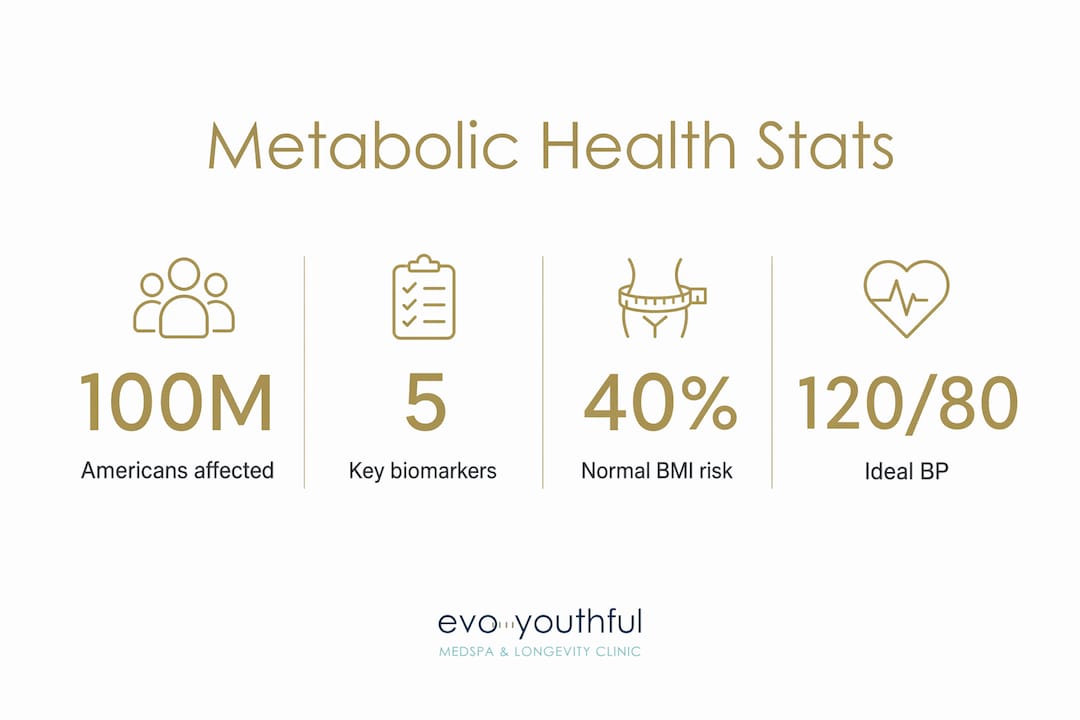
Approximately 1 in 3 US adults has metabolic syndrome, a cluster of risk factors that significantly raises the likelihood of heart disease, stroke, and type 2 diabetes.
That statistic means roughly 100 million Americans are living with a condition that most have never been formally told they have. Metabolic syndrome is not a disease in itself. It is a warning cluster, a signal that your body’s internal regulation is breaking down in multiple systems at once.
Insulin resistance sits at the center of this breakdown. When cells stop responding to insulin efficiently, the pancreas compensates by producing more. Blood sugar climbs, triglycerides rise, and HDL drops. The body begins storing more fat around the abdomen, which in turn drives more inflammation. This cycle, left unchecked, progresses silently toward type 2 diabetes and cardiovascular disease.
Most chronic conditions like heart disease and some cancers share underlying metabolic roots. That connection makes metabolic health one of the most consequential areas of preventive medicine available today.
Why isn’t metabolic health just about body weight?
Body weight is a poor proxy for metabolic health. Over 40% of US adults with a normal BMI are metabolically unhealthy. That means millions of people who look healthy by conventional standards are quietly accumulating metabolic risk.

The reverse is also true. Some people carry extra weight but maintain healthy blood sugar, blood pressure, and cholesterol levels. Their metabolic risk is lower than a lean person with elevated fasting glucose and poor HDL. This is why internal biomarkers matter far more than the number on a scale.
Beyond the standard five markers, several additional indicators reveal metabolic function earlier and more precisely:
- Fasting insulin: Rises before blood sugar does, making it an earlier warning sign of insulin resistance
- HOMA-IR: A calculated score using fasting insulin and glucose to estimate insulin sensitivity
- Continuous glucose monitoring (CGM): Tracks real-time blood sugar fluctuations throughout the day
- Uric acid: Elevated levels correlate with insulin resistance and cardiovascular risk
- C-reactive protein (CRP): A marker of systemic inflammation linked to metabolic dysfunction
- Apolipoprotein B (ApoB): A more precise cardiovascular risk marker than standard LDL
Metabolic flexibility is another concept worth understanding. It refers to your body’s ability to switch efficiently between burning carbohydrates and fat for fuel. Poor metabolic flexibility shows up as energy crashes after meals, difficulty losing weight, and persistent fatigue. Addressing low energy and fatigue often starts with improving this underlying metabolic function.
Pro Tip: Track trends over time, not single values. A fasting glucose of 95 mg/dL is technically normal, but if it has risen from 82 to 95 over three years, that trajectory is clinically meaningful.
What lifestyle changes improve metabolic health?
The good news is that metabolic dysfunction responds well to consistent lifestyle changes. You do not need a dramatic overhaul. Small, sustained shifts in how you eat, move, and sleep produce measurable improvements in your biomarkers.
Here are the most evidence-backed steps:
-
Lose a modest amount of weight if needed. Losing just 3% to 5% of body weight measurably improves blood sugar, cholesterol, and blood pressure. For a 200-pound person, that is 6–10 pounds.
-
Meet weekly activity targets. Health guidelines recommend at least 150 minutes of moderate aerobic activity or 75 minutes of vigorous activity per week. Walking, cycling, and swimming all count. Resistance training adds additional benefit by improving insulin sensitivity in muscle tissue.
-
Stabilize blood sugar through diet. Avoid processed carbohydrates that spike insulin rapidly. Focus on whole foods, fiber-rich vegetables, lean proteins, and healthy fats. Stable blood sugar throughout the day reduces the chronic insulin load that drives metabolic syndrome. Physical activity and diet work together to regulate these pathways more effectively than either approach alone.
-
Prioritize sleep. Poor sleep raises cortisol, increases insulin resistance, and disrupts hunger hormones within days. Seven to nine hours of quality sleep is not optional for metabolic recovery.
-
Manage chronic stress. Sustained cortisol elevation raises blood sugar, promotes abdominal fat storage, and suppresses HDL. Stress management is a metabolic intervention, not just a wellness nicety.
-
Stop smoking. Smoking directly worsens insulin resistance and raises triglycerides. Cessation produces rapid metabolic improvements within weeks.
For personalized dietary guidance based on your genetic profile, nutrigenomics testing identifies how your body responds to specific macronutrients, making dietary changes more targeted and effective.
Pro Tip: Stabilizing insulin starts at breakfast. A meal built around protein and healthy fats, rather than refined carbohydrates, prevents the morning insulin spike that sets the metabolic tone for the rest of the day.
How can clinical testing support metabolic health management?
Standard annual physicals catch obvious problems but often miss early metabolic deterioration. Metabolic dysfunction often shows no symptoms until it is advanced. By the time a fasting glucose reaches 126 mg/dL (the diabetes threshold), insulin resistance has typically been building for years.
The table below compares standard and advanced metabolic assessments:
| Assessment | Standard Panel | Advanced Panel |
|---|---|---|
| Blood sugar | Fasting glucose | Fasting insulin, HOMA-IR, hemoglobin A1c |
| Cholesterol | Total, LDL, HDL, triglycerides | ApoB, Lp(a), particle size |
| Glucose trends | Single fasting value | Continuous glucose monitoring (CGM) |
| Inflammation | Not typically included | CRP, homocysteine |
| Pros | Widely available, low cost | Earlier detection, more precise risk stratification |
| Cons | Misses early dysfunction | Higher cost, requires specialist interpretation |
Advanced internal biomarkers like fasting insulin and HOMA-IR reveal insulin resistance before blood sugar ever crosses a diagnostic threshold. CGM devices, now available without a prescription, show how your glucose responds to specific meals, stress, and sleep patterns in real time.
Seeking clinical guidance makes sense when multiple markers are trending in the wrong direction, when lifestyle changes have stalled, or when hormonal imbalances may be contributing to metabolic dysfunction. Hormone imbalance directly affects insulin sensitivity, fat distribution, and energy regulation, and it is frequently an overlooked driver of metabolic decline in adults over 40.
Key Takeaways
Metabolic health requires maintaining all five key biomarkers within optimal ranges, and early detection through advanced testing prevents the silent progression toward chronic disease.
| Point | Details |
|---|---|
| Five clinical markers define it | Blood pressure, fasting glucose, triglycerides, HDL, and waist circumference must all be optimal. |
| 1 in 3 adults is affected | Metabolic syndrome is widespread and often goes undiagnosed until serious damage occurs. |
| Weight alone is misleading | Over 40% of normal-BMI adults are metabolically unhealthy; biomarkers tell the real story. |
| Small changes produce results | Losing 3%–5% of body weight measurably improves multiple metabolic markers. |
| Advanced testing catches it early | Fasting insulin, HOMA-IR, and CGM reveal dysfunction years before standard labs flag it. |
My clinical take on metabolic health
I have worked with hundreds of adults in their 40s and 50s who came in feeling tired, gaining weight despite reasonable effort, and being told their labs were “normal.” What their standard panels missed was a slow, steady deterioration in insulin sensitivity and metabolic flexibility that had been building for a decade.
The most important shift I have seen in metabolic medicine is the move away from treating individual numbers and toward reading the full pattern. A fasting glucose of 98 mg/dL means very little in isolation. Paired with a fasting insulin of 18 and a rising waist circumference, it tells a completely different story.
What I tell every patient is this: metabolic dysfunction is reversible. I have seen people in their late 50s fully normalize their markers within 12 months through consistent dietary changes, structured exercise, and, where appropriate, hormonal support. The biology is forgiving if you give it the right inputs early enough.
The missed opportunity I see most often is waiting for a diagnosis before acting. By the time metabolic syndrome is formally diagnosed, the window for easy reversal has narrowed. Tracking your own trends, asking for advanced labs, and working with a clinician who looks at the full picture are the three things that make the biggest difference.
— Elizabeth Vogstrom, PA-C
Metabolic health support at evoyouthful
evoyouthful, located in Wayzata, MN, works with adults who want to address the root causes of metabolic decline rather than manage symptoms in isolation.

Hormonal imbalances are one of the most common and most overlooked drivers of metabolic dysfunction in adults over 40. Bioidentical hormone replacement therapy at evoyouthful restores the hormonal environment that supports healthy insulin sensitivity, energy regulation, and body composition. For those whose metabolic challenges are tied to weight, the medical weight loss program provides a supervised, personalized approach that goes well beyond calorie counting. Schedule a consultation to get a full metabolic picture and a plan built around your specific biology.
FAQ
What is the metabolic health definition used clinically?
Metabolic health is defined as having optimal levels of all five key biomarkers — blood pressure, fasting blood sugar, triglycerides, HDL cholesterol, and waist circumference — without medication. Clinical thresholds include fasting glucose below 100 mg/dL and blood pressure below 120/80 mmHg.
What are the most important metabolic health indicators to track?
The five standard markers are blood pressure, fasting glucose, triglycerides, HDL cholesterol, and waist circumference. Advanced indicators like fasting insulin, HOMA-IR, and continuous glucose monitoring provide earlier and more precise detection of dysfunction.
How does metabolic health affect weight loss?
Poor metabolic health, particularly insulin resistance, makes fat loss significantly harder by keeping fat storage hormones elevated. Improving metabolic markers through diet and exercise creates the internal conditions where weight loss becomes more sustainable.
Can you have a normal weight and still have poor metabolic health?
Yes. Over 40% of US adults with a normal BMI are metabolically unhealthy. Internal biomarkers, not body weight, determine true metabolic status.
How long does it take to improve metabolic health?
Measurable improvements in blood sugar, cholesterol, and blood pressure can appear within weeks of consistent lifestyle changes. Losing 3%–5% of body weight alone produces clinically significant improvements in multiple markers.
Recommended
Ready to Start?
Schedule a Consultation
Have questions about what you just read? Our team is here to help.