

Root Cause Health Optimization Guide for Lasting Vitality
Elizabeth Vogstrom, PA-C
evoyouthful Clinical Team
Discover the root cause health optimization guide for lasting vitality. Uncover underlying issues and master health pillars for true wellness.
Root Cause Health Optimization Guide for Lasting Vitality
Root cause health optimization is defined as the systematic process of identifying and correcting the underlying biological, hormonal, and lifestyle factors that drive poor health, rather than suppressing symptoms alone. This approach, also called root cause medicine or functional medicine, treats your body as an interconnected system. Fatigue, brain fog, weight gain, and chronic pain rarely have a single cause. They reflect layered dysfunctions across hormonal, metabolic, and immune systems. This guide walks you through the evidence-based framework for uncovering those layers, tracking the right biomarkers, and applying phased interventions that produce real, lasting results.
What foundational health pillars must you master first?
The root cause health optimization guide starts here, not with supplements or advanced diagnostics. Foundational health pillars account for over 80% of the biological age improvement achievable through any health intervention. That means sleep, movement, nutrition, and stress management deliver more return than any lab panel or biohacking protocol you can add on top.
Sleep: the non-negotiable baseline
Seven to nine hours of quality sleep per night is the single most powerful recovery tool available. Sleep regulates cortisol, insulin sensitivity, immune function, and cellular repair. Irregular sleep schedules disrupt circadian rhythm even when total hours look adequate, so consistency matters as much as duration.

Exercise: Zone 2 cardio and strength training
Zone 2 aerobic training targets 150–300 minutes per week. This is the intensity where you can hold a conversation but feel challenged. It builds mitochondrial density, improves insulin sensitivity, and reduces cardiovascular risk more effectively than high-intensity work alone. Pair it with strength training three times per week to preserve muscle mass, support bone density, and maintain metabolic rate as you age.
Nutrition: protein and whole foods
Protein intake of 1.6–2.2 grams per kilogram of body weight supports muscle repair and satiety. A plant-forward, whole-food diet reduces systemic inflammation and feeds a healthy gut microbiome. Ultra-processed foods disrupt blood sugar, gut integrity, and hormonal signaling, so reducing them is a foundational step before any targeted intervention.
Stress management
Chronic stress elevates cortisol, suppresses immune function, and accelerates biological aging. Mindfulness practice, strong social connection, and firm digital boundaries all reduce the physiological stress burden. These are not soft lifestyle suggestions. They are measurable interventions with documented effects on inflammatory markers.
- Sleep: 7–9 hours nightly, consistent schedule, dark and cool environment
- Cardio: 150–300 minutes of Zone 2 per week
- Strength: 3 sessions per week targeting major muscle groups
- Protein: 1.6–2.2g/kg of body weight daily
- Stress: daily mindfulness, social connection, screen-free wind-down
Pro Tip: Master these five pillars before spending money on supplements or advanced testing. No supplement can override a deficit in sleep or movement.
How do you perform root cause analysis to find underlying health issues?
Root cause analysis in health is a structured investigative process, not a single test or appointment. Symptoms rarely arise in isolation, and treating them without identifying their drivers leads to temporary relief at best. The process requires building a timeline, recognizing patterns, and distinguishing between triggers, mediators, and perpetuators.
Here is a practical sequence to follow:
-
Build a symptom timeline. Note when each symptom began, what changed in your life around that time (diet, stress, illness, medications), and how symptoms have evolved. Patients who bring structured timelines to their practitioners save months of diagnostic delay.
-
Identify triggers. Triggers are the initiating events. Examples include a viral infection, a period of extreme stress, a dietary change, or a significant hormonal shift such as perimenopause or andropause.
-
Identify mediators. Mediators are factors that amplify or sustain the problem. Poor sleep, blood sugar instability, and nutrient deficiencies are common mediators that keep symptoms active long after the original trigger resolves.
-
Identify perpetuators. Perpetuators are the ongoing conditions that prevent recovery. Gut dysbiosis, unresolved hormonal imbalances, and chronic low-grade inflammation are frequent perpetuators. Treating only perpetuators without addressing triggers produces only temporary improvement.
-
Journal consistently. Track symptoms daily alongside diet, sleep quality, stress level, and exercise. Patterns emerge within two to four weeks that are invisible without written records.
-
Use targeted lab testing. Order biomarker panels that reflect your specific symptom pattern. Avoid broad, unfocused testing that generates noise without clinical direction.
-
Avoid chasing mild abnormalities. A result slightly outside the reference range is not always clinically significant. Interpret labs in the context of your full symptom picture and history.
Pro Tip: Bring a written symptom timeline and pattern journal to every practitioner appointment. It is the single most efficient tool for accelerating accurate diagnosis.
What biomarkers support evidence-based health optimization?
Biomarker tracking converts subjective symptoms into objective data. Optimal targets for health optimization go beyond standard reference ranges, which are designed to detect disease, not to define excellent health. The table below outlines the key markers, their targets, and the primary action each informs.
| Biomarker | Optimal Target | Primary Action |
|---|---|---|
| ApoB | Below 70 mg/dL | Reduce saturated fat, assess statin need |
| Blood pressure | Below 120/80 mmHg | Reduce sodium, increase cardio, manage stress |
| Fasting insulin | Below 7 uIU/mL | Reduce refined carbs, increase Zone 2 training |
| Vitamin D | 40–60 ng/mL | Supplement D3/K2, increase sun exposure |
| Omega-3 index | Above 8% | Increase fatty fish or quality fish oil |
| hsCRP | Below 1.0 mg/L | Reduce inflammatory foods, address gut health |
| Homocysteine | Below 10 µmol/L | Optimize B vitamins, assess methylation |
Annual comprehensive bloodwork gives you a trajectory, not just a snapshot. Reviewing results year over year reveals whether your interventions are moving the needle. For people serious about proactive wellness, advanced testing such as epigenetic age assessment, DEXA body composition scans, and VO2 max testing adds another layer of precision. A biomarker checklist aligned with your health goals helps you prioritize which tests to run first.
How to implement a phased, personalized health optimization plan
Phased implementation is the most reliable path to sustainable health gains. Attempting to correct hormonal imbalances or repair gut function before clearing inflammatory triggers is the leading cause of failed optimization efforts. The sequence matters as much as the interventions themselves.
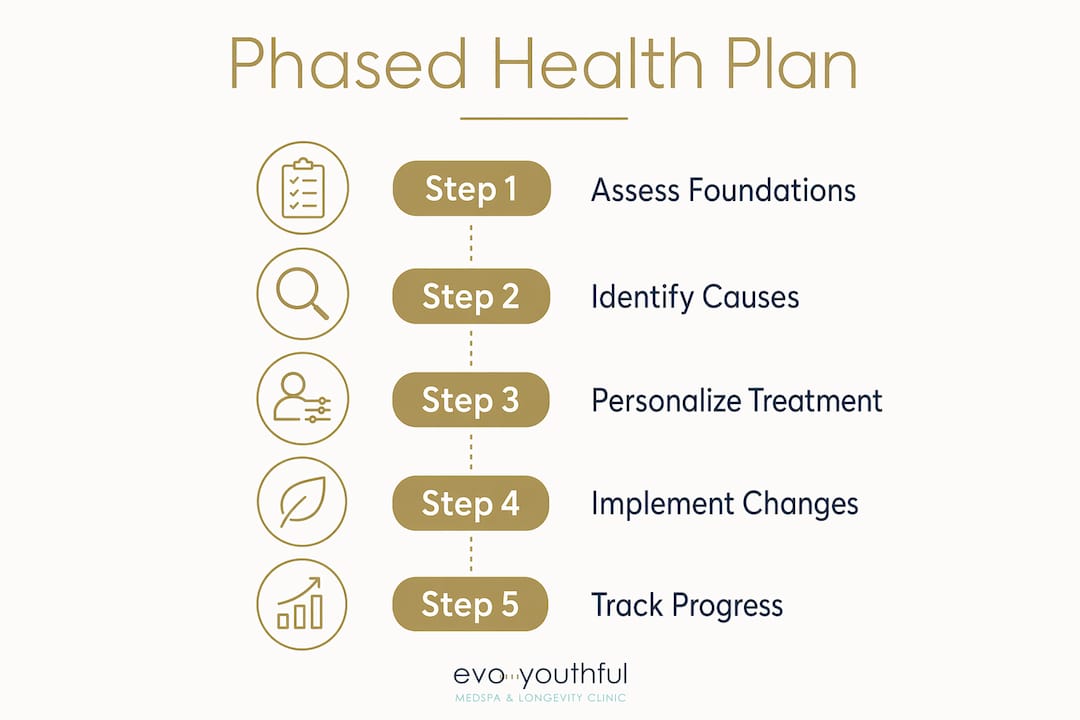
Phase 1: Removal
Start by eliminating what is actively harming your biology. This includes:
- Inflammatory foods: refined sugars, seed oils, ultra-processed products
- Environmental toxins: mold exposure, heavy metals, endocrine-disrupting chemicals in plastics
- Behavioral stressors: chronic sleep deprivation, sedentary patterns, excessive alcohol
Phase 2: Restoration
Once the inflammatory load drops, your body becomes receptive to repair. Restoration includes:
- Nutrient repletion: correcting deficiencies in Vitamin D, magnesium, B vitamins, and omega-3s
- Hormone balancing: addressing thyroid dysfunction, sex hormone decline, or adrenal dysregulation
- Gut repair: rebuilding microbiome diversity through fiber, fermented foods, and targeted probiotics
Root cause medicine requires a dynamic, individualized approach that interprets patterns across immune, hormonal, and metabolic systems. No two people share the same root cause profile, which is why personalized health plans outperform generic protocols. Changing too many variables at once makes it impossible to identify what is working. Adjust one or two factors at a time, monitor for four to six weeks, then reassess.
Pro Tip: Address foundational deficits first. Hormone therapy or gut repair protocols deliver far better results when sleep, nutrition, and stress are already stable.
What common mistakes sabotage health optimization efforts?
The most common error in root cause health optimization is skipping the foundation. Neglecting sleep hygiene and blood sugar control before investing in supplements or advanced diagnostics wastes both money and time. Supplements cannot override a body running on five hours of sleep and a high-sugar diet.
Other frequent mistakes include:
- Chasing a single cause. Most chronic health issues are multi-factorial. Fixing only one driver while ignoring others produces partial improvement at best.
- Over-testing without context. Running dozens of labs without a guiding clinical question generates confusion, not clarity.
- Changing too many variables at once. When you alter diet, sleep, supplements, and exercise simultaneously, you cannot identify which change produced which result.
- Ignoring symptom patterns. Symptoms that worsen after meals, during stress, or at specific times of day contain diagnostic information. Dismissing them slows the process.
- Failing to personalize. A protocol that worked for someone else may not fit your biology, history, or lifestyle. Generic plans produce generic results.
“Consistency and gradual improvement beat perfection every time. The person who improves sleep by one hour and adds two Zone 2 sessions per week will outperform the person chasing the perfect supplement stack while sleeping six hours a night.”
Pro Tip: Track one metric at a time. Progress is easier to see and sustain when you measure it clearly.
Key Takeaways
Addressing underlying health issues through a structured, phased approach produces far more lasting results than treating symptoms in isolation.
| Point | Details |
|---|---|
| Foundation comes first | Sleep, Zone 2 cardio, strength training, and nutrition drive over 80% of biological age improvement. |
| Root cause analysis is structured | Build a symptom timeline, identify triggers and perpetuators, and journal consistently before ordering labs. |
| Biomarkers guide intervention | Track ApoB, fasting insulin, Vitamin D, and Omega-3 index annually to measure real health trajectory. |
| Phased implementation works | Remove inflammatory triggers before starting restoration therapies like hormone balancing or gut repair. |
| Personalization is non-negotiable | Effective health plans interpret your unique immune, hormonal, and metabolic patterns, not a generic template. |
What I have learned from years of root cause health work
By Elizabeth Vogstrom, PA-C
The patients who arrive at evoyouthful most frustrated are often the ones who have already spent years and significant money on supplements, specialty diets, and advanced diagnostics without addressing the basics. I have seen people with comprehensive hormone panels and genetic tests who were sleeping six hours a night and eating ultra-processed food daily. The labs told a story, but the foundation was not there to act on it.
What I have found is that the most powerful shift happens when someone commits to the foundational pillars for 60 to 90 days before we layer in clinical interventions. Their labs improve. Their symptoms clarify. And when we do introduce bioidentical hormone therapy or targeted peptide support, the results are dramatically better because the body is ready to respond.
The other lesson I keep relearning is that patience is not passive. Tracking symptoms, adjusting one variable at a time, and bringing that data to your appointments is active, disciplined work. It is also the work that separates people who see lasting change from those who cycle through protocols without progress. I encourage every person I work with to treat their health history as a living document, not a list of past diagnoses. The patterns in that document are where the answers live. You can explore vitality medicine as a framework for understanding how this kind of layered, personalized care comes together in practice.
— Elizabeth Vogstrom, PA-C
How evoyouthful approaches root cause health optimization
evoyouthful is a medical wellness clinic in Wayzata, MN built around the principle that lasting health requires addressing root causes, not managing symptoms indefinitely.

The clinic offers bioidentical hormone replacement therapy grounded in comprehensive lab analysis, alongside nutrigenomics testing that maps your genetic blueprint to your nutrition and supplementation needs. For those dealing with cognitive fatigue or mood changes, ExoMind TMS therapy provides advanced neural support. Every care plan at evoyouthful starts with a thorough clinical history and biomarker review, so interventions are targeted, not guesswork. Schedule a consultation to build a personalized plan grounded in your biology.
FAQ
What is root cause health optimization?
Root cause health optimization is the practice of identifying and correcting the underlying biological, hormonal, and lifestyle factors driving poor health, rather than treating symptoms alone. It uses structured analysis, biomarker tracking, and phased interventions to produce lasting wellness improvements.
Which biomarkers should I track for health optimization?
Key biomarkers include ApoB below 70 mg/dL, fasting insulin below 7 uIU/mL, Vitamin D between 40–60 ng/mL, Omega-3 index above 8%, and blood pressure below 120/80. Annual comprehensive bloodwork reveals your health trajectory over time.
How do I start identifying the root causes of my health issues?
Build a detailed symptom timeline, note triggers and patterns, and journal daily observations about diet, sleep, and stress. Bringing this structured history to a practitioner accelerates accurate diagnosis and reduces trial-and-error significantly.
Why should I address foundational health before advanced therapies?
Foundational pillars like sleep, Zone 2 cardio, and nutrition account for the majority of biological age improvement. Advanced therapies deliver far better results when the body’s baseline systems are already stable and supported.
What is the difference between triggers, mediators, and perpetuators?
Triggers are the initiating events that start a health problem, such as an infection or major stress. Mediators amplify the problem, such as poor sleep or nutrient deficiency. Perpetuators are ongoing conditions like gut dysbiosis or hormonal imbalance that prevent recovery without targeted correction.
Recommended
Ready to Start?
Schedule a Consultation
Have questions about what you just read? Our team is here to help.