

What Is Telomere Health and Why It Matters
Elizabeth Vogstrom, PA-C
evoyouthful Clinical Team
Discover what is telomere health and why it matters for aging and longevity. Learn how to protect your cells and enhance your wellbeing.
What Is Telomere Health and Why It Matters
Telomere health is defined as the functional integrity of the protective DNA caps at the ends of every chromosome in your body. These caps, called telomeres, are composed of repetitive TTAGGG nucleotide sequences that preserve genome stability and regulate how many times a cell can divide. Lifestyle factors such as smoking, inflammation, and pollution accelerate their shortening, making telomere health a measurable reflection of how your cells are aging. Understanding what drives telomere decline, and what you can do about it, is one of the most direct ways to think about longevity at the cellular level.
What is telomere health and how do telomeres protect chromosomes?
Telomeres function as protective caps that stop chromosome ends from being mistaken for broken DNA. Without them, your cells would trigger emergency DNA repair responses at every chromosome tip, causing genetic chaos and rapid cell death. Think of them as the plastic tips on shoelaces. Remove the tip, and the lace frays.
The protection comes from a group of six proteins called the shelterin complex, which includes TRF1, TRF2, TPP1, POT1, TIN2, and RAP1. These proteins bind directly to telomeric DNA and form a physical shield that prevents the cell’s damage-detection machinery from firing. The shelterin complex also recruits telomerase and DNA repair factors, actively managing telomere length rather than just passively covering the ends.

Telomeres also solve a fundamental problem in DNA replication. Every time a cell copies its DNA, the replication machinery cannot fully copy the very end of a linear chromosome. This is called the end-replication problem, and it means telomeres shorten slightly with each cell division. That shortening is not a flaw. It is a built-in biological clock.
Key structural features of telomeres include:
- TTAGGG repeats: The specific DNA sequence that makes up human telomeres, repeated thousands of times
- T-loop structure: Telomeric DNA folds back on itself to hide the chromosome end from damage sensors
- Shelterin proteins: Six specialized proteins that bind, protect, and regulate the telomere cap
- G-quadruplex formations: Four-stranded DNA structures within telomeres that add an extra layer of stability
Pro Tip: Chronic psychological stress raises cortisol levels, which increases oxidative stress in cells. Oxidative stress directly damages telomeric DNA, accelerating shortening faster than normal cell division alone.
How does telomere length relate to aging and age-related diseases?
Telomere shortening triggers a cellular state called senescence, where a cell stops dividing but does not die. Senescent cells accumulate in tissues over time and release inflammatory signals that damage surrounding healthy cells. This process connects telomere biology directly to the physical experience of aging.
Shortened telomeres associate with increased risk of cardiovascular disease, diabetes, and certain cancers. That association is real and well-documented across large population studies. The implication is significant: the state of your telomeres reflects, in part, your biological age rather than just your chronological age.
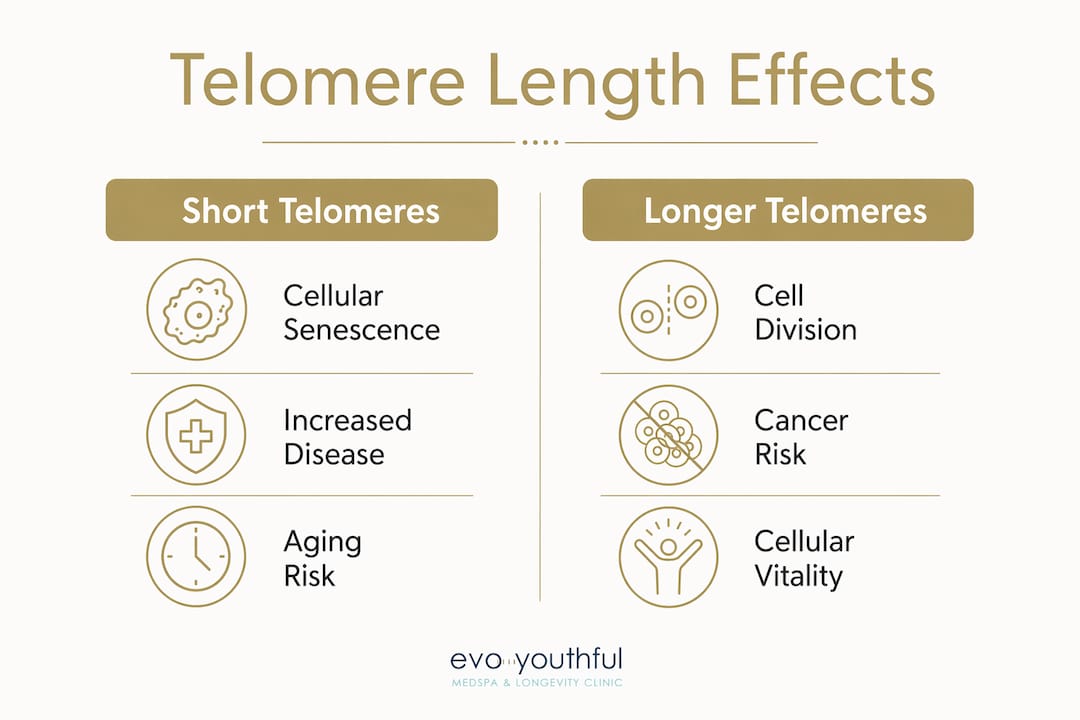
Telomere length varies at birth due to germline genetics, meaning two people of the same age can have meaningfully different baseline telomere lengths. One person may be born with longer telomeres and therefore have more cellular “runway” before reaching critical shortening thresholds. This genetic variability complicates simple comparisons between individuals.
| Condition | Telomere connection | Clinical implication |
|---|---|---|
| Cardiovascular disease | Shorter telomeres in heart tissue and white blood cells | Associated with higher risk in population studies |
| Type 2 diabetes | Accelerated telomere attrition linked to metabolic stress | Inflammation compounds shortening rate |
| Certain cancers | Critically short telomeres precede genomic instability | Instability enables tumor formation |
| Cellular senescence | Telomere shortening triggers permanent cell cycle arrest | Senescent cells drive tissue inflammation |
The population-level data is compelling. Translating it to individual clinical decisions, however, remains a challenge. A single telomere length measurement cannot reliably predict when a specific person will develop a specific disease. The science is directionally clear, but individual prognosis requires more than one data point.
What role does telomerase play in telomere maintenance and cancer risk?
Telomerase is a reverse transcriptase enzyme that replenishes telomeric sequences by adding TTAGGG repeats back onto chromosome ends. It counteracts the end-replication problem and extends the replicative lifespan of cells that need it most.
Telomerase is active mainly in stem and germ cells. Its absence in most somatic (body) cells is not an oversight. It is a deliberate tumor-suppressive mechanism. Cells that cannot indefinitely replenish their telomeres are cells that cannot divide forever, which limits cancer risk.
The cancer connection is the most counterintuitive aspect of telomere biology. Here is how the two-phase model works:
- Phase 1 (short telomeres): Critically short telomeres cause chromosomal instability, which can trigger mutations that initiate cancer
- Phase 2 (telomerase reactivation): Once a cell becomes cancerous, it often reactivates telomerase to maintain its telomeres and divide without limit
- Net result: Forced telomerase activation in somatic cells is a primary mechanism cancer cells use to become immortal
This two-phase dynamic explains why both too-short and excessively maintained telomeres can lead to serious health consequences. The goal is not the longest possible telomeres. The goal is healthy, well-regulated telomere maintenance.
Pro Tip: Telomerase-activating supplements are widely marketed but lack strong clinical evidence for safe use in healthy adults. The cancer risk profile of artificially elevated telomerase activity in somatic cells is not yet well understood.
What factors influence telomere shortening and how can telomere health be improved?
Telomere shortening is unavoidable. Every cell division costs you a small amount of telomeric DNA. What you control is the rate at which that shortening happens. Lifestyle and environmental factors can dramatically accelerate or slow the process.
The factors that accelerate telomere attrition most reliably include:
- Smoking: Tobacco smoke generates oxidative stress that directly damages telomeric DNA, compounding the natural shortening from cell division
- Chronic inflammation: Persistent low-grade inflammation, often driven by poor diet or unmanaged stress, increases cell turnover and oxidative damage
- Air pollution: Environmental toxins trigger inflammatory responses that raise oxidative stress throughout the body
- Psychological stress: Chronic stress elevates cortisol and inflammatory markers, both of which are associated with faster telomere attrition
- Poor sleep: Sleep deprivation impairs cellular repair processes that normally help maintain genome integrity
The good news is that the same lifestyle factors that protect your heart and metabolic health also protect your telomeres. Vitamin C intake associates with longer telomeres, suggesting that antioxidant-rich diets actively reduce the oxidative damage that accelerates shortening. Antioxidants neutralize the free radicals that attack telomeric DNA between cell divisions.
Practical steps that support telomere health include regular aerobic exercise, a diet rich in colorful vegetables and fruits, stress reduction practices like meditation or adequate sleep, and avoiding tobacco. These are not novel recommendations. What makes them compelling in the context of telomere biology is the cellular mechanism behind them. You are not just “being healthy.” You are preserving the replicative capacity of your cells.
Lifestyle changes mitigate but do not halt telomere shortening. Managing expectations matters here. No supplement or protocol reverses decades of telomere attrition overnight. The goal is to slow the rate of loss and reduce the environmental insults that accelerate it beyond the biological baseline. Addressing fatigue and inflammation through consistent lifestyle habits compounds over years, not weeks.
How is telomere health assessed and what is its role in clinical practice?
Telomere length can be measured using several laboratory techniques. Flow-FISH (flow cytometry combined with fluorescence in situ hybridization) is one of the most accurate methods available. Accurate telomere length testing has influenced treatment decisions in specific diseases like dyskeratosis congenita, a rare genetic disorder caused by abnormally short telomeres.
For the general population, however, telomere testing is not yet a standard clinical tool. Individual variability in telomere length results arises from both genetic heterogeneity at birth and methodological differences between labs. A result showing “shorter than average” telomeres does not reliably predict when or whether a specific disease will develop. Population-level associations are strong. Individual-level prognosis from a single test is not.
The field is advancing. Researchers are working to combine telomere length data with other biomarkers, including inflammatory markers and epigenetic clocks, to build more clinically useful aging profiles. For now, telomere testing is most valuable as a research tool and as one piece of a broader proactive wellness picture rather than a standalone diagnostic.
Key Takeaways
Telomere health is the single most direct cellular measure of biological aging, shaped by genetics, lifestyle, and the cumulative burden of oxidative stress over a lifetime.
| Point | Details |
|---|---|
| Telomeres protect chromosomes | The shelterin complex prevents chromosome ends from triggering false DNA damage signals. |
| Shortening drives aging | Telomere attrition leads to cell senescence, inflammation, and increased disease risk over time. |
| Telomerase is a double-edged tool | It replenishes telomeres in stem cells but enables cancer when reactivated in somatic cells. |
| Lifestyle slows attrition | Antioxidant-rich diets, exercise, and stress reduction measurably reduce the rate of telomere shortening. |
| Testing has limits | Telomere length tests inform research but cannot yet reliably predict individual disease outcomes. |
Telomere health in clinical practice: what I’ve learned matters most
The conversation around telomeres has attracted a lot of noise, and most of it oversimplifies a genuinely complex system. Patients come in asking about telomere-lengthening supplements after reading a headline, and I understand the appeal. The idea that you can reverse cellular aging with a capsule is compelling. The biology, however, does not support that framing.
What I have found in practice is that the people with the best cellular aging profiles are not the ones chasing the latest longevity supplement. They are the ones who have consistently managed inflammation, prioritized sleep, and kept their hormonal environment stable over years. Hormonal balance, in particular, is underappreciated in the telomere conversation. Estrogen, for example, has known antioxidant properties and influences telomerase activity in certain tissues. When hormones fall out of balance, the downstream effects on oxidative stress and inflammation are real.
The science on telomeres is genuinely exciting, and I am optimistic about where it is heading. Combining telomere data with epigenetic clocks and inflammatory biomarkers will eventually give clinicians a much sharper picture of biological age. For now, the most honest and useful thing I can tell you is this: the habits that protect your telomeres are the same ones that protect everything else. Start there, and let the science catch up.
— Elizabeth Vogstrom, PA-C
Supporting cellular vitality at evoyouthful
Cellular aging does not happen in isolation. Hormonal shifts, chronic inflammation, and oxidative stress all converge to accelerate the biological processes that telomere science makes visible. At evoyouthful in Wayzata, MN, the approach to healthy aging starts with restoring the internal environment your cells need to function well.

Bioidentical hormone replacement therapy at evoyouthful addresses one of the most significant drivers of accelerated cellular aging: hormonal imbalance. BHRT uses hormones that are molecularly identical to those your body produces, supporting the antioxidant and anti-inflammatory pathways that protect cellular health. The team at evoyouthful builds personalized treatment plans based on your labs, symptoms, and health goals. Schedule a consultation to explore what a science-based approach to cellular vitality looks like for you.
FAQ
What is telomere health in simple terms?
Telomere health refers to the length and functional integrity of the protective DNA caps at the ends of your chromosomes. Longer, well-maintained telomeres generally correspond to healthier cellular aging.
What are the signs of poor telomere health?
Poor telomere health does not produce direct symptoms you can feel. It shows up indirectly through accelerated aging, increased susceptibility to chronic diseases like cardiovascular disease and diabetes, and reduced cellular repair capacity over time.
Does diet affect telomere health?
Yes. Antioxidant-rich diets, including high intake of vitamin C, associate with longer telomeres by reducing the oxidative stress that damages telomeric DNA between cell divisions.
Can telomere length be tested at home?
Commercial telomere length tests exist, but their clinical value for individual health decisions is limited. Results vary based on genetics and lab methodology, and a single measurement cannot reliably predict personal disease risk.
How does stress affect telomere length and aging?
Chronic stress raises cortisol and inflammatory markers, both of which increase oxidative damage to telomeric DNA. This accelerates shortening beyond the baseline rate caused by normal cell division.
Recommended
Ready to Start?
Schedule a Consultation
Have questions about what you just read? Our team is here to help.