
Functional Hormone Testing: How It Finds Imbalances and Guides Care
Elizabeth Vogstrom, PA-C
evoyouthful Clinical Team
Discover how functional hormone testing identifies imbalances and informs personalized care by analyzing hormone patterns and rhythms.
Functional Hormone Testing: How It Finds Imbalances and Guides Care
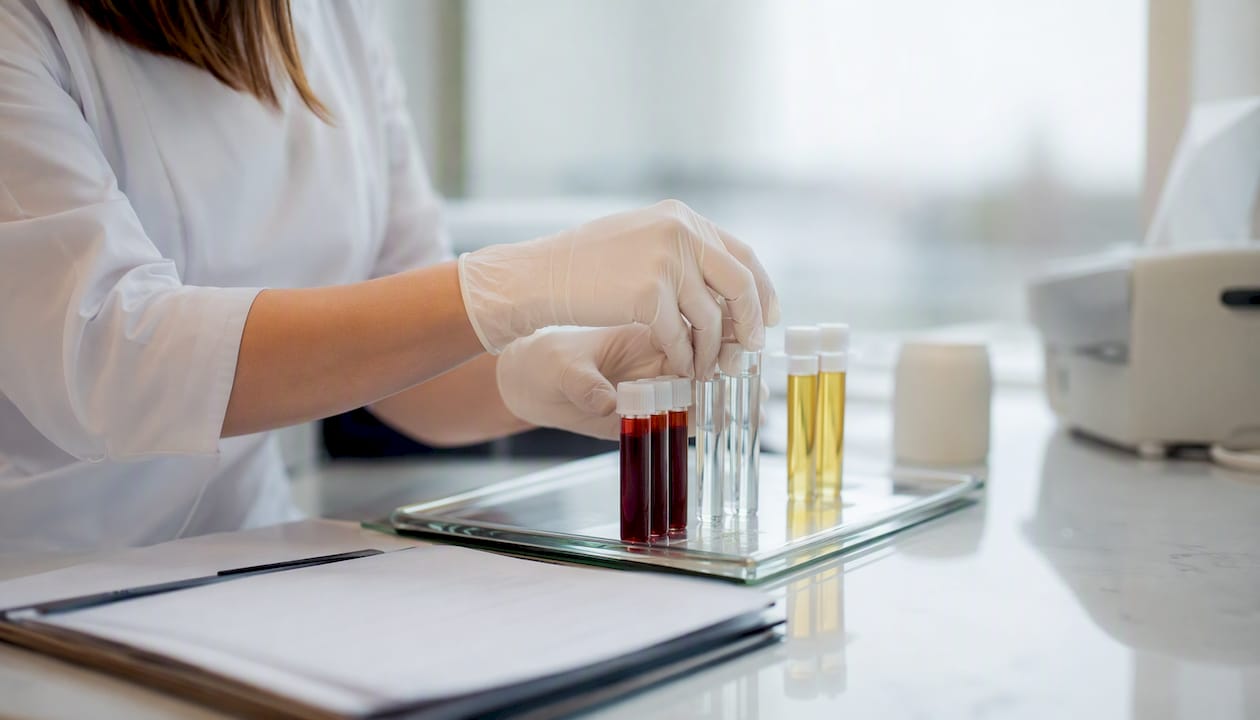
Functional hormone testing measures hormone levels, metabolites, and rhythms across multiple sample types — blood, saliva, and urine — to map how your body produces, uses, and clears hormones over time. Unlike a single-point blood draw, it captures patterns that a routine lab order often misses. The verdict: it can be genuinely useful when specific symptoms or clinical questions call for a deeper look, but it isn’t necessary for every person who feels “off,” and not every symptom is hormone-related.
The most common panels you’ll encounter include:
- Comprehensive sex-hormone panel: estradiol, estrone, progesterone, total and free testosterone, and sometimes their metabolites
- Full thyroid panel: TSH, free T4, free T3, reverse T3, and anti-thyroid antibodies
- Adrenal/cortisol rhythm tests: 24-hour salivary cortisol profiles or DUTCH (Dried Urine Test for Comprehensive Hormones)
- DHEA-S, SHBG, LH, FSH, AMH, and prolactin: ordered selectively based on the clinical question
A few caveats belong right up front. Timing matters enormously — the same hormone can read high or low depending on where you are in your cycle, what time of day you collected the sample, or whether you’re on oral contraceptives. Interpretation always requires clinical context. And broad panels ordered without a specific clinical question can generate confusing results, unnecessary follow-up, and real out-of-pocket cost.
Key Takeaways
Functional hormone testing adds the most value when it is targeted to a specific clinical question, interpreted by a licensed clinician, and paired with a clear plan for what to do with the results.
| Point | Details |
|---|---|
| Definition and scope | Functional hormone testing maps hormone production, rhythm, and metabolism across blood, saliva, and urine samples. |
| Timing is critical | Cycle day, time of day, and medication status all affect results; wrong timing can invalidate an entire panel. |
| Full thyroid panel over TSH alone | Clinical guidance supports TSH, free T4, free T3, reverse T3, and antibodies for symptomatic patients needing diagnostic clarity. |
| Overtesting is a real risk | Broad panels without targeted clinical questions generate costly, confusing results and can lead to unnecessary treatment. |
| evoyouthful’s approach | evoyouthful uses selective, clinician-interpreted hormone panels to guide individualized care including BHRT when indicated. |
Table of Contents
- What is functional hormone testing, and how does it differ from a routine lab order?
- A test-by-test breakdown of common functional hormone panels
- How functional testing differs from conventional hormone testing
- Which sample type should you use, and when does timing matter?
- How clinicians interpret results and build personalized treatment plans
- Who actually benefits from functional hormone testing?
- Limitations, accuracy concerns, and common pitfalls
- What does functional hormone testing cost, and will insurance cover it?
- What to expect: from ordering to results to follow-up
- How evoyouthful integrates functional hormone testing into individualized care
- What the evidence says about clinical validity
- Potential risks and downsides: overdiagnosis and overtreatment
- evoyouthful: clinically supervised hormone care in Wayzata, MN
- A clinician’s perspective on pragmatic hormone testing
- Sources
What is functional hormone testing, and how does it differ from a routine lab order?
Functional hormone testing is the clinical practice of measuring not just whether a hormone is present, but how it’s being metabolized, cleared, and expressed across time. A standard lab order might check your TSH and call it a day. A functional approach checks TSH alongside free T3, free T4, reverse T3, and thyroid antibodies — because each marker answers a different question about thyroid function.
The term “functional” comes from functional medicine, a model that emphasizes root-cause investigation and personalized care. In practice, functional hormone analysis tends to use broader panels, metabolite data, and rhythm-based sampling to build a more complete picture of your endocrine health. That picture can then guide individualized plans: lifestyle adjustments, targeted nutritional support, or hormone therapies like bioidentical hormone replacement therapy (BHRT).
What it is not: a replacement for a full diagnostic workup. Hormone test results must be interpreted alongside medical history, physical exam, and sometimes imaging — because a mildly abnormal single value can be temporary, while a pattern across several tests points more clearly to an endocrine issue.
A test-by-test breakdown of common functional hormone panels
Understanding what each panel actually measures helps you have a more productive conversation with your provider. Here’s how the major panels break down.
Comprehensive sex-hormone panel
This panel typically includes estradiol (E2), estrone (E1), progesterone, total testosterone, and free testosterone. When metabolites are added — such as 2-hydroxyestrone, 4-hydroxyestrone, and 16-alpha-hydroxyestrone — the panel reveals how estrogen is being broken down and cleared. Favorable estrogen metabolism (higher 2-OH relative to 16-OH) is associated with lower inflammatory burden, while unfavorable ratios may warrant lifestyle or nutritional intervention.
Who benefits: Women with irregular cycles, perimenopausal symptoms, suspected estrogen dominance, or low libido; men with fatigue, low libido, or suspected testosterone deficiency.
Full thyroid panel
TSH alone is a screening tool, not a complete picture. Clinical guidance supports using a full thyroid panel — TSH, free T4, free T3, reverse T3, and anti-thyroid antibodies (TPO and thyroglobulin) — for many symptomatic patients because it reveals conversion problems, autoimmune activity, and cellular availability of active thyroid hormone that TSH alone cannot.
Who benefits: Anyone with unexplained fatigue, cold intolerance, hair thinning, weight changes, or mood shifts after a normal TSH result.
Adrenal and cortisol rhythm testing
A single morning serum cortisol tells you very little about adrenal rhythm. A 24-hour salivary cortisol profile — collected at four or more time points across the day — maps the diurnal curve: high in the morning, tapering through the afternoon, low at night. Flattened curves, inverted patterns, or a blunted cortisol awakening response each suggest different types of adrenal dysregulation.

Who benefits: People with chronic fatigue, sleep disruption, anxiety, or difficulty recovering from stress.
DUTCH (Dried Urine Test for Comprehensive Hormones)
DUTCH is a dried-urine panel that measures free cortisol, cortisone, cortisol metabolites (THF, THE, allo-THF), sex hormone metabolites, and the melatonin metabolite 6-sulfatoxymelatonin. Because it captures metabolites rather than just parent hormones, it adds information about how hormones are being processed — not just how much is circulating. Rhythm and metabolite data from tests like DUTCH can reveal adrenal patterns that single serum cortisol tests miss.
Who benefits: Patients already on BHRT who need metabolite monitoring; those with complex adrenal or estrogen metabolism questions; anyone for whom salivary or serum testing has been inconclusive.
Other key markers
Who benefits from these markers: Fertility patients need LH, FSH, and AMH. Perimenopausal women benefit from FSH alongside estradiol. Anyone with low libido or fatigue may need SHBG to understand how much hormone is actually bioavailable.
Pro Tip: Adding metabolites or rhythm testing to a panel changes clinical interpretation most when a single-point result is borderline or when symptoms don’t match the initial lab picture. If your estradiol looks normal but you still have symptoms, estrogen metabolite data or a cortisol rhythm profile may reveal what the standard draw missed.
See the comprehensive hormone panel guide for a deeper look at how these markers are combined in practice.
How functional testing differs from conventional hormone testing
The primary differences are marker breadth, metabolite analysis, and rhythm assessment. Conventional endocrinology typically uses single-time-point serum tests and compares results against population-based reference ranges. Functional approaches add metabolites, 24-hour patterns, and sometimes “optimal” ranges that are narrower than standard lab reference intervals.
That distinction matters in practice. A TSH of 3.5 mIU/L falls within the standard reference range at most labs, but some functional clinicians consider values above 2.0 mIU/L worth investigating in a symptomatic patient — especially when free T3 is low-normal and reverse T3 is elevated. Whether that interpretation is clinically warranted depends on the full picture, not the number alone.
Mainstream endocrinology supports specific elements of the functional approach. Full thyroid panels, AMH for ovarian reserve, and rhythm-based cortisol testing all have solid clinical backing. Where evidence is thinner is in the interpretation of some salivary steroid assays and in the use of very broad panels without a targeted clinical question. Conventional providers often criticize functional testing for high cost, interpretation variability, and the risk of generating false positives that lead to unnecessary treatment. Clinicians mitigate these concerns by ordering selectively, using validated assays, and anchoring every result to the patient’s symptoms and history.
Which sample type should you use, and when does timing matter?
The short answer: sample choice is test-dependent, and timing can make or break the accuracy of your results.
Serum (blood): Best for thyroid hormones, LH, FSH, AMH, prolactin, DHEA-S, and SHBG. These markers are relatively stable across the day (with some exceptions) and are measured most accurately in a controlled lab setting.
Saliva: Captures free (bioavailable) hormone fractions and is well-suited for cortisol rhythm testing. Because saliva samples can be collected at home at multiple time points, they’re practical for mapping the diurnal cortisol curve.
Dried urine (DUTCH): Captures both free hormones and their metabolites over a collection window. Particularly useful for estrogen metabolism, cortisol metabolites, and melatonin. Collection involves urinating on filter paper strips at specific times across 24 hours, then air-drying and mailing them to the lab.
Timing rules that actually change your results
- Estrogen and progesterone: For cycle assessment, estradiol and FSH are typically drawn on days 2–4 of the menstrual cycle; progesterone is drawn around day 21 (or 7 days after ovulation) to confirm ovulation.
- Cortisol: Morning serum cortisol is drawn between 8–9 AM. Salivary or DUTCH cortisol requires multiple collections: on waking, 30 minutes after waking (cortisol awakening response), midday, afternoon, and before bed.
- Testosterone: Most accurately measured in the morning, when levels peak.
- Medications and washout: Oral contraceptives suppress LH, FSH, and alter SHBG significantly — results collected while on the pill reflect the pill’s effect, not your baseline. Exogenous steroids (including topical BHRT) affect serum and saliva readings; DUTCH may be preferable for monitoring some BHRT patients because it captures metabolites rather than just the applied hormone.
Pro Tip: Before any hormone test, bring a complete medication list to your provider — including supplements, topical creams, and over-the-counter hormones. Acute illness, intense exercise in the 24 hours before testing, and even significant emotional stress can shift cortisol and other markers enough to invalidate results. If you’re unsure whether to test, ask your clinician whether the timing is right.
Common pitfalls that invalidate results:
- Testing estrogen/progesterone mid-cycle when the clinical question is about luteal-phase adequacy
- Collecting salivary cortisol after eating, brushing teeth, or drinking coffee
- Testing within days of stopping or starting hormonal contraception
- Recent corticosteroid use (including inhaled or topical steroids)
- Collecting DUTCH samples during acute illness
How clinicians interpret results and build personalized treatment plans
Interpretation always starts with symptoms and context. Labs refine clinical judgment — they don’t replace it. A result that looks abnormal on paper may be entirely expected given a patient’s age, cycle phase, or medication history. A result that looks normal may still be meaningful if it doesn’t match the patient’s symptom burden.
Here’s a practical stepwise approach that clinicians typically follow:
- Verify timing and medication context. Confirm the sample was collected at the right cycle day and time of day, and that no medications or supplements distorted the result.
- Compare related hormones together. Estradiol without progesterone tells half the story. Free testosterone without SHBG tells you nothing about bioavailability. Look at ratios and relationships, not isolated values.
- Evaluate metabolites and clearance. If estrogen metabolite data is available, assess the 2-OH to 16-OH ratio. If cortisol metabolites are elevated, consider whether the issue is production, clearance, or both.
- Map patterns. A flattened diurnal cortisol curve suggests adrenal fatigue patterns. Elevated estrogen with low progesterone suggests relative estrogen dominance. Low free T3 with elevated reverse T3 suggests impaired thyroid conversion, often driven by multi-system factors like inflammation, nutritional deficiencies, or medications.
- Check for red flags. Severely suppressed cortisol, markedly elevated prolactin, or very high FSH in a young woman warrant endocrine referral before any functional treatment is initiated.
How results shape treatment choices
For rhythm issues (flattened cortisol curve, disrupted sleep), lifestyle and sleep hygiene come first — before any hormone intervention. Targeted nutrient support (magnesium, B vitamins, adaptogenic herbs) may follow if metabolite patterns suggest cofactor deficiencies. When labs clearly show a hormone deficit that matches symptoms — low estradiol in a perimenopausal woman, low testosterone in a symptomatic man — BHRT becomes a clinically grounded option, not a guess. Monitoring cadence typically involves retesting 8–12 weeks after initiating therapy, then every 6 months once stable.

See the hormone panel testing checklist for a practical guide to tracking panels and monitoring intervals.
Questions to ask your provider after receiving results:
- What does each abnormal value mean in the context of my symptoms?
- Which findings are most likely to change with treatment, and which might resolve on their own?
- What are the risks and alternatives to the treatment you’re recommending?
- How often will we retest, and what improvement should I expect to see?
Pro Tip: Ask your provider to walk you through the results in plain language before agreeing to any treatment. If a clinician recommends a significant hormone therapy based on a single borderline result without discussing your full symptom picture, that’s worth a second opinion.
Who actually benefits from functional hormone testing?
Testing is most useful when specific symptoms or clinical questions make the results actionable. Clinicians recommend a focused assessment before testing, noting that many symptoms attributed to hormones have other causes. The goal is to test with a purpose, not to test everything and see what comes back.
Clear indications where testing tends to add value:
- Infertility or difficulty conceiving (LH, FSH, AMH, estradiol, progesterone)
- Irregular or absent menstrual cycles
- Perimenopausal symptom triage (hot flashes, sleep disruption, mood changes)
- Suspected adrenal dysregulation after a basic workup is unrevealing
- Unexplained fatigue with normal CBC, metabolic panel, and TSH
- Sexual dysfunction not explained by relationship, psychological, or medication factors
- Monitoring during BHRT or other hormone therapies
Three scenarios where testing changes the clinical picture:
A 38-year-old woman with irregular cycles and difficulty conceiving gets an AMH, FSH, and estradiol on cycle day 3. Her AMH comes back low for her age, prompting a fertility referral earlier than it might otherwise have happened.
A 52-year-old man with fatigue, low libido, and brain fog gets total testosterone, free testosterone, SHBG, and LH. His total testosterone is low-normal, but his SHBG is high — meaning very little is bioavailable. That distinction changes the treatment conversation entirely.
A 45-year-old woman with persistent fatigue and poor stress tolerance gets a 24-hour salivary cortisol profile. Her morning cortisol is blunted and her evening cortisol is elevated — a pattern that points to disrupted adrenal rhythm rather than primary adrenal insufficiency, and guides a lifestyle-first approach.
When not to test:
- Routine annual screening without specific symptoms or clinical questions
- Within a short washout window after stopping hormonal contraception or exogenous hormones
- When acute illness, extreme stress, or recent intense exercise may distort results
Red flags that need urgent or specialist evaluation — not routine functional testing:
- Signs of acute adrenal crisis (severe weakness, vomiting, low blood pressure, confusion)
- Markedly elevated prolactin (possible pituitary adenoma)
- Severe hyperglycemia or signs of Cushing’s syndrome
- A young woman with very high FSH and absent periods (possible premature ovarian insufficiency requiring prompt evaluation)
Limitations, accuracy concerns, and common pitfalls
Functional hormone tests provide useful signals, but no single value proves a chronic hormonal state without clinical correlation. Hormones fluctuate — sometimes dramatically — across hours, days, and cycle phases. That biological variability is the most important limitation to understand before interpreting any result.
Common pitfalls in functional hormone testing:
- Testing at the wrong cycle day and misinterpreting a normal mid-cycle estrogen surge as estrogen dominance
- Treating lab “optimal ranges” as absolute thresholds when they are often derived from smaller, non-representative populations
- Over-relying on large panels without a targeted clinical question — generating multiple borderline results that require costly follow-up
- Commercial labs using nonstandard reference ranges that don’t align with peer-reviewed clinical standards
Accuracy and evidence context:
Standard thyroid assays (TSH, free T4) and AMH have strong clinical validation and are widely used in mainstream endocrinology. Salivary steroid testing has more variable evidence. Peer-reviewed literature notes limits in salivary steroid testing and variability across analytic platforms — meaning the same sample sent to two different labs can yield meaningfully different numbers. DUTCH has grown in functional practice for its metabolite data, but its interpretation requires a clinician familiar with the platform’s reference ranges and methodology.
NBC News reporting on direct-to-consumer hormone panels highlights a real consumer risk: broad, expensive panels marketed online can generate alarming-looking results that lead patients toward unnecessary treatments. The harm isn’t just financial — inappropriate hormone therapy carries real clinical risks, including cardiovascular effects and hormone-sensitive tissue stimulation.
How clinicians reduce error:
- Order targeted panels tied to specific clinical questions, not broad screens
- Repeat borderline results before acting on them
- Use metabolite and rhythm data to validate single-point anomalies
- Choose labs with validated, standardized assays and published reference ranges
What does functional hormone testing cost, and will insurance cover it?
Costs vary widely, and many functional panels are paid out-of-pocket. A single hormone analyte ordered through a physician and run at a standard lab may cost relatively little after insurance. A comprehensive functional panel — particularly DUTCH or a broad sex-hormone metabolite panel — typically runs several hundred dollars and is often not covered by standard insurance plans.
Rough cost bands (out-of-pocket, U.S. market):
- Single analyte (e.g., TSH, testosterone, AMH): typically low cost when ordered through a physician and run at a standard reference lab; often covered by insurance with documented clinical indication
- Small targeted panel (e.g., thyroid panel, basic sex-hormone panel): moderate cost; partial insurance coverage possible with appropriate diagnosis codes
- Comprehensive functional panels (e.g., DUTCH, full sex-hormone metabolite panel): higher cost, typically several hundred dollars; usually not covered by standard insurance
Practical tips for ordering affordably:
- Ask your provider to document medical necessity clearly — insurance is more likely to cover tests tied to a specific diagnosis code than to general wellness screening.
- When a comprehensive panel isn’t covered, ask whether a targeted subset of the most clinically relevant markers can be ordered through an in-network lab instead.
- Direct-to-consumer hormone kits bypass the physician order but also bypass clinical interpretation — the cost savings rarely outweigh the risk of misinterpreting results without provider guidance.
- Start with the tests most likely to change your treatment plan. A targeted panel that answers a specific question is almost always more cost-effective than a broad screen.
What to expect: from ordering to results to follow-up
The typical timeline from ordering to receiving results is 1–2 weeks for most serum panels. DUTCH and other specialized urine or metabolite panels may take 2–3 weeks, depending on the lab’s processing time and shipping logistics.
Your step-by-step patient checklist:
- Before the test: Confirm with your provider which cycle day to test (if applicable), whether to fast, and which medications or supplements to pause. Track your menstrual cycle for at least one full cycle before testing if cycle-day timing is relevant.
- Collection day: Follow your provider’s instructions precisely — time of day, fasting status, and collection method all affect accuracy. For DUTCH, collect urine on filter strips at the specified times, allow them to dry fully, and ship them according to the lab’s instructions.
- Shipping and lab logistics: Most specialty labs provide prepaid shipping materials. Confirm the shipping deadline so samples don’t sit over a weekend.
- Wait time: Standard serum panels typically return within 3–7 business days. DUTCH and comprehensive metabolite panels often take 10–21 days.
- Results and follow-up: Results should be reviewed with your provider in a dedicated follow-up appointment, not just sent to your patient portal without context. Ask for a written summary of findings and the proposed next steps.
What to bring to your follow-up consultation:
- A complete medication and supplement list, including dosages
- A menstrual cycle calendar for the past 2–3 months (if applicable)
- A symptom log noting when symptoms occur, their severity, and any patterns
- A written list of questions prepared in advance
See the local hormone therapy provider guide for practical steps on finding and working with a clinician who can interpret these results in context.
How evoyouthful integrates functional hormone testing into individualized care
At evoyouthful, functional hormone testing is used selectively — to answer specific clinical questions and to guide monitoring when BHRT or targeted therapies are initiated, not as a routine screen for every patient who walks through the door.
The clinic’s workflow follows a deliberate sequence:
- Intake and symptom mapping: A thorough intake captures symptom history, lifestyle factors, medications, and prior lab results before any testing is ordered.
- Targeted panel selection: Panels are chosen based on the clinical question, not ordered broadly. A patient presenting with perimenopausal symptoms gets a different panel than one presenting with unexplained fatigue or fertility concerns.
- Sample collection logistics: Depending on the panel, samples may be collected at the clinic or via take-home kits (saliva, DUTCH). Patients receive clear instructions on timing, preparation, and shipping.
- Clinician interpretation: Results are reviewed by a licensed clinician — including Elizabeth Vogstrom, PA-C — who interprets findings in the context of the patient’s full symptom picture, history, and exam.
- Individualized plan: The plan may include lifestyle modifications, targeted nutritional support, nutraceuticals, or BHRT when clinically indicated. Monitoring is scheduled at defined intervals.
- Scheduled monitoring: Follow-up testing is built into the plan from the start, with retesting typically at 8–12 weeks after initiating therapy and every 6 months once stable.
The personalized medicine approach that guides evoyouthful’s care means that no two treatment plans look the same, even when two patients present with similar lab values.
What the evidence says about clinical validity
The clinical evidence supporting functional hormone testing is strongest where the tests align with mainstream endocrinology. Full thyroid panels, AMH for ovarian reserve, and rhythm-based cortisol testing all have meaningful peer-reviewed support. Clinical reviews support using a full thyroid panel for many symptomatic patients because it provides diagnostic clarity that TSH alone cannot offer — particularly for patients with conversion issues or autoimmune thyroid disease.
AMH is now a standard tool in reproductive endocrinology for assessing ovarian reserve, and its clinical utility is well-established. Salivary cortisol rhythm testing has a reasonable evidence base for identifying disrupted diurnal patterns, though the clinical significance of specific pattern subtypes is still being refined in the literature.
Where evidence is more limited: the interpretation of broad estrogen metabolite panels in asymptomatic patients, some salivary steroid assays for sex hormones, and the use of “optimal” rather than reference ranges for markers like DHEA-S and progesterone. These areas require more clinical judgment and should be interpreted conservatively.
The broader principle is that functional hormone testing is most evidence-supported when it is targeted, when validated assays are used, and when results are interpreted alongside clinical findings rather than in isolation. Womenshealth provide solid patient-facing evidence summaries for specific conditions like thyroid disease that are useful for grounding clinical conversations.
Potential risks and downsides: overdiagnosis and overtreatment
The most significant risk in functional hormone testing isn’t a bad test result. It’s what happens when results are acted on without adequate clinical context.
Overdiagnosis occurs when a borderline or mildly abnormal result — entirely normal given the patient’s age, cycle phase, or stress level — is treated as evidence of a chronic hormonal disorder. Overtreatment follows: a patient starts BHRT, thyroid medication, or DHEA supplementation based on a single data point that might have normalized on its own with lifestyle changes or a repeat test.
The risks of inappropriate hormone therapy are real. Estrogen therapy without adequate progesterone in women with a uterus raises endometrial risk. Testosterone therapy without monitoring can suppress natural production and affect cardiovascular markers. DHEA supplementation can convert to androgens or estrogens in ways that are difficult to predict without metabolite monitoring.
Direct-to-consumer hormone panels amplify this risk. A consumer who orders a broad panel online, receives a report flagging multiple “suboptimal” values, and then self-prescribes supplements or seeks out a provider willing to prescribe based on those results alone is in a genuinely risky position. The panel itself may be technically accurate; the interpretation without clinical context is where the harm enters.
Functional hormone testing is a tool, not a diagnosis. Used well, with targeted ordering, validated assays, and clinician-guided interpretation, it adds real value to personalized care. Used poorly, it generates noise, cost, and sometimes harm. The safeguard is always the same: a licensed clinician who asks the right questions before ordering, and interprets results in the full context of who you are.
evoyouthful: clinically supervised hormone care in Wayzata, MN
If you’re ready to move from questions to answers, evoyouthful offers clinically supervised hormone imbalance evaluation and treatment in Wayzata, MN. The clinic’s approach starts with a thorough intake and symptom review, uses targeted hormone panels ordered by a licensed clinician, and builds individualized plans that may include lifestyle support, nutritional guidance, or bioidentical hormone replacement therapy when the clinical picture supports it.

Every result is interpreted by a licensed provider — not an algorithm, not a generic report. If testing points toward a primary endocrine condition requiring specialist care, the team will tell you directly and help coordinate that referral. This is not a self-prescribe-from-a-kit model. It’s supervised, monitored, and adjusted over time. Schedule a consultation at evoyouthful to discuss whether functional hormone testing makes sense for your specific symptoms and goals.
This article is for general informational purposes only and is not a substitute for professional medical advice. Always consult a licensed clinician or endocrinologist before ordering hormone tests or initiating any hormone therapy.
A clinician’s perspective on pragmatic hormone testing
There’s a version of functional hormone testing that genuinely helps people, and a version that generates anxiety, unnecessary expense, and sometimes real harm. The difference usually comes down to one question: what clinical decision will this result change?
When a patient comes in with fatigue, irregular cycles, and a normal TSH, a full thyroid panel and a targeted sex-hormone panel can reveal something actionable. When a patient comes in feeling “generally off” and wants to test everything, the most helpful thing a clinician can do is slow down, take a thorough history, and order only what the symptom picture actually calls for. A 15-marker panel ordered without a clear hypothesis rarely produces a clear answer. It produces 15 data points, some of which will be borderline, and a follow-up conversation that’s harder than the one you would have had with two targeted tests.
The patients who benefit most from functional hormone testing are the ones who come in with specific, describable symptoms, a willingness to engage with lifestyle factors alongside any lab findings, and a provider relationship built on shared decision-making. Testing is a tool for refining a clinical picture, not for building one from scratch. When results are used that way, with careful ordering, validated assays, and honest interpretation, they can meaningfully guide care. That’s the standard worth holding.
Sources
These resources offer clinician-grade guidance and patient-facing evidence summaries on hormone testing and endocrine health:
- Common Causes for Hormone Testing in Women
- Should I Have My Hormone Levels Checked? - Kaiser Permanente
- Hormone Testing: Diagnosing Endocrine Problems - Acibadem Hospitals Group
- NCBI Bookshelf - Clinical guidance on thyroid testing
- Are your hormones imbalanced? Doctors explain how to know if you need testing - NBC News
Recommended
Ready to Start?
Schedule a Consultation
Have questions about what you just read? Our team is here to help.