

Comprehensive Hormone Panel: What It Tests and Why It Matters
Elizabeth Vogstrom, PA-C
evoyouthful Clinical Team
Discover what a comprehensive hormone panel tests and how it reveals vital insights about your hormonal health. Get informed today!
Comprehensive Hormone Panel: What It Tests and Why It Matters
A comprehensive hormone panel is a diagnostic blood test that measures multiple hormones and related biomarkers at once, giving you and your provider a detailed picture of your hormonal health. Rather than checking a single value in isolation, these panels assess how your thyroid, adrenal glands, and sex hormones are working together as a system. Labs like Quest Diagnostics, Labcorp OnDemand, and Life Extension offer panels that can include dozens of markers from a single blood draw. The result is a clinical map that guides decisions about treatment, lifestyle changes, and further testing. Direct-to-consumer comprehensive hormone panels often cost over $500, and insurance coverage is inconsistent. Unless you have a specific clinical indication, the out-of-pocket cost may not always bring actionable findings.
A comprehensive hormone panel typically serves three core purposes:
- Diagnostic clarity: Identify the root cause of symptoms that standard single-hormone tests might miss
- Hormone balance assessment: Evaluate how hormones interact, including binding proteins and metabolites, not just raw levels
- Wellness monitoring: Track changes over time, especially during perimenopause, andropause, or hormonal therapy
What does a comprehensive hormone panel measure?
The hormonal ecosystem includes free hormones, binding proteins like sex hormone-binding globulin (SHBG), metabolites, and circadian patterns. A thorough panel captures all of these layers, not just a snapshot of one hormone at one moment. Comprehensive hormone tests typically include thyroid markers, adrenal function indicators, sex hormones, and sometimes metabolic markers like fasting insulin and lipid panel components.
| Hormone / Marker | Category | Clinical Significance |
|---|---|---|
| TSH, Free T3, Free T4 | Thyroid | Assess thyroid activity and conversion of T4 to active T3 |
| Thyroid antibodies (Anti-TPO, Anti-TG) | Thyroid | Detect autoimmune thyroid conditions like Hashimoto’s |
| Cortisol | Adrenal | Reflects stress response and adrenal function across the day |
| DHEA-S | Adrenal | Adrenal reserve and precursor to sex hormones |
| Total and free testosterone | Sex hormones | Evaluate androgen levels and bioavailability |
| Estradiol, estrone, estriol | Sex hormones | Differentiate estrogen types for reproductive and metabolic insight |
| Progesterone | Sex hormones | Assess luteal function and estrogen-progesterone balance |
| SHBG | Binding protein | Determines how much testosterone and estrogen are biologically active |
| Fasting insulin / HOMA-IR | Metabolic | Early detection of insulin resistance before blood sugar rises |
| FSH and LH | Pituitary | Signal reproductive status and pituitary-gonadal communication |
Cortisol follows a circadian rhythm, peaking in the morning and dropping through the day. A single morning draw captures only one point on that curve. The DUTCH test, a dried urine collection taken at four time points, measures cortisol patterns and metabolites more completely than a standard serum draw. Total testosterone alone is also insufficient because SHBG binds testosterone and reduces its bioavailability. Free testosterone measurement fills that gap.
Optional markers that some panels add for deeper insight include:
- Reverse T3 (inactive thyroid metabolite that can block T3 receptors)
- Melatonin (sleep regulation and circadian health)
- Parathyroid hormone (PTH) paired with calcium
- IGF-1 (growth hormone surrogate)
- C-peptide (distinguishes endogenous from exogenous insulin production)
Signs and symptoms that suggest hormone testing
Symptoms alone cannot confirm a hormonal imbalance, but certain patterns make testing clinically appropriate. Common signs include irregular menstrual cycles, unexplained weight gain or loss, persistent fatigue, mood changes, severe acne, hair thinning, and sexual dysfunction. These symptoms overlap with many conditions, which is exactly why a provider needs the full clinical picture before ordering tests.

Women and men often present differently. Women in perimenopause may notice cycle irregularities, hot flashes, and disrupted sleep months or years before estrogen levels drop dramatically. Men experiencing andropause tend to report gradual fatigue, reduced motivation, and difficulty maintaining muscle mass rather than a clear hormonal event. Reproductive health changes, including shifts in libido or fertility, can signal imbalances in either sex and are worth discussing with a provider who understands signs of reproductive health.
Specific conditions that commonly prompt hormone testing include:
- Premature menopause (before age 40), where FSH and estradiol confirm ovarian function
- Suspected polycystic ovary syndrome (PCOS), which involves testosterone, LH/FSH ratios, and insulin
- Thyroid disorders, where TSH alone may miss subclinical dysfunction
- Adrenal fatigue or Cushing’s syndrome, requiring cortisol patterns and ACTH
- Male hypogonadism, where free testosterone and LH clarify whether the issue is primary or secondary
- Unexplained infertility in either partner
Persistent symptoms that do not resolve with basic lifestyle changes, or that worsen over time, are the clearest signal that a targeted hormone workup is worth pursuing.
Who should consider getting a comprehensive hormone panel?
Not everyone needs a broad hormone panel. Routine testing without symptoms or clinical indication adds cost and can generate confusing results that lead to unnecessary treatment. The right candidates are adults with specific symptom patterns, a relevant medical history, or a clinical reason to monitor hormone levels over time.
Groups who may benefit most include:
- Perimenopausal and postmenopausal women experiencing symptoms that affect quality of life, such as vasomotor symptoms, mood instability, or bone density concerns
- Men over 40 with fatigue, low libido, or reduced physical performance that persists despite adequate sleep and nutrition
- Adults with chronic, unexplained symptoms that have not responded to standard workups, including persistent fatigue, weight changes, or cognitive fog
- People currently on hormonal therapy, including bioidentical hormone replacement therapy, who need baseline and follow-up monitoring
- Individuals with a family history of thyroid disease, adrenal disorders, or early cardiovascular disease linked to hormonal factors
- Those with suspected insulin resistance or metabolic dysfunction, where fasting insulin and HOMA-IR add meaningful data
Clinical indications like premature menopause under age 40 or a suspected endocrine disorder are among the clearest reasons a provider would order a comprehensive panel rather than a targeted single-hormone test. Age and medical history both shape which markers are most relevant, so the panel should be tailored rather than identical for every patient.
How to prepare for accurate hormone panel testing
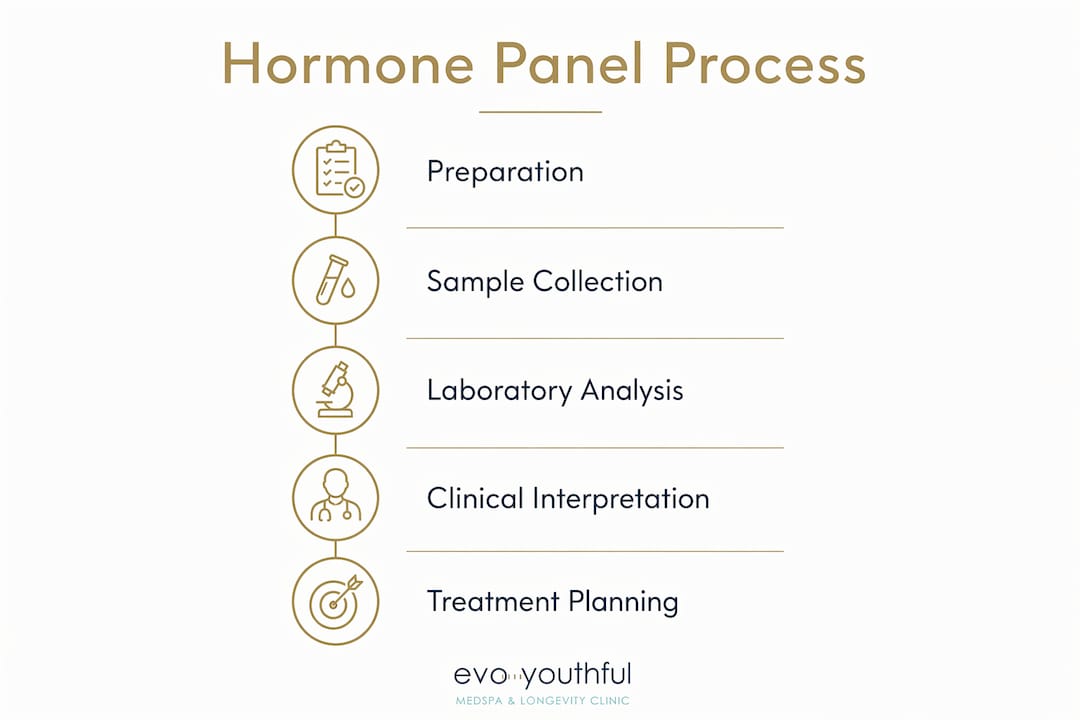
Preparation directly affects result accuracy. A few straightforward steps make the difference between a reliable baseline and a misleading reading.
- Time your blood draw in the morning, ideally before 10 AM. Morning fasting draws are optimal for cortisol, testosterone, and most metabolic markers, which follow daily rhythms that shift significantly by afternoon.
- Fast for at least 8–12 hours before the draw if your panel includes fasting insulin, lipids, or glucose-related markers.
- Pause hormonal birth control well in advance. Stopping hormonal contraceptives for at least 90 days before testing allows your body to return to its natural baseline.
- Note all supplements and medications, particularly those containing hormones, adaptogens, or thyroid-active compounds. Your provider needs this information to interpret results accurately.
- Keep timing consistent for repeat tests. A testosterone draw at 7 AM and a follow-up at 2 PM are not comparable. Consistent timing is what makes trend data meaningful.
- Avoid intense exercise, alcohol, and significant stress in the 24 hours before your draw, as all three can shift cortisol and sex hormone levels temporarily.
Sample collection for most comprehensive panels is a standard venous blood draw. Some specialized tests, like the DUTCH test for cortisol patterns, use dried urine samples collected at home across the day. Saliva testing exists for certain markers but is less commonly used in clinical settings.
How to interpret hormone panel results and what treatment looks like
Results from a comprehensive panel require clinical interpretation, not just a comparison to printed reference ranges. Hormone levels alone do not make a diagnosis. Your provider weighs them alongside your symptoms, medical history, medications, and family background before drawing any conclusions.
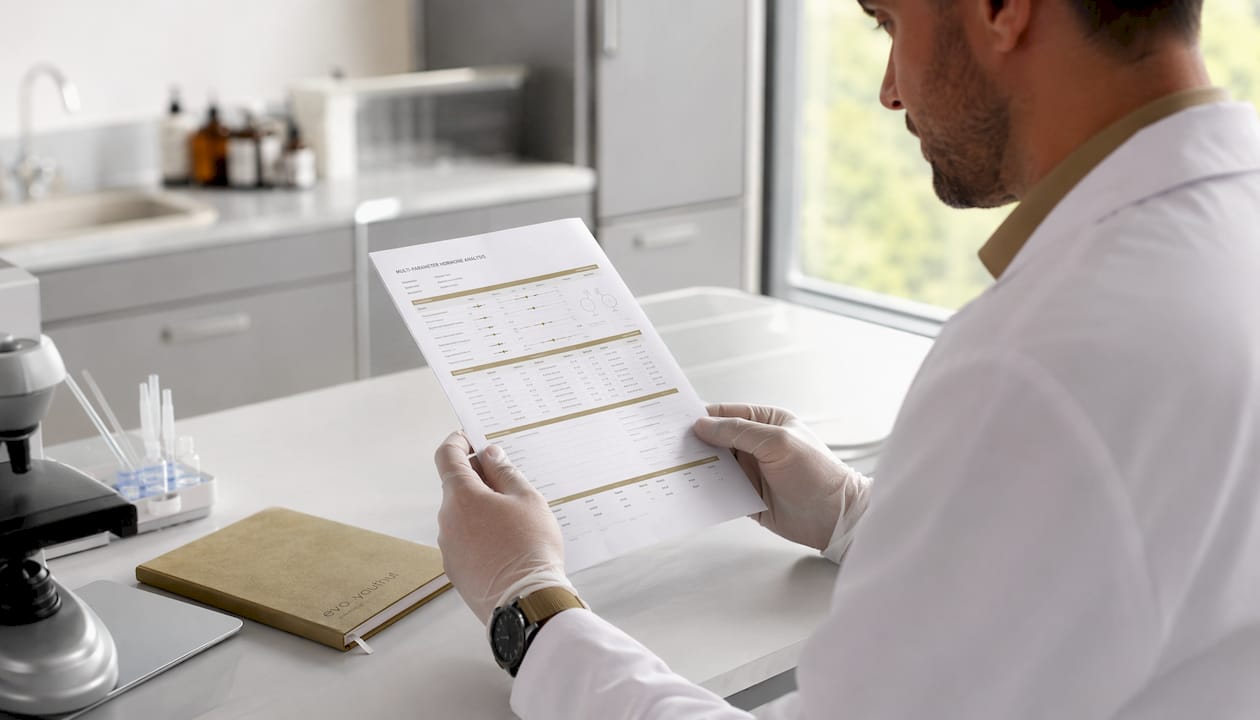
Standard lab reference ranges are broad by design, built to capture the middle of a large population. A testosterone level that falls within the “normal” range may still be suboptimal for a 38-year-old with fatigue and low libido. Functional medicine interpretation uses narrower optimal ranges and considers the relationships between markers, such as the cortisol-to-DHEA ratio or free versus total testosterone, rather than treating each number as independent.
Common treatment directions based on panel findings include:
- Lifestyle modification for mild imbalances: sleep optimization, resistance training, dietary changes to support insulin sensitivity
- Bioidentical hormone replacement therapy (BHRT) for estrogen, progesterone, or testosterone deficiencies, using hormones structurally identical to those your body produces
- Thyroid support, ranging from dietary iodine and selenium to prescription levothyroxine or combination T3/T4 therapy
- Adrenal support protocols for cortisol dysregulation, including adaptogenic herbs, stress reduction, and in some cases, low-dose DHEA supplementation
- Targeted medications for conditions like PCOS, hypothyroidism, or hypogonadism that require pharmaceutical management
Pro Tip: Get your baseline panel before starting any hormonal therapy. Results taken after you begin treatment reflect the therapy, not your body’s natural output. A true baseline gives your provider the reference point needed to adjust dosing accurately over time.
The hormonal ecosystem view treats relationships between markers as more informative than any single value. Testosterone-to-estradiol ratios, T3-to-reverse T3 ratios, and cortisol patterns across the day all tell a story that isolated numbers cannot.
What experts say about the clinical value and limits of hormone panels
The clinical utility of comprehensive hormone panels depends heavily on why the test is ordered. The Mayo Clinic Press notes that testing has limited value for many perimenopausal women experiencing age-appropriate hormonal changes, and that symptom-driven treatment often makes more clinical sense than broad hormone balancing through extensive testing. Many providers prioritize treating the symptom pattern rather than chasing numbers on a panel.
Cost and coverage matter. Direct-to-consumer comprehensive hormone panels can exceed $500, and insurance coverage is inconsistent. Without a clear clinical indication, the out-of-pocket cost may not translate into actionable findings.
The gap between standard and functional medicine approaches to hormone testing is real. Standard practice often checks one or two markers in isolation, TSH for thyroid function or total testosterone for male hormone health. A comprehensive hormonal evaluation adds metabolites, binding proteins, and circadian patterns, which can reveal imbalances a single-marker test would miss entirely.
Key limitations to keep in mind:
- Reference ranges are population averages, not individual optima. A result within range does not guarantee that level is right for you.
- Timing affects accuracy. Cortisol, testosterone, and several other hormones fluctuate enough throughout the day that an improperly timed draw can produce misleading results.
- Panels are not standalone diagnostic tools. They guide clinical thinking but require symptom correlation and medical history to be meaningful.
- Holistic screening context matters. Understanding why holistic screenings matter helps frame hormone panels as one layer of a broader health assessment rather than a complete answer on their own.
Used appropriately, with clear indications and skilled interpretation, a comprehensive hormone panel gives both patient and provider a level of diagnostic depth that isolated tests simply cannot match.
Key Takeaways
A comprehensive hormone panel provides the most clinical value when ordered for specific symptoms or conditions, interpreted in context, and paired with a personalized treatment plan.
| Point | Details |
|---|---|
| What the panel measures | Thyroid, adrenal, sex hormones, binding proteins, and metabolic markers from a single blood draw |
| Timing and preparation | Morning fasting draws before 10 AM and a 90-day pause from hormonal birth control improve accuracy |
| Interpretation requires context | Lab reference ranges are broad; optimal levels vary by individual, age, and symptom pattern |
| Cost and coverage | Direct-to-consumer panels often cost over $500 and are often not covered by insurance without a clinical indication |
| Treatment follows findings | Results guide options from lifestyle changes to bioidentical hormone replacement therapy based on the full clinical picture |
At evoyouthful in Wayzata, MN, hormone health is approached as exactly that: a system, not a checklist. If your symptoms have been dismissed or your previous tests came back “normal” despite how you feel, a more thorough evaluation may be the next step. evoyouthful offers bioidentical hormone replacement therapy and personalized treatment protocols designed around your results, your history, and your goals. Schedule a consultation to find out what your hormones are actually telling you.

Recommended
- Hormone Imbalance | Treatments in Wayzata, MN | evoyouthful Wayzata, MN
- Local Hormone Therapy Provider Steps: Your 2026 Guide | evoyouthful Blog
- Bioidentical Hormone Replacement Therapy | Restore balance from the inside out | evoyouthful Wayzata, MN
- What Is Metabolic Health? A Guide for Adults 30–60 | evoyouthful Blog
Ready to Start?
Schedule a Consultation
Have questions about what you just read? Our team is here to help.