

Local Hormone Therapy Provider Steps: Your 2026 Guide
Elizabeth Vogstrom, PA-C
evoyouthful Clinical Team
Master local hormone therapy provider steps with our 2026 guide. Secure personalized treatment for menopause or testosterone decline effectively.
Local Hormone Therapy Provider Steps: Your 2026 Guide
Local hormone therapy provider steps are the essential actions you take to secure personalized, effective treatment for menopause or testosterone decline. Hormone replacement therapy, known clinically as HRT or bioidentical hormone replacement therapy (BHRT), requires more than a simple prescription. It demands a specialized provider, thorough preparation, and ongoing monitoring. Skipping any step in this process puts your results and safety at risk. This guide walks you through every stage, from your first symptom log to your follow-up lab review, so you can move forward with confidence.
What preparation is necessary before contacting a local hormone therapy provider?
Preparation before your first consultation directly determines how personalized your treatment plan will be. A provider can only tailor a protocol to your specific needs if you arrive with clear, organized information. Showing up without this foundation wastes valuable consultation time and can lead to a generic approach that misses your actual needs.
Start by tracking your symptoms for at least one week before your appointment. Research confirms that symptom tracking before consultation improves provider evaluation and treatment personalization. Log the time of day, severity, and any triggers you notice for symptoms like hot flashes, sleep disruption, mood changes, low libido, fatigue, or brain fog.
Gather the following before you call a provider:
- Past lab results: Any blood panels from the last 12 months, especially hormone, thyroid, or metabolic panels
- Health history summary: Chronic conditions, surgeries, and relevant family history (cardiovascular disease, osteoporosis, hormone-sensitive cancers)
- Medication and supplement list: Include dosages and how long you have been taking each
- Symptom log: Your week-long record with dates, times, and severity ratings
- Written questions: At minimum, ask about delivery methods, monitoring frequency, and expected timelines for symptom relief
Pro Tip: Write your three most disruptive symptoms at the top of your question list. Providers prioritize what you prioritize, and naming your worst symptoms first sets the clinical agenda for the entire visit.
How do you identify and evaluate qualified hormone therapy providers in your area?
Provider selection is the single most consequential decision in this process. Only 6.8% of surveyed providers reported feeling adequately prepared to manage menopause. That statistic means the majority of general practitioners are not equipped to deliver the nuanced care hormone therapy requires.
Follow these steps to evaluate any provider you are considering:
- Verify specialized credentials. Look for the Menopause Society Certified Practitioner (MSCP) designation or equivalent hormone therapy training. Generic directories like Healthgrades or Zocdoc rarely filter for this specialization, so use verified directories from professional societies instead.
- Confirm experience with your specific condition. Ask directly how many patients the provider currently manages for menopause or low testosterone. Experience volume matters.
- Ask about delivery method options. Reputable providers offer a range of options including pellets, creams, patches, and injections. Providers who only offer compounded hormones and exclude FDA-approved options are a red flag.
- Ask about baseline lab testing. Any provider who offers a prescription without first ordering a comprehensive hormone and metabolic panel should be disqualified immediately.
- Assess their monitoring protocol. A qualified provider schedules follow-up visits and repeat labs. Hormone therapy is not a one-time prescription.
- Check for realistic communication. Avoid providers who promise dramatic results in unrealistic timeframes or who cannot explain their dosing rationale clearly.
Pro Tip: Call the clinic before booking and ask one question: “Do you order baseline labs before prescribing?” If the answer is vague or negative, move on. That single question filters out a significant portion of underqualified providers.
Proximity to your clinic also matters more than most patients expect. Frequent follow-up visits and lab draws are part of responsible care, and local clinic access makes consistent monitoring realistic rather than burdensome.

What to expect during your initial consultation with a hormone therapy provider
Your first appointment will feel different from a standard medical visit. Initial hormone therapy consultations typically last 45–60 minutes, significantly longer than a routine appointment. That extended time exists because a thorough assessment cannot be rushed.
A well-structured first consultation covers the following:
- Comprehensive symptom review: The provider works through your symptom log and asks follow-up questions about onset, frequency, and impact on daily function
- Full health history intake: This includes cardiovascular risk factors, bone density concerns, mental health history, and any prior hormone therapy experience
- Treatment goal discussion: You and your provider align on what success looks like, whether that is better sleep, restored libido, stable mood, or improved energy
- Baseline lab order: The provider orders a hormone panel covering estrogen, progesterone, testosterone, DHEA, thyroid markers, and metabolic indicators
- Physical examination: Some providers include blood pressure, body composition, or pelvic assessments depending on your symptoms and their scope of practice
Most national lab networks, including Quest Diagnostics and Labcorp, return results in 3–5 days. Your treatment plan is built after those results arrive, not before.
| Consultation element | What it accomplishes |
|---|---|
| Symptom review | Identifies priority concerns and guides lab selection |
| Health history intake | Screens for contraindications and risk factors |
| Treatment goal alignment | Sets measurable benchmarks for follow-up evaluation |
| Baseline lab order | Provides objective data to personalize dosing |
| Physical examination | Confirms clinical findings that symptoms alone cannot reveal |
How are treatment plans developed and monitored for hormone therapy patients?
A personalized treatment plan is built from your lab results, symptom profile, and health history together. No two protocols are identical, because hormone levels, metabolism, and symptom burden vary significantly between patients. Choosing a provider with specialized training is critical precisely because interpreting these variables requires clinical experience, not a formula.
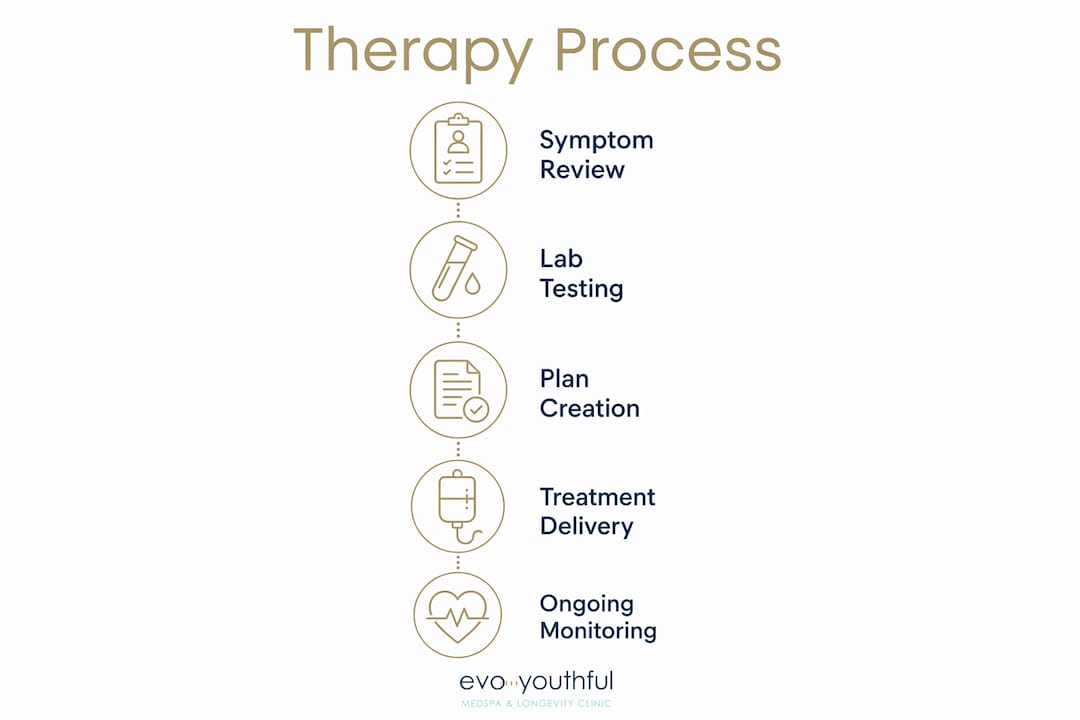
Your provider selects a hormone type, dose, and delivery method based on your results. Each delivery method has distinct characteristics worth understanding:
| Delivery method | Key consideration |
|---|---|
| Pellets | Consistent release over 3–6 months; requires in-office insertion |
| Creams or gels | Applied daily; absorption can vary by skin type |
| Patches | Steady transdermal delivery; changed every few days |
| Injections | Precise dosing; requires regular clinic or self-administration visits |
Most patients notice initial symptom changes within the first few weeks, though full benefit typically takes 2–3 months as hormone levels stabilize. Hormone therapy requires an ongoing clinical relationship with regular lab testing and follow-up, not a one-time prescription. The initial follow-up appointment typically occurs 4–6 weeks after starting treatment, with subsequent monitoring every 3–6 months.
Ongoing monitoring serves two purposes. First, it confirms your hormone levels are within the therapeutic range. Second, it creates the opportunity to adjust dosing as your body responds and your needs change over time. Patients who maintain consistent follow-up appointments achieve better long-term outcomes than those who treat their first prescription as the finish line.
Pro Tip: Keep a symptom journal between follow-up visits. Bring it to every appointment. Providers who review hormone levels alongside lifestyle factors consistently achieve better outcomes than those who rely on labs alone.
Key Takeaways
Following clear, sequential local hormone therapy provider steps, from symptom preparation through ongoing monitoring, is the most reliable path to safe, effective hormone therapy outcomes.
| Point | Details |
|---|---|
| Prepare before your first call | Track symptoms for at least one week and gather past labs before contacting any provider. |
| Verify specialized credentials | Look for MSCP designation or equivalent; avoid relying on generic medical directories. |
| Demand baseline lab testing | No provider should prescribe hormones without a comprehensive hormone and metabolic panel first. |
| Expect a longer first appointment | Initial consultations run 45–60 minutes; a shorter visit signals an incomplete assessment. |
| Commit to ongoing monitoring | Follow-up visits at 4–6 weeks and every 3–6 months thereafter protect your safety and results. |
What I have learned from watching patients navigate hormone therapy
The patients who get the best results from hormone therapy are not the ones who found the fastest provider. They are the ones who did the work before they walked in the door.
I have seen patients arrive with a week of detailed symptom notes and leave their first consultation with a genuinely personalized protocol. I have also seen patients who skipped preparation and ended up with a generic starting dose that took months to correct. The difference was not the provider’s skill. It was the quality of information the patient brought to the table.
The most common mistake I observe is selecting a provider based on convenience alone. Proximity matters for follow-up compliance, but it cannot substitute for specialization. A provider 20 minutes away who lacks hormone therapy training will cost you more time, money, and discomfort than one 45 minutes away who does this work every day.
The second mistake is treating the first prescription as the destination. Hormone therapy is a clinical relationship, not a transaction. Patients who communicate openly between visits, report symptom changes promptly, and show up for their follow-up labs consistently are the ones who reach stable, sustained improvement. The process rewards patience and active participation. That is not a limitation of the therapy. It is how good medicine works.
— Elizabeth Vogstrom, PA-C
evoyouthful offers personalized hormone therapy in Wayzata, MN
evoyouthful is a medspa and longevity clinic in Wayzata, MN, built around the principle that hormone health requires expert evaluation, not guesswork. The clinical team specializes in bioidentical hormone replacement therapy, offering personalized protocols based on comprehensive baseline labs and ongoing monitoring.

Whether you are managing menopause symptoms or addressing testosterone decline, evoyouthful designs treatment plans around your specific lab results, symptom profile, and health goals. The team offers multiple delivery methods and schedules follow-up care to track your progress and refine your protocol over time. If you are ready to work with a provider who treats hormone therapy as a clinical relationship rather than a quick fix, schedule a consultation at evoyouthful today.
FAQ
What are the first steps to find a local hormone therapy provider?
Start by tracking your symptoms for at least one week, then search for providers with verified hormone therapy credentials such as the MSCP designation through professional society directories rather than generic medical sites.
How long does the first hormone therapy consultation take?
Initial consultations typically last 45–60 minutes, which is significantly longer than a standard medical appointment, because a thorough symptom review, health history, and lab order all happen in that single visit.
What lab tests should a hormone therapy provider order before prescribing?
A reputable provider orders a comprehensive baseline panel covering sex hormones (estrogen, progesterone, testosterone), DHEA, thyroid markers, and metabolic indicators before writing any prescription.
How often do hormone therapy patients need follow-up visits?
The first follow-up typically occurs 4–6 weeks after starting treatment, with ongoing monitoring scheduled every 3–6 months to assess hormone levels and adjust dosing as needed.
What delivery methods does hormone therapy include?
Hormone therapy is available as pellets, creams, gels, patches, and injections. A qualified provider offers multiple options and selects the best fit based on your lab results, lifestyle, and clinical needs rather than defaulting to a single method.
Recommended
- Hormone Imbalance | Treatments in Wayzata, MN | evoyouthful Wayzata, MN
- Bioidentical Hormone Replacement Therapy | Restore balance from the inside out | evoyouthful Wayzata, MN
- BHRT for Men | Low Testosterone Treatment in Wayzata, MN | evoyouthful
- Holistic Anti-Aging Approach: Your Complete 2026 Guide | evoyouthful Blog
Ready to Start?
Schedule a Consultation
Have questions about what you just read? Our team is here to help.