
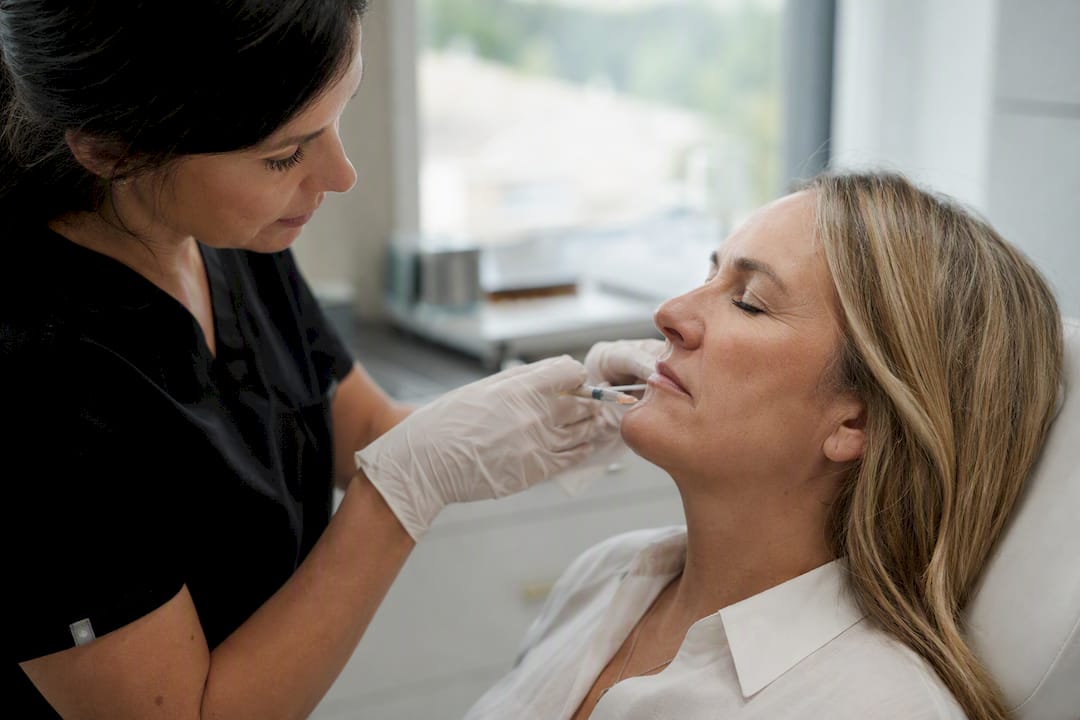
Smile Lines Filler: What Actually Works and Why
Elizabeth Vogstrom, PA-C
evoyouthful Clinical Team
Discover how smile lines filler can enhance your appearance! Learn why personalized consultations with licensed injectors lead to the best results.
Smile Lines Filler: What Actually Works and Why
Dermal fillers commonly soften smile lines, and most people see real improvement with a plan built around their own facial anatomy rather than a one-size approach. The action worth taking first isn’t picking a filler brand. It’s booking an anatomy-led consultation with a licensed injector who can tell you whether your nasolabial folds need direct filling, midface support, or a combination of both.
Two facts frame every decision that follows. Results from hyaluronic acid and other dermal fillers typically last between 6 and 18 months, depending on the product and how your tissue responds. And if hyaluronic acid (HA) filler is used, it can be dissolved with hyaluronidase, which makes it the lowest-risk starting point for most first-time patients.
- Fillers soften, they don’t erase. Deep, longstanding folds usually improve rather than disappear entirely.
- Provider skill matters more than product choice. An experienced injector who assesses your midface first tends to produce more natural results than one who fills the crease alone.
- HA remains reversible. That safety net is why most providers recommend it as a first treatment.
Key Takeaways
Smile line filler works best when the treatment plan addresses the actual cause of the fold, whether that’s midface volume loss, localized skin laxity, or both, rather than defaulting to direct injection alone.
| Point | Details |
|---|---|
| Diagnosis comes before product choice | Ask whether your fold needs direct filling, midface support, or both before discussing which filler to use. |
| HA offers the safest starting point | Hyaluronic acid fillers can be reversed with hyaluronidase if results aren’t right or complications occur. |
| Results last 6 to 18 months | Longevity depends on product type, injection depth, and your own metabolism and facial movement. |
| Know the emergency warning signs | Intense pain, skin blanching, or sudden vision changes require immediate medical attention. |
| evoyouthful uses anatomy-led planning | The clinic’s consultations assess midface and skin quality first, keep hyaluronidase on hand, and schedule structured follow-up. |
Table of Contents
- What Causes Smile Lines (Nasolabial Folds) to Form
- How Dermal Fillers Work on Smile Lines
- Which Filler Type Is Right for Your Smile Lines?
- What Happens During a Smile Line Filler Appointment
- How Long Does Smile Line Filler Last?
- Risks and Safety: What Can Go Wrong and When to Worry
- Aftercare: Protecting Your Results After Treatment
- How to Choose a Safe, Qualified Injector
- A Clinician’s Approach to Smile Line Assessment
- Why the Standard Advice on Smile Lines Misses the Point
- Ready to Discuss Your Smile Lines With evoyouthful
- Sources
What Causes Smile Lines (Nasolabial Folds) to Form
Smile lines, medically called nasolabial folds, run from the sides of your nose down to the corners of your mouth. They’re not just wrinkles from smiling. They’re a structural consequence of aging that involves several tissue layers at once.
As you age, the cheekbone itself loses density in a process called bone resorption, and the fat pads that once sat high on your cheeks lose volume and shift downward. The ligaments that anchor your skin to deeper structures loosen, letting skin and soft tissue descend. Repeated muscle movement from talking and smiling adds a mechanical crease on top of all that volume loss.
Here’s what determines your treatment path: whether your fold is driven mainly by lost midface volume, or by loose skin sitting directly over the crease with a fairly full cheek underneath. A useful self-check is to gently lift your cheek skin upward with your fingers in the mirror. If the fold visibly softens, volume loss above it is likely a major driver. If it barely changes, localized skin laxity around the fold itself is doing more of the work.
- Sunken cheeks with a deep fold: often points toward midface volume loss.
- Full cheeks but a persistent fold: often points toward localized skin laxity.
- Both present together: common, and it usually calls for a combined strategy.
This distinction is why an injector who examines your midface before touching the fold itself tends to get better, more natural-looking results than one who treats the crease in isolation.
How Dermal Fillers Work on Smile Lines
Filler works through three overlapping mechanisms: replacing lost volume, physically supporting sagging tissue from beneath, and in some formulations, stimulating your own collagen production over time. Which mechanism matters most for you depends on the anatomy question you just answered above.
Clinicians generally use one of two strategic approaches, sometimes both in the same visit:
- Direct injection into the nasolabial fold places filler right along the crease to fill it from within. This works well when localized skin laxity is the primary problem.
- Indirect midface, cheek, or temple augmentation lifts and supports the tissue above the fold, letting it settle into a smoother position without ever touching the fold itself. Documented AST (assessment, strategy, treatment) protocols describe this multi-plane approach in detail, and it’s frequently the better choice when volume loss above the fold is doing most of the damage.
Most experienced injectors favor a staged, conservative plan over one aggressive session. Small, layered amounts of product, sometimes called microboluses, placed across different tissue planes reduce the risk of lumps, asymmetry, or an overfilled look, and they let your injector reassess before adding more.
Pro Tip: Ask your injector to show you, on your own face, whether they plan to inject the fold directly, support your midface, or both. If they can’t explain the “why” behind the plan, that’s worth pausing on.
Which Filler Type Is Right for Your Smile Lines?
Not every filler category behaves the same way once it’s under your skin, and the right choice depends on how long you want results to last, how much structural support you need, and how much you value the ability to reverse the treatment if you don’t like it; for more details on selecting the best approach, see How to Choose Dermal Fillers for Personalised Results.
Hyaluronic acid (HA) fillers are the most commonly used option for nasolabial folds, and for good reason. HA integrates naturally with the water content already in your skin, produces a soft and predictable result, and can be dissolved with hyaluronidase if you’re unhappy with it or a complication arises. Most first-time patients start here.

Calcium hydroxylapatite (CaHA) fillers offer more structural lift and tend to stimulate some collagen production, which can make results feel more durable over time. It’s not reversible the way HA is, so it usually suits patients who have already had HA and know they want a firmer, longer-lasting effect.
Poly-L-lactic acid (PLLA), a biostimulator rather than a traditional filler, works gradually by encouraging your own collagen to rebuild over several months. It’s not an immediate-result product and isn’t reversible, which makes it a poor fit for anyone who wants to see the change right away or wants an easy undo option.
Fat grafting, using your own harvested fat, can address more significant volume loss with a permanent-feeling result, but it requires a separate surgical harvesting step and longer recovery than injectable fillers.
Selection really comes down to four questions your injector should walk through with you:
- How much tissue movement happens in your fold area when you talk or smile?
- How thick or thin is your skin in that zone?
- How long do you want the result to last, and how do you feel about touch-up visits?
- Do you want the option to reverse the treatment if you change your mind?
For most people weighing nasolabial folds filler cost against results, HA remains the sensible starting point because it lets you test the look before committing to something less reversible.
What Happens During a Smile Line Filler Appointment
A filler appointment for smile lines follows a fairly predictable sequence, though the details shift based on whether your injector is doing direct filling, midface support, or both.
- Consultation and photography. Your injector examines your face at rest and in motion, often photographing it to track results and plan volume placement.
- Marking and numbing. Treatment areas get marked, and a topical numbing cream is usually applied for 15 to 20 minutes before injection.
- Injection technique. Some injectors use a fine needle for precise placement directly in the fold; others prefer a blunt-tipped cannula, especially for midface work, because it reduces bruising risk and lets product spread more evenly under the skin.
- Gradual layering. Rather than injecting the full planned amount at once, most injectors add product in stages, checking the result from multiple angles before deciding whether more is needed.
A typical appointment runs 30 to 60 minutes total, and syringe usage for nasolabial folds alone often falls in the range of half a syringe to one and a half syringes of HA filler, though midface work can add more. Your injector will size this to your anatomy rather than a fixed number.
You’ll notice volume change immediately, but don’t judge the final look right away. Swelling and minor asymmetry are common for the first few days, and the true result usually settles in over one to two weeks as any bruising or puffiness resolves.
How Long Does Smile Line Filler Last?
Most patients can expect their results to last 6 to 18 months, a range confirmed by FDA guidance on dermal fillers. Where you land in that window depends on the product’s density and cross-linking, how deep it’s placed, your metabolism, and how much your face moves throughout the day.

A pooled analysis of randomized trials found that filler improvement to the nasolabial fold area peaks around one month after treatment, then gradually declines by the twelve-month mark. That decline is normal and expected, not a sign that anything went wrong.
Two things extend how long results feel visible. First, biostimulatory products like PLLA or CaHA tend to leave behind some collagen benefit even after the initial volume fades. Second, pairing filler with skin-quality treatments such as energy-based devices can improve the surrounding skin’s texture and tone, which makes the overall result read as fresher for longer even as the filler itself gradually metabolizes. Planning a maintenance visit before your results fully fade, rather than after, tends to produce the smoothest transition between treatments.
Risks and Safety: What Can Go Wrong and When to Worry
Most side effects from smile line filler are minor and resolve on their own within days. A pooled analysis of clinical trials found that roughly 58 percent of patients experienced some complication after treatment, but the vast majority were mild and transient: bruising, swelling, tenderness, or small lumps under the skin that smooth out as the product settles.
Rare but serious complications exist, and knowing the warning signs matters more than memorizing statistics.
If you notice intense, disproportionate pain during or shortly after injection, skin that turns unusually pale or mottled (blanching), a dusky or blue discoloration, or any sudden change in vision, treat it as an emergency. These are signs of vascular occlusion, where filler has compressed or entered a blood vessel, and rare cases have led to skin necrosis or vision loss when not addressed immediately.
Vascular occlusion is uncommon, but it’s the reason provider skill matters more here than almost any other cosmetic decision you’ll make. The Mayo Clinic notes that licensed injectors with strong anatomical knowledge reduce this risk significantly compared to unlicensed or inexperienced providers.
Before you book, your injector should be able to answer yes to each of these:
- Do you have detailed knowledge of facial vascular anatomy in the injection zones you’re treating?
- Do you keep hyaluronidase on hand and know the dosing protocol to reverse HA filler quickly if a vascular event occurs?
- Do you have a documented emergency plan, including who to call and what steps to take, if a complication happens during or after treatment?
- Will you tell me directly if you see or suspect a complication rather than waiting for me to notice something is wrong?
A provider who hesitates on any of these questions is not the right one for this procedure.
Aftercare: Protecting Your Results After Treatment
What you do in the days after treatment affects both how quickly swelling resolves and how well your results hold up.
- First 24 to 48 hours: Apply a cold compress in short intervals to reduce swelling, and skip heavy exercise, which raises blood flow to the face and can worsen bruising.
- First week: Avoid alcohol and blood-thinning medications unless your doctor has told you otherwise, since both increase bruising risk. Skip facials, saunas, and intense heat exposure.
- One to two weeks out: Most swelling and bruising has resolved by now, and this is typically when your true result becomes visible. Some injectors schedule a check-in visit here to assess symmetry.
- One to three months out: This is the window to evaluate whether you want additional product or a touch-up, since the filler has fully integrated by this point.
- Ongoing: Daily sun protection helps prevent the collagen breakdown that speeds up volume loss, and keeping your skin barrier healthy through good skincare supports how long your results visually hold.
How to Choose a Safe, Qualified Injector
The single decision that matters most in this entire process isn’t which filler you choose. It’s who’s holding the syringe. Use this checklist at your consultation.
Credentials to verify:
- A current medical license (physician, physician assistant, or nurse practitioner, depending on your state’s regulations).
- Documented injectable training and a track record of experience specifically with facial filler, not just general aesthetics.
What a real consultation should include:
- A hands-on assessment of your midface and skin, not just a glance at your fold.
- A clear explanation of whether your plan involves direct filling, indirect midface support, or both, and why.
- A full discussion of risks and written consent, not a rushed verbal summary.
- Confirmation that hyaluronidase is stocked on-site if HA filler is being used.
- A defined follow-up plan, including when to come back if you notice asymmetry or a complication.
Red flags to walk away from:
- Treatment offered in a salon or non-medical setting with no physician oversight.
- Pressure to buy more syringes than your consultation actually calls for.
- No clear answer when you ask what happens if something goes wrong.
Pro Tip: Bring a written list of these questions to your consultation. A good injector will welcome them; one who seems annoyed by them is telling you something. For more on separating medical-grade care from spa-level treatment, this comparison of medical-grade versus spa treatments is worth a read before you book anywhere.
A Clinician’s Approach to Smile Line Assessment
At evoyouthful, every filler consultation for smile lines starts with the same question: is this fold really about the crease, or is it about what’s happening in the midface above it? That distinction shapes the entire treatment plan.
The clinic’s approach favors conservative, layered treatment over aggressive single-session filling, with hyaluronidase kept on hand for every HA-based procedure and a structured follow-up scheduled within the first two weeks to check symmetry and settling.
Why the Standard Advice on Smile Lines Misses the Point
Most articles on this topic treat smile line filler as a shopping decision: which brand, which price point, how many syringes. That framing gets the priority backward. The research on nasolabial fold treatment is consistent on one point that consumer content largely ignores: outcomes depend far more on whether the injector correctly diagnoses the cause of your fold than on which product ends up in the syringe.
I’d push this further than most patient guides do. If your injector’s first move is to reach for a needle and start filling the crease itself, without assessing your midface, that’s a signal to ask more questions, not necessarily to walk away, but to understand their reasoning. The anatomy-first approach documented in AST protocols exists because direct filling alone often produces a result that looks “filled” rather than naturally restored.
What should you prioritize first? Not the filler type. The consultation itself, and whether your provider treats it as diagnosis rather than a sales conversation.
— Elizabeth Vogstrom, PA-C
Ready to Discuss Your Smile Lines With evoyouthful
If you’ve read this far, you already understand more about nasolabial fold treatment than most people walking into a consultation. The next step is putting that knowledge in front of someone who can examine your specific anatomy and tell you honestly whether your fold needs direct filling, midface support, or both.

At evoyouthful in Wayzata, MN, a filler consultation starts with a real assessment: photographs, a hands-on evaluation of your midface and skin quality, and a plan tailored to what’s actually causing your fold, not a generic syringe count. Our team keeps hyaluronidase on hand for every HA-based treatment and builds in a follow-up visit to check your results as swelling resolves. If skin quality is part of the picture, we can also talk through complementary options like physician-curated skincare or Botox and Dysport for dynamic lines that often show up alongside nasolabial folds.
Visit our dermal fillers page to see what’s involved and book a consultation to get an anatomy-led plan built around your face, not a template.
Sources
- Dermal Filler dos and don’ts | FDA
- Assessment, Strategy, and Treatment Protocol: Nasolabial Fold Assessment and Hyaluronic Acid Fillers (PMC)
- Systematic review and meta-analysis on tissue fillers for nasolabial folds (Aesth Plast Surg, 2021)
This article is general information, not a substitute for advice from a qualified doctor. Consult a qualified healthcare professional about your own circumstances before acting on anything here.
Recommended
Ready to Start?
Schedule a Consultation
Have questions about what you just read? Our team is here to help.