

Medical Grade vs Spa Treatments: What Actually Works
Elizabeth Vogstrom, PA-C
evoyouthful Clinical Team
Discover the key differences in medical grade vs spa treatments. Understand what works best for your skin and choose wisely for effective results.
Medical Grade vs Spa Treatments: What Actually Works
Medical grade treatments are clinically supervised procedures that target deep skin concerns using professional-strength products and licensed medical technology, unlike spa treatments, which focus on relaxation and surface hydration. The distinction matters because choosing the wrong option for your goal wastes time and money. If you want to reduce deep wrinkles, address pigmentation, or correct skin laxity, a spa facial will not deliver those results. Understanding the difference between medical grade vs spa treatments helps you invest in the right care from the start.
What are medical grade treatments and how do they work?
Medical grade treatments operate as clinical procedures performed by licensed physicians, nurse practitioners, or physician assistants. They use pharmaceutical-strength products and technologies that are not available over the counter or in standard spas. The goal is structural change in the skin, not temporary surface improvement.
These treatments work below the skin’s surface. Neuromodulators like Botox and Dysport relax the muscles that cause dynamic wrinkles. Laser resurfacing removes damaged outer layers and stimulates collagen production in deeper tissue. Chemical peels using AHAs and BHAs at clinical concentrations accelerate cell turnover and address pigmentation at a cellular level. Medical aesthetic treatments like biostimulators promote extracellular matrix remodeling and collagen production for long-term tissue health, which goes well beyond temporary surface improvement.
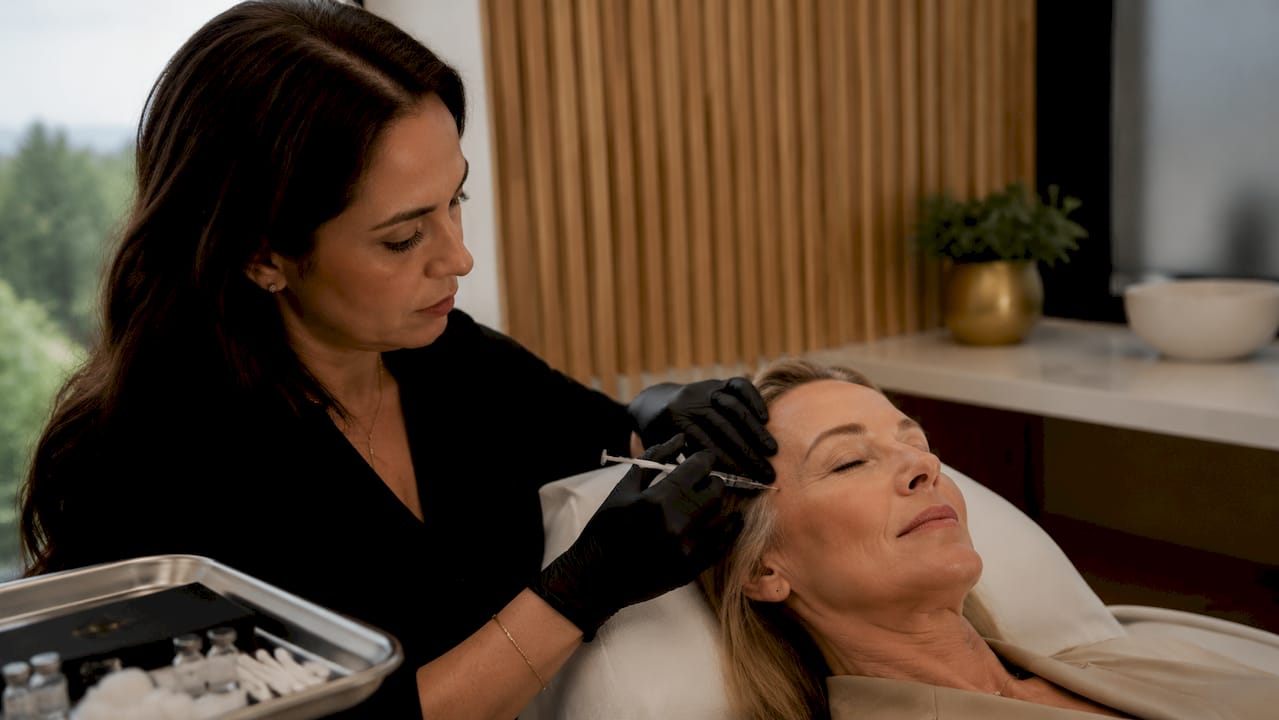
Treatment timelines are predictable and well-documented. Botox results appear within 7–14 days, with effects lasting approximately 3–4 months. Re-treatment is typically recommended every 12 weeks to maintain results. That consistency is what separates medical grade outcomes from the temporary glow of a spa visit.
Pro Tip: Consistent neuromodulator treatments do more than maintain results. Regular Botox treatments relax muscles before permanent static wrinkles develop, giving them a preventive function that most people overlook.
Medical grade treatments also require a diagnostic evaluation before any procedure begins. A licensed provider reviews your skin history, current concerns, and health background to build a personalized treatment plan. That individualized approach is what makes clinical results possible.
Key examples of medical grade procedures include:
- Neuromodulators (Botox, Dysport, Daxxify): reduce dynamic wrinkles and prevent new lines
- Dermal fillers: restore volume in cheeks, lips, and under-eye areas
- Laser resurfacing: corrects texture, pigmentation, and fine lines
- Microneedling with PRF: stimulates collagen using your body’s own growth factors
- Professional chemical peels: address acne, hyperpigmentation, and uneven tone
How do spa treatments differ in purpose and outcomes?
Spa treatments are designed for relaxation, surface hydration, and general wellness. They do not involve medical diagnosis, prescription-strength products, or procedures that affect living tissue beneath the skin. That is not a flaw. It is simply a different purpose.
A standard spa facial uses gentle exfoliation, steam, massage, and mild masks to cleanse pores and temporarily brighten the complexion. Aromatherapy massages reduce muscle tension and promote calm. Mineral bath therapies and hydrotherapy sessions support circulation and stress relief. These treatments feel restorative because they are. Spa treatments activate the parasympathetic nervous system, reducing cortisol and increasing mood-regulating neurotransmitters. That physiological shift explains why you feel genuinely better after a spa day, not just pampered.
The mental health benefits of spa therapies are measurable. Balneotherapy reduces stress by up to 46% and depression by up to 54%, with benefits lasting six months. Sleep quality improved by up to 67% and stress management by 50% in follow-up studies. Those numbers reflect real, lasting wellness improvements, even if the skin results are temporary.
Spa treatment benefits are real, but they operate on a different timeline and depth than clinical procedures. A hydrating facial gives your skin a temporary glow that fades within days. A relaxation massage reduces cortisol for hours to days. These outcomes are valuable for maintenance and mental wellness, but they do not correct deep wrinkles, acne scarring, or significant pigmentation.
How do medical grade and spa treatments compare in safety and oversight?
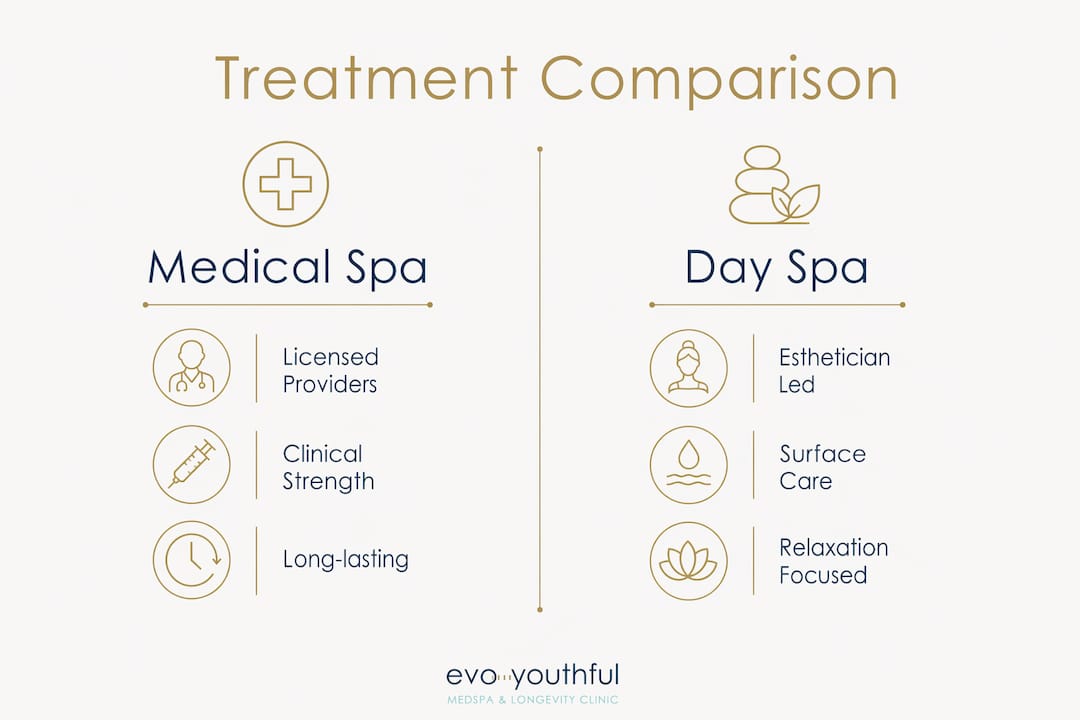
The most important difference between clinical and spa procedures is who is responsible for your care. Medical spas operate as medical practices under licensed physician oversight. A licensed provider screens each patient, designs a treatment plan, and manages any adverse reactions. Day spas do not operate under that framework.
| Factor | Medical spa | Day spa |
|---|---|---|
| Provider licensing | Licensed physician, NP, or PA required | Esthetician or massage therapist |
| Treatment depth | Below skin surface, living tissue | Outer skin layers only |
| Personalization | Diagnostic evaluation, custom plan | Standardized menu treatments |
| Adverse event management | Licensed provider on-site | Not equipped for clinical reactions |
| Regulatory oversight | Medical practice regulations apply | Cosmetology board regulations |
Medical spas are required to have licensed providers accountable for managing adverse events. Day spas are not. That difference matters when a treatment involves needles, lasers, or pharmaceutical-grade acids. A reaction to a clinical peel or injectable requires medical management, not just a cold compress.
Personalization is another key distinction. Diagnostic-driven treatment plans account for your individual skin health history, current medications, and specific concerns. Spa treatments follow a standardized menu. You choose a facial type, and the esthetician follows a set protocol. That works well for maintenance but cannot address complex skin conditions.
Pro Tip: Before booking any injectable or laser treatment, ask the clinic directly who performs the procedure and what their medical license covers. A legitimate medical spa will answer that question without hesitation.
How to choose between medical grade and spa treatments
Your skin goal is the clearest guide. Spa treatments are the right choice for relaxation, stress relief, surface hydration, and mild maintenance between clinical appointments. Medical grade treatments are the right choice when you want to correct a specific concern, such as deep wrinkles, acne scarring, uneven pigmentation, or skin laxity.
Use these questions to guide your decision:
- What is your primary goal? If it is relaxation and a temporary glow, a spa facial delivers that well. If it is visible correction of a skin concern, you need a clinical procedure.
- How long do you want results to last? Spa results fade within days to a week. Medical grade results last months to years depending on the treatment.
- Do you have a specific skin condition? Acne, rosacea, hyperpigmentation, and significant aging require clinical assessment and treatment-grade products.
- What is your budget and time commitment? Medical grade treatments cost more per session but deliver longer-lasting results. Spa treatments are more accessible for regular visits.
- Do you have any medical conditions or take medications? Some medical grade treatments interact with medications or are contraindicated for certain conditions. A licensed provider screens for this at consultation.
Many people benefit from both. Regular spa visits support wellness and skin maintenance. Scheduled medical grade treatments address deeper concerns on a clinical timeline. The two approaches work well together when you understand what each one does.
What are popular examples of each treatment type?
Knowing specific treatments by name helps you ask the right questions at a consultation. The table below compares common options across both categories.
| Treatment | Type | Expected onset | Duration of results |
|---|---|---|---|
| Botox / Dysport | Medical grade | 7–14 days | 3–4 months |
| Dermal fillers | Medical grade | Immediate | 6–18 months |
| PRF injections | Medical grade | 2–4 weeks | 6–12 months |
| Laser resurfacing | Medical grade | 1–2 weeks post-healing | 1–3 years |
| Hydrating facial | Spa | Immediate | 3–7 days |
| Aromatherapy massage | Spa | During session | Hours to days |
| Mineral bath therapy | Spa | During session | Days |
Medical grade facials use stronger ingredients and procedures under medical supervision to induce long-term skin changes. Spa facials focus on surface hydration and relaxation. The compounding effects of medical grade treatments over time yield structural skin improvement that spa facials cannot replicate.
Medical grade treatments do carry more risk than spa services. Injectables can cause bruising, swelling, or asymmetry if performed incorrectly. Lasers can cause burns or pigment changes in the wrong hands. That is why licensed medical oversight is not optional. It is the safety mechanism that makes these treatments worth the investment.
Home care products also play a role in extending medical treatment results. Physician-curated skincare lines use clinical-grade retinoids, growth factors, and antioxidants that reinforce in-office treatment outcomes between appointments.
Key Takeaways
Medical grade treatments deliver clinically supervised, long-lasting skin correction, while spa treatments provide real but temporary wellness and surface benefits that serve a different, equally valid purpose.
| Point | Details |
|---|---|
| Clinical oversight is the core difference | Medical spas require licensed providers; day spas do not, which affects safety and treatment depth. |
| Medical grade results last months | Botox lasts 3–4 months; fillers last 6–18 months; spa results typically fade within days. |
| Spa treatments have measurable wellness benefits | Balneotherapy reduces stress by up to 46% and depression by up to 54% with effects lasting six months. |
| Match treatment to your goal | Choose spa for relaxation and maintenance; choose medical grade for targeted skin correction. |
| Personalization requires a clinical evaluation | Medical grade treatment plans are built around your individual skin history, not a standard menu. |
What I’ve learned from patients who came to us after spa disappointment
Patients often arrive at a medical spa after months of regular spa facials that did not move the needle on their skin concerns. They are not wrong to feel frustrated. They were sold a result that the treatment was never designed to deliver.
The confusion is understandable. Marketing language blurs the line between spa and clinical care. Words like “rejuvenating,” “resurfacing,” and “corrective” appear on spa menus and medical treatment lists alike. But a spa facial using gentle exfoliation and a hydrating mask is not the same as a clinical skin resurfacing procedure using medical-grade technology. One refreshes. The other rebuilds.
What I tell every new patient is this: spa treatments are not inferior. They serve a real purpose. Stress reduction, cortisol management, and skin maintenance all matter for long-term health. But if you have a specific skin concern you want corrected, you need a licensed provider who can assess your skin, design a plan, and use tools that actually reach the problem. Hoping a hydrating facial will resolve deep acne scarring is like hoping a good night’s sleep will fix a broken bone. Rest helps. It does not repair.
The most successful patients I work with use both. They come in for scheduled medical grade treatments and maintain their skin between visits with spa services and physician-grade home care. That combination produces the best long-term outcomes I have seen in practice.
— Elizabeth Vogstrom, PA-C
Experience medical grade care at evoyouthful in Wayzata, MN
evoyouthful is a medical aesthetics and wellness clinic in Wayzata, MN, built around licensed provider oversight and personalized treatment planning. The clinic offers Botox, Dysport, and Daxxify for wrinkle reduction, dermal fillers, PRF injections, and advanced skin rejuvenation treatments including plasma laser therapy and RF microablation. Beyond aesthetics, evoyouthful provides peptide therapy, ExoMind cognitive support, and bioidentical hormone replacement therapy for patients seeking whole-body wellness alongside skin care.
Every treatment at evoyouthful begins with a thorough consultation to match your goals with the right clinical approach. If you are ready to move beyond surface-level results and invest in treatments that deliver real, lasting change, schedule a consultation with the evoyouthful team today.
FAQ
What is the main difference between medical grade and spa treatments?
Medical grade treatments are performed by licensed medical providers using clinical-strength products and technologies that affect living tissue beneath the skin. Spa treatments focus on surface hydration, relaxation, and general wellness using gentler, non-prescription methods.
Are spa treatments worth it if I want better skin?
Spa treatments deliver real benefits for stress reduction, surface hydration, and skin maintenance, but they do not correct deep wrinkles, acne scarring, or significant pigmentation. For visible skin correction, medical grade procedures are the appropriate choice.
How long do medical grade treatment results last?
Results vary by treatment. Botox and Dysport last approximately 3–4 months, dermal fillers last 6–18 months, and laser resurfacing results can last 1–3 years. Consistent treatment schedules extend and compound these outcomes over time.
Is a medical spa safer than a day spa for skin treatments?
Medical spas are required to have licensed providers on-site who are accountable for managing adverse events, which day spas are not equipped to do. That oversight makes medical spas the appropriate setting for any procedure involving needles, lasers, or pharmaceutical-grade products.
Can I combine spa and medical grade treatments?
Yes, and many patients benefit from doing exactly that. Medical grade treatments address specific skin concerns on a clinical timeline, while regular spa visits support maintenance, stress management, and general skin health between appointments.
Recommended
- Skincare | Physician-curated skincare lines for clinical results at home | evoyouthful Wayzata, MN
- AgeJET Plasma Skin Therapy | Comprehensive skin rejuvenation with plasma energy | evoyouthful Wayzata, MN
- Fine Lines & Wrinkles | Treatments in Wayzata, MN | evoyouthful Wayzata, MN
- Body Skin Tightening | Treatments in Wayzata, MN | evoyouthful Wayzata, MN
Ready to Start?
Schedule a Consultation
Have questions about what you just read? Our team is here to help.