

3–6 Week Clinician Led Sleep Plan for Midlife Women: Progesterone Explained
Elizabeth Vogstrom, PA-C
evoyouthful Clinical Team
Clinician-led, evidence-based guide for midlife women on progesterone for sleep: who benefits, expected 100–300 mg dosing, a 3–6 week timeline, and safety...
3–6 Week Clinician Led Sleep Plan for Midlife Women: Progesterone Explained
Oral micronized progesterone, sold in the United States as Prometrium, has real clinical evidence behind it for improving sleep in peri- and postmenopausal women. The typical bedtime dose generally ranges within a common clinical spectrum, and most women need several weeks of nightly use before benefits fully settle in. Because of side effects like morning grogginess and mood changes, this is a conversation to have with a clinician, not a solo experiment.
TL;DR:
- Progesterone improves sleep in peri- and postmenopausal women primarily by supporting slow-wave sleep and reducing middle-of-the-night awakenings.
- Real clinical benefits typically emerge after three to six weeks of nightly use, with dosages ranging from 100 to 300 mg depending on response.
- Side effects like morning grogginess and mood changes occur more frequently at higher doses or when taken too early in the evening, requiring medical oversight.
- Progesterone’s calming effect is linked to its metabolite allopregnanolone acting on GABA-A receptors, differentiating it from traditional sleep medications.
- Proper evaluation should include screening for sleep apnea and other causes, with hormone therapy being a targeted approach for sleep-maintenance issues related to hormonal decline.
Table of Contents
- How Progesterone Affects the Brain and Sleep Physiology
- What the Clinical Trials and Reviews Actually Show
- Who Benefits Most and How Long It Takes
- Side Effects, Contraindications, and Safety Checks
- Where Progesterone Fits Alongside Estrogen and Other Sleep Treatments
- A Clinician’s Approach to Assessment and Titration
- Questions to Bring to Your Next Appointment
- The Verdict on Progesterone as a Sleep Strategy
- A Clinician-Led Path to Better Hormonal Sleep Support
- Key Studies Worth Reading Further
- Sources
How Progesterone Affects the Brain and Sleep Physiology
Progesterone doesn’t sedate you the way a sleep aid does. It metabolizes into a compound called allopregnanolone, and allopregnanolone binds to GABA-A receptors, which are the same receptors targeted by benzodiazepines and many hypnotic medications. That’s the biological reason progesterone tends to feel calming rather than knockout-strength.
This pathway does two things for sleep, according to a review of reproductive hormones and sleep:
- Shortens the time it takes to fall asleep by quieting overactive neural signaling
- Supports slow-wave sleep and helps reduce middle-of-the-night wakefulness
Progesterone also acts as a mild respiratory stimulant. That matters more than it sounds like it should, because hormone changes influence ventilatory drive and can shift the risk profile for sleep-disordered breathing. It’s a gentler mechanism than most prescription sleep medications, which is part of why it behaves differently in the body.
Pro Tip: If you’ve tried a sleep medication and felt groggy or “hungover” the next day, ask your provider whether hormone-related insomnia might be the underlying driver instead of primary insomnia.
What the Clinical Trials and Reviews Actually Show
A 2020 systematic review and meta-analysis of randomized controlled trial data found that micronized progesterone improved sleep onset latency and several self-reported sleep measures, mostly in postmenopausal women. That’s the strongest evidence base we have on this topic, and it’s worth taking seriously.
Polysomnography data, the objective sleep-lab measurement, tells a messier story. Some trials report meaningful gains in slow-wave sleep and reduced wake-after-sleep-onset with progesterone doses around 300 mg nightly, but results vary between studies, partly because dosing, formulations, and study length weren’t standardized. One randomized trial comparing hormone regimens found that estrogen paired with micronized progesterone improved sleep efficiency by roughly 8% compared to estrogen paired with medroxyprogesterone acetate, a synthetic progestin. That’s a meaningful distinction: not all progestogens behave the same way in the brain.
Patient-reported improvements in sleep quality often outpace what shows up on an EEG tracing. A review on subjective versus objective sleep outcomes notes that this gap doesn’t make the improvement less real. Feeling rested is a legitimate clinical endpoint, even when the polysomnography numbers move less dramatically.
The limitations are real too. Many trials are small, some combined progesterone with estrogen, making it hard to isolate progesterone’s individual contribution, and dosing protocols differ across studies. That heterogeneity doesn’t erase the signal, but it means no one should expect uniform, guaranteed results.
Who Benefits Most and How Long It Takes
Progesterone tends to help a fairly specific group of women, and understanding whether you fit that profile matters more than the dose itself.
- Sleep-maintenance insomnia. Women who fall asleep fine but wake repeatedly through the night, especially in perimenopause and postmenopause, tend to see the clearest benefit.
- Vasomotor symptoms alongside sleep trouble. If hot flashes or night sweats are also disrupting sleep, progesterone paired with estrogen often addresses both issues at once.
- Hormonal timing. Declining progesterone in the years around menopause removes a naturally calming influence on the nervous system, and replacing it can restore some of that stability.
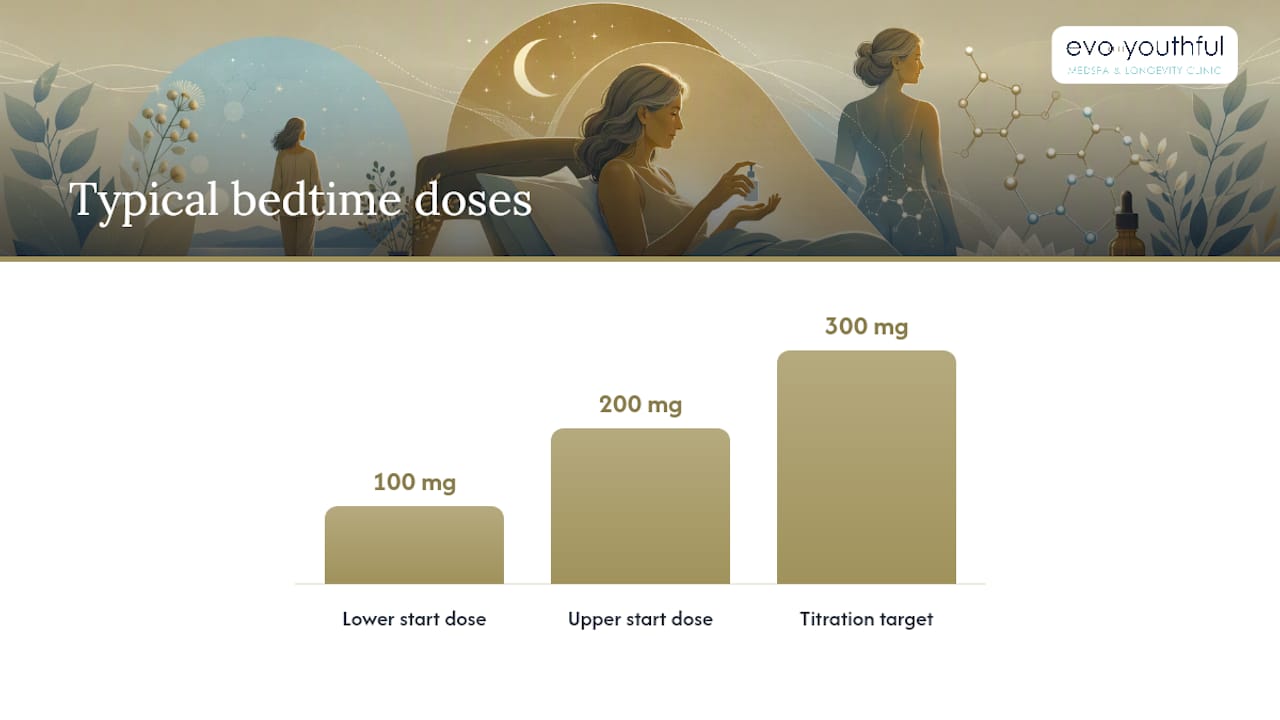
Clinicians commonly start with oral micronized progesterone at bedtime, often in the 100 to 200 mg range, and titrate upward toward 300 mg based on response and tolerance, per clinical trial and clinician guidance. Some women notice drowsiness the very first night. Others don’t feel a clear shift until three to six weeks of consistent nightly use, which is why judging the treatment too early is one of the most common mistakes.
Pro Tip: Take it at bedtime, not earlier in the evening. The drowsiness effect is the whole point, and daytime dosing just invites unwanted grogginess.
Side Effects, Contraindications, and Safety Checks
Progesterone is generally well tolerated, but it’s not free of downsides, and some of them matter enough to flag before you start.
- Morning grogginess, especially at higher doses or when taken too early in the evening
- Dizziness, mild breast tenderness, or breakthrough spotting
- Mood changes, including new or worsening low mood in some women
- Interaction risk with other central nervous system depressants, including certain sleep medications and alcohol
- Caution in women with significant liver impairment, since progesterone is metabolized hepatically
Before prescribing, a clinician should confirm pregnancy status if relevant, review the full medication list for interaction risk, and screen for obstructive sleep apnea. That last point matters because progesterone won’t fix apnea-driven fragmented sleep, and treating the wrong root cause wastes time. A partner resource on clinical safety screening before starting a new therapy makes a similar point: side-effect counseling upfront prevents most problems down the line.
Where Progesterone Fits Alongside Estrogen and Other Sleep Treatments
Progesterone and estrogen solve different pieces of the same puzzle. Estrogen mainly calms the hot flashes and night sweats that jolt you awake. Progesterone stabilizes sleep architecture itself through the GABA-A pathway described earlier.
- CBT-I stays first-line for chronic insomnia unrelated to hormonal shifts, and it often outperforms medication long-term.
- Progesterone is a strong adjunct when hormonal decline is clearly part of the picture, particularly for sleep-maintenance problems.
- Sleep apnea needs its own evaluation. If snoring, gasping, or witnessed pauses in breathing are present, a CPAP referral belongs ahead of hormone therapy, not behind it.
A Clinician’s Approach to Assessment and Titration
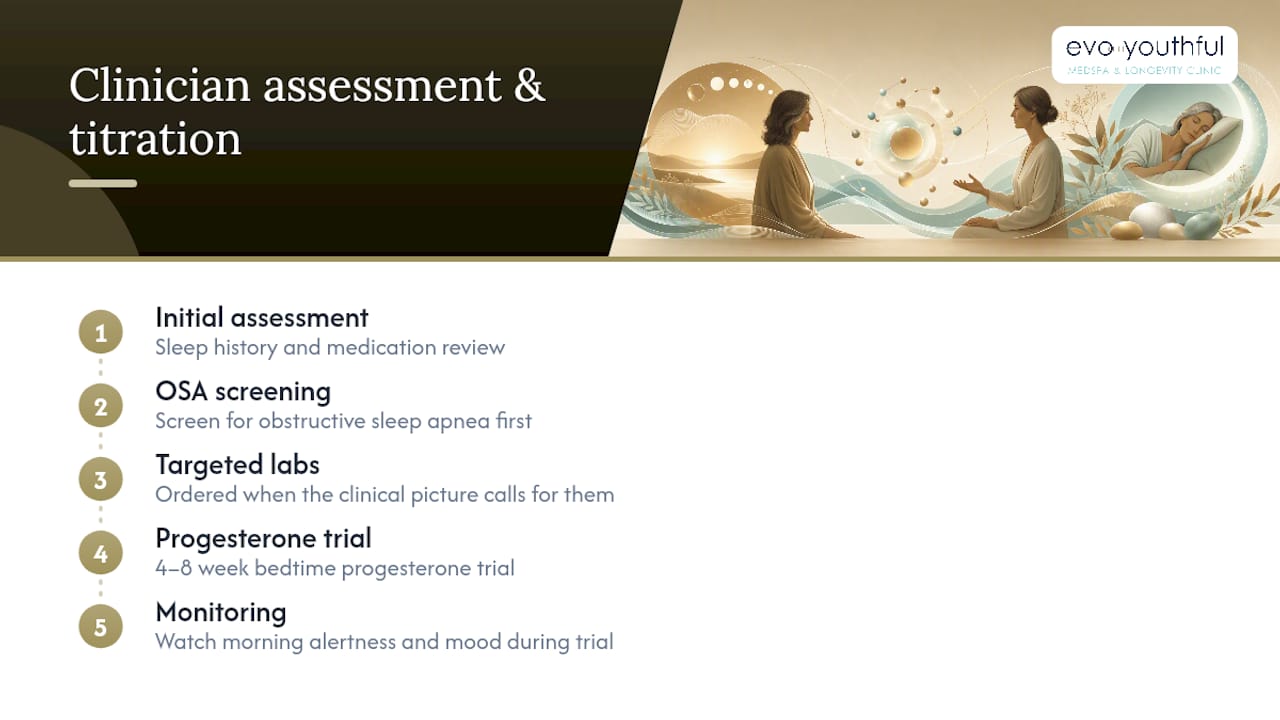
A thorough evaluation starts with sleep history, a full medication review, and screening for obstructive sleep apnea before assuming hormones are the cause. Targeted labs come next when the picture calls for them. Most clinicians run a four to eight week trial of bedtime progesterone, watching morning alertness and mood along the way rather than judging results after a few nights.
At evoyouthful, this fits inside a broader six to eight week plan built around bioidentical hormone replacement therapy, addressing sleep, hormone imbalance, and related midlife symptoms together rather than treating insomnia in isolation.
Questions to Bring to Your Next Appointment
Walking into an appointment with the right questions saves time and gets you a real plan instead of a vague suggestion to “try it and see.”
- Is progesterone appropriate given my symptoms, medical history, and current medications?
- What starting dose and form make sense for me, and how will we adjust it?
- Should I be screened for sleep apnea before we assume this is hormonal?
- What follow-up timeline should I expect, and what counts as working?
- What symptoms, like worsening mood or excessive morning sedation, mean we should stop or change course?
The Verdict on Progesterone as a Sleep Strategy
The evidence here is genuinely encouraging, but it’s also narrower than most headlines suggest. This isn’t a universal insomnia cure. It’s a targeted therapy for a specific biological cause: the loss of a calming neurosteroid pathway as progesterone declines around menopause. When that’s the actual driver, the research, including the 2020 meta-analysis, supports real improvement.
Where conventional advice falls short is the impatience baked into how people try it. Expecting results after two nights and quitting when nothing dramatic happens misses the point entirely; this is a three to six week commitment, not an overnight fix. It also gets miscast as a simple sleep pill when it’s better understood as hormone therapy with a sleep benefit attached, which means mood and side effects deserve just as much attention as the sleep numbers.
My take: don’t self-diagnose hormonal insomnia and don’t self-treat it either. Get screened for sleep apnea first, rule out other causes, and if hormones are genuinely the driver, work with a clinician who will titrate thoughtfully and check in past the first week.
— Elizabeth Vogstrom, PA-C
A Clinician-Led Path to Better Hormonal Sleep Support
Reading about mechanisms and trial data only gets you so far. What actually changes your sleep is an individualized evaluation, not a guess at a dose based on an article. evoyouthful offers exactly that: a clinician-led bioidentical hormone replacement therapy evaluation built around your actual hormone levels, sleep pattern, and health history, rather than a one-size-fits-all prescription.

A first visit typically includes a detailed symptom and sleep-history review, lab planning when indicated, and a personalized dosing strategy that gets adjusted across a six to eight week follow-up window. If hormonal decline is contributing to your sleep disruption, this is how you find out for certain instead of guessing. Explore evoyouthful’s hormone imbalance treatment options in Wayzata, MN, and schedule an evaluation to build a sleep plan around your own biology.
Key Studies Worth Reading Further
For readers who want to go deeper: the 2020 systematic review and meta-analysis on micronized progesterone and sleep, the hormone replacement therapy sleep comparison trial, and the postmenopausal polysomnography study on slow-wave sleep changes.
This article is general information, not a substitute for advice from a qualified doctor. Consult a qualified healthcare professional about your own circumstances before acting on anything here.
Sources
- Efficacy of Micronized Progesterone for Sleep: A Systematic Review and Meta-analysis of Randomized Controlled Trial Data
- Clinical trial evidence and week-by-week guidance for oral micronized progesterone
- Sleep in menopause: differential effects of two forms of hormone replacement therapy
- Sleep across the lifespan: role of reproductive hormones (review)
Recommended
Ready to Start?
Schedule a Consultation
Have questions about what you just read? Our team is here to help.