

Menopause Brain Fog: Symptoms, Causes, and What Helps
Elizabeth Vogstrom, PA-C
evoyouthful Clinical Team
Discover what is menopause brain fog and how to manage symptoms like memory lapses and concentration issues. Learn effective coping strategies.
Menopause Brain Fog: Symptoms, Causes, and What Helps
Menopause brain fog refers to the subjective cognitive difficulties, including memory lapses, trouble concentrating, and word-finding struggles, that commonly arise during perimenopause and the menopause transition. The reassuring news: for most women, these changes are temporary and distinct from dementia. If your symptoms are mild to moderate and tied to this life stage, the most useful first step is addressing the secondary drivers, particularly sleep disruption and mood, while tracking what you notice.
- Common symptoms: forgetting words mid-sentence, misplacing items, losing a train of thought, difficulty concentrating at work
- Typical timing: most pronounced during perimenopause; often improves after the transition
- Seek evaluation promptly if: memory loss is rapid, daily living skills are declining, you notice new neurological signs, or a family member is concerned about your functioning
Statistic: In the Study of Women’s Health Across the Nation (SWAN), A substantial proportion of premenopausal women reported forgetfulness, with an increase observed in women experiencing early perimenopause — confirming these complaints are real, common, and tied to the hormonal transition.
Table of Contents
- What does “menopause brain fog” actually mean?
- What are the typical symptoms and when do they peak?
- Why does menopause cause brain fog?
- How is menopause brain fog different from dementia?
- Practical self-care strategies that can reduce brain fog now
- What medical options can a clinician offer?
- When should you contact a clinician?
- Key Takeaways
- A clinician’s perspective on what these symptoms mean for you
- How evoyouthful supports women navigating brain fog
- Useful sources and further reading
What does “menopause brain fog” actually mean?
“Brain fog” is not a clinical diagnosis. It is a patient-reported description of specific cognitive changes that many women notice during the menopause transition, and it deserves to be taken seriously even without a formal diagnostic label.
The cognitive domains most commonly affected are verbal learning and memory, sustained attention, working memory, and word retrieval. Women often describe the sensation as their brain feeling wrapped in cotton wool: a name that was always automatic suddenly won’t come, a thought evaporates before it can be finished, or a grocery list that used to live in memory now requires a written backup.
What makes this clinically meaningful is that objective cognitive test differences across menopause stages are often small, even when subjective complaints are prominent. That gap between “I feel foggy” and “my test scores are normal” can be confusing, but it does not mean the experience isn’t real. It means the brain is working harder to produce the same output, and that extra effort shows up as fatigue, frustration, and reduced mental stamina rather than a measurable global decline.
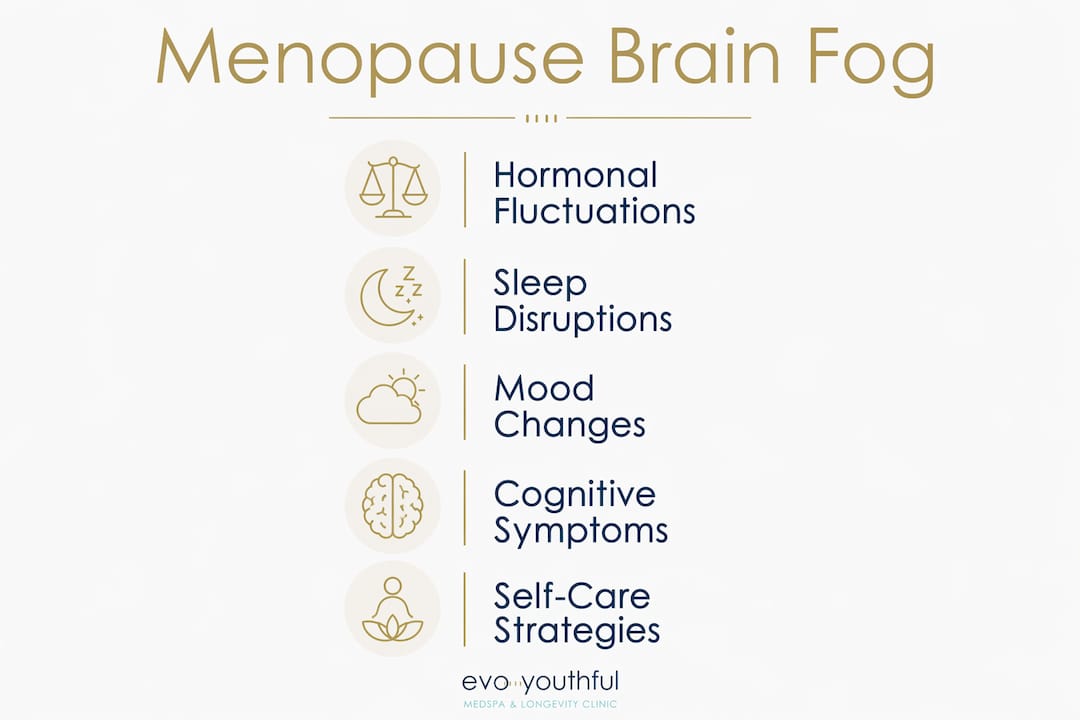
What are the typical symptoms and when do they peak?
Symptoms vary in severity from mildly annoying to genuinely disruptive. Most women fall somewhere in the middle.
Common symptoms of menopause brain fog include:
- Forgetting words or names during conversation
- Difficulty holding a thought long enough to act on it
- Trouble concentrating on reading, meetings, or complex tasks
- Slowed processing speed, feeling mentally sluggish
- Misplacing everyday items more often than usual
- Increased reliance on lists, reminders, and calendar alerts
| Symptom Domain | What Women Report | Context |
|---|---|---|
| Verbal memory | Forgetting names, appointments, recent conversations | Most commonly reported complaint |
| Attention | Difficulty staying focused during meetings or reading | Worsens with sleep disruption |
| Working memory | Losing a train of thought mid-task | Linked to anxiety and hot flashes |
| Processing speed | Feeling mentally slower than usual | Often improves post-menopause |
Timing matters. Cognitive complaints tend to peak during perimenopause, the years of hormonal flux leading up to the final menstrual period. The SWAN trial found that perimenopausal women temporarily have trouble learning new information, with performance often improving as women move past the transition. That pattern suggests the hormonal instability of perimenopause, not simply lower estrogen levels, plays a central role. Cognitive changes that appear years after menopause are more likely related to aging than to the transition itself.
Why does menopause cause brain fog?
The short answer is that estrogen does far more than regulate reproduction. Estrogen receptors are present throughout the brain, including in regions critical for memory and attention such as the hippocampus and prefrontal cortex. As estradiol levels decline and fluctuate during perimenopause, the brain’s ability to regulate neurotransmitters, manage inflammation, and maintain energy metabolism is affected.
“With estrogen receptors in virtually every organ, our bodies are highly sensitive to hormone fluctuations. Estrogen loss can announce itself in how our brain works.” — Dr. Heather Hirsch, Harvard Health
Declining androgens, including testosterone, add another layer. Both hormones support neuronal function and mood regulation, so their simultaneous reduction compounds the effect.
Secondary contributors often amplify the hormonal picture significantly:
- Sleep disruption: Night sweats and insomnia fragment sleep architecture, and poor sleep alone is enough to impair memory consolidation and attention the next day.
- Hot flashes: Vasomotor symptoms disrupt sleep and may directly affect brain blood flow.
- Anxiety and depression: Research shows that cognitive complaints correlate moderately with anxiety and depression even when objective performance differences are small, making mood a high-yield treatment target.
- Medication effects: Sedatives, antihistamines, and some blood pressure medications can blunt cognition independently of hormones.
The interaction is cumulative: hormonal flux disrupts sleep and mood, which in turn amplify subjective cognitive complaints, creating a cycle that feels worse than any single factor would alone.
How is menopause brain fog different from dementia?
This is the question most women are quietly asking, and the answer is genuinely reassuring. Dementia before age 64 is uncommon, and menopause-related cognitive changes have a very different clinical profile than neurodegenerative disease.
Key distinguishing features:
- Menopause brain fog typically begins in the mid-40s to early 50s, tied to hormonal transition, not progressive neurodegeneration
- Objective test performance usually remains within the normal range, even when complaints feel significant
- Skills and daily living abilities stay intact; the difficulty is with efficiency and retrieval, not with fundamental function
- Symptoms often fluctuate with sleep quality, stress, and hot flash severity rather than progressing steadily
Red flags that warrant prompt medical evaluation:
- Rapidly worsening memory over weeks or months
- Difficulty with familiar tasks like managing finances, cooking, or driving
- Getting lost in familiar places
- Significant personality or behavior changes noted by others
- New neurological signs: speech changes, coordination problems, or unexplained falls
If any of these apply, contact your clinician promptly. Bring a list of current medications, a brief symptom timeline, and, if possible, a trusted person who can describe what they have observed. A clinician will likely consider a medical history review, mood and sleep screening, thyroid and metabolic labs, and cognitive screening tools such as the MoCA.
Practical self-care strategies that can reduce brain fog now
Self-care is not a consolation prize here. Addressing the modifiable drivers of brain fog, especially sleep and mood, often produces noticeable cognitive improvement without any prescription.
Sleep first. Treating night sweats and insomnia is one of the highest-yield steps you can take. Keep the bedroom cool, limit caffeine after noon, and establish a consistent sleep and wake time. If night sweats are severe, discuss treatment options with your clinician before assuming the cognitive symptoms are primary.

Move regularly. Regular aerobic exercise improves cognition and supports mood, sleep, and vascular health simultaneously. Strength training adds metabolic and hormonal benefits. Aim for consistency over intensity, especially when energy is low.

Address mood directly. Anxiety and depression are not just emotional problems during menopause; they are cognitive ones. Cognitive behavioral therapy (CBT) is effective for both mood and sleep, and treating mood often reduces cognitive complaints more than any supplement. If you are struggling, anxiety and mood support is worth exploring as part of a broader care plan.
Use organizational tools without apology. Sticky notes, phone reminders, and written lists are not signs of failure. They are smart adaptations that free up working memory for more demanding tasks.
Review your medications and substances. Alcohol, even in moderate amounts, disrupts sleep and impairs memory consolidation. Sedatives and antihistamines can blunt cognition. Ask your clinician whether any current medications may be contributing.
Pro Tip: Dr. Hadine Joffe of Harvard Medical School recommends a simple focus reset: when you notice your mind scattering, slow down and commit to one task at a time. “How many of us go into a room and say, ‘Why am I in here?’ It’s because we thought of three other things along the way,” she notes. Deliberately narrowing attention to a single task, rather than multitasking, reduces the cognitive load that makes fog feel worse.
What medical options can a clinician offer?
Medical care for menopause brain fog is not one-size-fits-all, and the evidence base is nuanced. Understanding what is well-supported versus where the data is mixed helps you have a more productive conversation with your provider.
Menopausal hormone therapy (MHT/BHRT): Guidelines and trial data do not support hormone therapy solely to prevent cognitive decline or dementia. However, many women notice cognitive improvements after their vasomotor and sleep symptoms are controlled with treatment. The cognitive benefit, when it occurs, appears to be indirect: better sleep and fewer hot flashes create the conditions for clearer thinking. Decisions about BHRT should weigh individual symptom burden, health history, and risk profile with a qualified clinician. Information on hormone imbalance evaluation can help you understand what an assessment involves.
“Clinicians should normalize cognitive complaints during menopause and include them in routine menopausal care.” — Brain fog in menopause: a health-care professional’s guide
Other medical interventions clinicians use:
- Treating insomnia with behavioral or pharmacological approaches
- Addressing depression and anxiety with therapy, medication, or both
- Reviewing and adjusting medications that may impair cognition
- Specialty referrals to neuropsychology or neurology when red-flag features are present
Questions to bring to your clinician:
- Could my sleep or mood symptoms be driving my cognitive complaints?
- Am I a candidate for hormone therapy, and what are the risks and benefits for my situation?
- Are any of my current medications affecting my thinking?
- When would you recommend neuropsychological testing?
When should you contact a clinician?
Book an appointment if cognitive symptoms are interfering with work, home responsibilities, or relationships, if they have persisted for several months without improvement, or if any red-flag features described above are present. You do not need to wait until things feel severe.
What to bring to your visit:
- A brief symptom diary: dates, specific examples of lapses, sleep quality, mood, and current medications
- A note on when symptoms started and whether they fluctuate with sleep or stress
- A list of any supplements or over-the-counter products you are taking
Your clinician will likely ask about your menstrual history, sleep patterns, mood, and stress level. Expect a medication review, and possibly thyroid function tests, a metabolic panel, and a brief cognitive screening. If the picture is complex, a referral to neuropsychology for formal testing may follow.
Key Takeaways
Menopause brain fog is a real, common, and usually temporary cognitive experience tied to hormonal changes and secondary symptoms, not to progressive neurodegeneration.
| Point | Details |
|---|---|
| Brain fog is real but not dementia | Objective test scores usually stay in the normal range; the experience reflects increased cognitive effort, not global decline. |
| Perimenopause is the peak window | Cognitive complaints are most common during the hormonal transition and often improve after menopause. |
| Sleep and mood are high-yield targets | Treating insomnia and anxiety often reduces cognitive complaints more directly than any single supplement or hormone intervention. |
| Red flags require prompt evaluation | Rapidly worsening memory, loss of daily skills, or new neurological signs need medical assessment without delay. |
| evoyouthful offers personalized evaluation | The clinic combines hormone assessment, cognitive support programs, and mood and sleep care for a whole-person approach to brain health. |
A clinician’s perspective on what these symptoms mean for you
The women who come in describing brain fog are often relieved to hear one thing first: this is one of the most common complaints during the menopause transition, and it does not mean something is seriously wrong with your brain. What it usually means is that your brain is working under conditions it was not designed to sustain indefinitely, specifically hormonal instability, fragmented sleep, and elevated stress, and it is telling you so.
What I find underappreciated in most conversations about this topic is how much mood and sleep explain. Women often come in focused on estrogen as the sole culprit, and while declining estrogen is genuinely relevant, the research is clear that anxiety and depression account for a substantial share of subjective cognitive complaints at midlife. That means treating mood is not a workaround; it is often the most direct path to clearer thinking.
The other thing worth saying plainly: the evidence does not support prescribing hormone therapy specifically to treat cognitive decline. But when a woman’s sleep improves and her hot flashes are managed, her cognitive complaints frequently improve alongside them. That indirect benefit is real and worth discussing with your provider in the context of your full symptom picture.
Cognitive assessment should be part of routine menopause care, not something women have to advocate for. If your clinician has not asked about your thinking and memory, bring it up. You deserve a complete evaluation, not reassurance without investigation.
How evoyouthful supports women navigating brain fog
Women dealing with cognitive changes during menopause often need more than a single intervention. At evoyouthful in Wayzata, MN, the approach combines a thorough hormone imbalance evaluation with targeted support for the secondary drivers that amplify brain fog, including sleep disruption, mood, and metabolic health.

The clinic’s ExoMind TMS cognitive program offers neurostimulation-based support for cognitive function, and bioidentical hormone replacement therapy (BHRT) is available for women whose symptom burden warrants a hormone assessment. First visits include a detailed health history, review of current symptoms, and a personalized care plan that reflects your specific situation, not a generic protocol.
If you are in the western Minneapolis area and your cognitive symptoms are affecting your daily life, scheduling a consultation at evoyouthful is a concrete next step toward understanding what is driving your symptoms and what can be done about it.
Useful sources and further reading
-
Menopause and cognitive impairment: A narrative review — PMC: A thorough clinical review of the relationship between estrogen, the menopause transition, and cognitive function, including SWAN and WHIMS data. Reliable for understanding the evidence base.
-
Menopause and brain fog: What’s the link? — Harvard Health: Accessible summary from Harvard-affiliated clinicians, with practical self-care strategies and an honest look at what the research does and does not show.
-
Brain fog — The Menopause Charity: Clear, patient-facing explanation of the cognitive domains affected and why brain fog is a valid symptom even without a diagnostic label.
-
Brain fog in menopause: a health-care professional’s guide — Tandfonline: Clinician-level guidance on counseling, treatment decisions, and the limits of hormone therapy for cognitive complaints. Useful for preparing questions for your provider.
-
Cognition and the menopause transition — npj Women’s Health: Large community cohort study showing the relationship between menopause stage, mood, and cognitive complaints. Supports the argument for mood-focused interventions.
-
Menopause and brain fog: how to counsel and treat midlife women — PubMed: Practical clinical review covering modifiable risk factors and counseling approaches for midlife cognitive complaints.
This article is for general informational purposes only and is not a substitute for professional medical advice. Please consult a qualified clinician for guidance specific to your health situation.
Recommended
- Brain Health & Cognitive Function | Treatments in Wayzata, MN | evoyouthful Wayzata, MN
- Low Energy & Fatigue | Treatments in Wayzata, MN | evoyouthful Wayzata, MN
- Hormone Imbalance | Treatments in Wayzata, MN | evoyouthful Wayzata, MN
- Lifestyle and Clinical Fatigue Solutions That Work | evoyouthful Blog
Ready to Start?
Schedule a Consultation
Have questions about what you just read? Our team is here to help.