

Non-Surgical Eye Bag Treatment: What Works and Why
Elizabeth Vogstrom, PA-C
evoyouthful Clinical Team
Under-eye bags have different causes, and the right non-surgical treatment depends on yours. Learn what works, what to expect and how to stay safe.
The most effective non-surgical approach to under-eye bags starts with a question most people skip: what is actually causing yours? Puffiness from fluid, hollowing beneath the lower lid, thin crepey skin and a true bulge of fat call for different treatments. Match the treatment to the cause and the results look natural. Guess, and you can end up with a shadow, a bluish tint or more puffiness than you started with.
At evoyouthful in Wayzata, we begin with an assessment of the under-eye area before any needle, laser or device comes near it. This guide explains how to read your own eyes, what each non-surgical option does, what recovery and longevity look like, and when swelling needs a medical eye exam instead of a cosmetic appointment.
TL;DR
- Under-eye bags have several causes: fat shifting forward with age, fluid, hollowing, loose skin and shadows. The right treatment depends on which one you have.
- Sleep, salt, allergies and a cool compress can reduce fluid-related puffiness. Eye creams with caffeine or retinoids have some research behind them.
- In-office options include hyaluronic acid (HA) filler for hollows, skin-quality treatments such as PRF and laser for crepey skin, and collagen stimulation for overall support.
- The under-eye area calls for restraint: overfilling is the most common way to worsen the look of bags.
- Swelling that is painful, red, itchy or lasts more than a day or two needs an eye care professional first.
Table of Contents
- First, work out what kind of bag you have
- Start with the habits that move fluid
- What non-surgical treatments do for under-eye bags
- Tear trough filler: when it is the right tool
- Skin quality treatments: PRF, plasma and collagen support
- Safe use: where under-eye treatment goes wrong
- When puffiness is a medical question, not a cosmetic one
- A sensible order of operations
- Your next step at evoyouthful
- Perspective: why we treat the cause, not the bag
- FAQ
- Sources
First, work out what kind of bag you have
The word “bag” covers several different problems. The American Academy of Ophthalmology lists the main causes as aging, which weakens tissues so fat shifts forward into the lower eyelids, fluid that pools in the area, and shadows cast by puffy eyelids, the nose or the brow. Lack of sleep, dehydration, smoking, alcohol, allergies and heredity can all contribute.
Johns Hopkins Medicine adds a high-salt diet and medical conditions such as thyroid problems to the list. Its facial plastic surgeon, Kofi Boahene, MD, explains that with age the skin becomes lax and the muscles and tissues weaken, so the fat surrounding the eye bulges out.
Here is a practical way to sort what you see in the mirror:
- Puffy in the morning, better by afternoon. This pattern points to fluid, often tied to salt, allergies, alcohol or poor sleep.
- A soft bulge that stays all day. This is usually the fat pad that cushions the eye moving forward over time.
- A hollow or groove just below the bag. Volume loss in the tear trough, the channel running from the inner corner of the eye toward the cheek, often makes a bag look larger than it is.
- Thin, crinkled, shadowed skin. This is a skin quality and laxity issue more than a volume issue.
- Dark tone without much puffiness. Pigment or shadow is the main driver here.
Many people have two or three of these at once, which is why a single product or procedure rarely handles everything. It also explains why the same treatment can look wonderful on one friend and wrong on another.
Start with the habits that move fluid
Before any procedure, it helps to calm the fluid-related part of the problem. The Mayo Clinic and the American Academy of Ophthalmology both list the same basics:
- A cool compress with light pressure while sitting upright
- Seven to nine hours of sleep
- Sleeping with your head raised a few inches
- Limiting salt and cutting back on fluids close to bedtime
- Not smoking
- Managing allergy symptoms with over-the-counter antihistamines
- Using cosmetics to soften the look of shadows
For busy executives who travel, the salt and sleep pieces are often the easiest wins. A late dinner out followed by a morning flight is a classic recipe for puffy lower lids.
What about eye creams and the Vaseline trick?
A peer-reviewed review of popular eye cream ingredients found evidence for caffeine, retinoids, vitamin C, niacinamide, peptides, hyaluronic acid and ceramides in periorbital concerns. Caffeine is the one most tied to puffiness, and topical caffeine up to 3% is considered safe. The same review notes that large clinical trials on finished eye cream products are still lacking, so think of creams as supportive care that improves skin quality over months.
One warning from Cleveland Clinic: do not use hemorrhoid cream under your eyes. Extended hydrocortisone use can thin or discolor skin, which can darken circles, and phenylephrine can cause allergic reactions and burning. Their dermatology guidance points to eye creams with caffeine, retinol or other puffiness-reducing ingredients instead.
We carry skincare products and treatments at the clinic, and your provider can help you build a routine that fits your skin and whatever in-office care you choose.
What non-surgical treatments do for under-eye bags
Johns Hopkins Medicine lists HA filler, laser resurfacing, chemical peels, nanofat grafting and PRP injections as in-office options. The table below pairs those approaches with the cause they address and what to expect. Timelines are general ranges from the sources noted and vary by person.
| Approach | Best suited to | How it works | Typical longevity |
|---|---|---|---|
| HA filler (tear trough) | Hollowing below the bag, mild volume loss | Replaces lost volume so the transition from lid to cheek looks smoother | About six to 12 months per Johns Hopkins |
| PRF or PRP | Thin, crepey skin, mild laxity | Uses your own blood-derived growth factors to support skin quality | Gradual improvement; plan for a series |
| Laser resurfacing | Fine lines, texture, mild laxity | Removes surface skin and stimulates collagen | Can last years, depending on skin type and sun exposure |
| Chemical peel | Surface texture and tone | Removes superficial skin layers | A few years, depending on skin type and sun exposure |
| Neuromodulator in the crow’s feet | Smile-line wrinkles at the outer eye | Relaxes the muscle that creases the skin | Every three to six months, per ASPS |
Two points deserve emphasis. First, neuromodulators such as Botox or Dysport relax wrinkles at the outer eye and are injected between the outer eye and temple rather than along the lower lid. They refine the area around a bag, they do not remove one. Second, the ASPS notes that nonablative resurfacing lasers can tighten skin in a single session or a series to reduce the appearance of bags.
Tear trough filler: when it is the right tool
Filler is the best-known non-surgical option because it works quickly and is done in the office under local anesthetic, according to Johns Hopkins. The American Society of Plastic Surgeons says tear-trough HA filler can camouflage mild volume loss. In plain terms, when the real issue is a hollow under the bag, filling the hollow makes the bag stop looking like a bulge. Dr. Perry at Cleveland Clinic makes a similar point: HA fillers in the lower lid often improve hollowness beneath a bag.
That reasoning is also why a careful assessment matters. Cleveland Clinic’s oculoplastic surgeon explains that the fat behind the eye is normal cushioning, and treatment should focus on the particular anatomical change causing the problem. Good candidates tend to have:
- Visible hollowing or a groove under the eye
- Mild to moderate volume loss rather than a large fat bulge
- Realistic expectations that the result is subtle and temporary
If this sounds like you, our page on under-eye tear trough filler in Wayzata explains the treatment, and our blog on under-eye hollows covers what to expect afterward. For how long results hold in different facial areas, see our guide to how long fillers last.
Skin quality treatments: PRF, plasma and collagen support
When the main complaint is thin, crinkled skin rather than a hollow, volume is not the answer. The ASPS describes erbium laser or microneedling with PRP as options that can improve crepey skin or mild laxity. PRP and PRF both use your own blood to deliver growth factors, and the clinic offers PRF injections. Our blog on under-eye PRF explains how we decide among PRF, PRP and filler for a given eye.
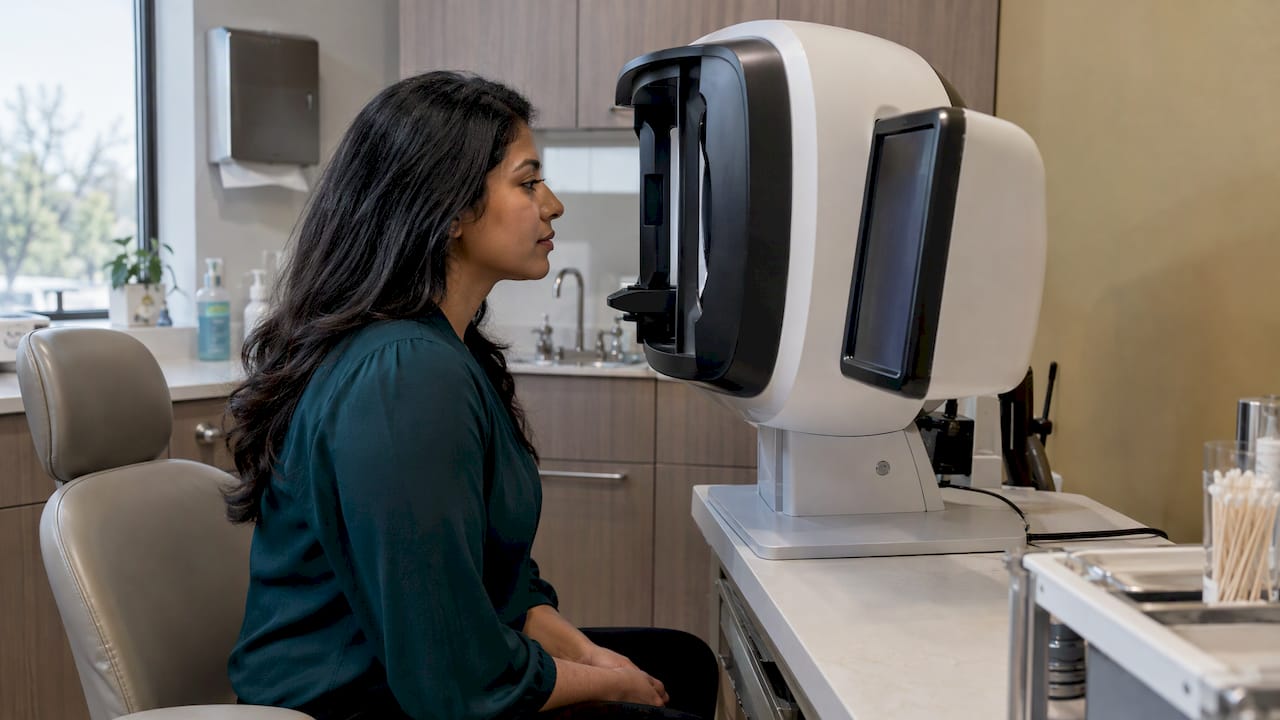
We also offer AgeJET plasma skin therapy, Sculptra collagen stimulator and advanced skin analysis using 3D imaging. The imaging gives a detailed look at skin quality before a plan is built, which is useful for an area as delicate as the lower lid. Skin treatments around the eyes work best as a series with sun protection, since sun exposure affects how long laser and peel results last.
Safe use: where under-eye treatment goes wrong
The under-eye area is thin skin over a web of small blood vessels. The ASPS quotes Dr. Devgan describing it as an area that demands finesse and restraint, where less is often more. The safety points below are the ones worth knowing before you book anything.
- Overfilling. The ASPS cautions against overfilling the undereye area, particularly where there is true fat herniation, because filler can worsen puffiness or cause the Tyndall effect, a bluish hue under thin skin.
- Fluid buildup. Cleveland Clinic notes that lower-lid filler can occasionally be associated with fluid buildup such as festoons or malar mounds.
- Rare vascular events. A 2024 peer-reviewed review describes vascular occlusion as a serious, potentially irreversible filler complication, with early diagnosis and treatment within 48 hours giving the best results. Cleveland Clinic’s Dr. Perry puts the risk of blindness from tear-trough filler as incredibly low but not zero. The review stresses that injectors should master facial vascular anatomy.
- Aggressive resurfacing. The ASPS notes that resurfacing without anatomical support can cause lower lid retraction.
- Skin of color and lasers. Mayo Clinic advises people with brown or Black skin to talk with their provider about which laser technique lowers the risk of permanent color changes.
- Health conditions. Cleveland Clinic notes that people with fluid blisters, inflammation, allergies or Graves’ disease may not be good filler candidates. Tell your provider about thyroid and allergy history.
That is why we suggest asking any injector about training, vascular anatomy and how they handle complications. Our dermal filler safety checklist walks through those questions, our article on under-eye filler risks covers our protocols, and our page on dissolving filler with hyaluronidase explains how HA filler can be reversed if needed.
Mayo Clinic also notes that treatment done solely to improve appearance may not be covered by medical insurance, so expect to pay for cosmetic eye work yourself.
When puffiness is a medical question, not a cosmetic one
Mayo Clinic describes bags under the eyes as usually a cosmetic concern. Occasionally, though, swelling is a sign of something else, and that should be sorted out before any cosmetic plan.
The American Academy of Ophthalmology says to see an ophthalmologist if swelling around the eye is painful, itchy, red or does not go away. Cleveland Clinic ophthalmologist Annapurna Singh, MD, advises an eye care professional visit for any eye swelling that lasts longer than 24 to 48 hours, because it can be something severe. She also warns that steroid eye drops used for the wrong condition could harm your vision, so do not self-treat with leftover drops.
Swelling can also appear in the jaw and lower face for reasons that need prompt attention; this overview of sudden facial swelling warning signs explains which symptoms call for urgent care. Swelling accompanied by fever, vision changes or pain is a reason to seek care first and book an aesthetic visit later.
A sensible order of operations
- Rule out medical causes. Persistent, one-sided, painful or red swelling gets an eye exam.
- Tighten up the basics. Sleep, salt, allergy control and a cool compress for a few weeks.
- Get a cause-based assessment. Identify whether hollowing, skin laxity, fat or pigment is leading.
- Pick the least aggressive tool that fits. Often that means conservative filler for hollows or a skin-quality series for crepey skin.
- Maintain. Filler is refreshed on its own schedule, and skincare and sun protection protect the investment.
Your next step at evoyouthful
If you are in Wayzata, Minnetonka, Plymouth, Eden Prairie or the surrounding lake communities, our clinic is led by an award-winning, advanced BHRT-certified Physician Assistant with more than 20 years in medical aesthetics. Our approach combines aesthetics and regenerative medicine, with personalized, data-driven plans and minimally invasive options. For the under-eye area, that includes dermal fillers, PRF injections, AgeJET plasma skin therapy and Sculptra. You can see our dermal filler services in Wayzata or explore the clinic to schedule a consultation.

Members of our Aesthetic & Wellness membership program receive exclusive pricing and perks; details are on our membership page.
Perspective: why we treat the cause, not the bag
When someone sits down and says they want their eye bags gone, the first thing we do is look at the whole face. A bag that looks like a bulge is often partly a hollow. Skin that looks tired is often thin before it is puffy. Treating the wrong layer is how people end up with results that look heavy or blue.
Our approach is personalized and data-driven. We use detailed assessments and advanced skin analysis with 3D imaging to see texture, pigment and quality that are hard to judge in a mirror. From there we can choose among tear trough filler, PRF, AgeJET plasma skin therapy or Sculptra to build a plan that supports your own tissue and respects the delicate under-eye area.
We also think about the person behind the eyes. Fatigue, hormone shifts and skin changes often show up together, and as a clinic that combines aesthetics with regenerative medicine, we can look at the full picture. Our goal is a refreshed look that still looks like you, on a timeline you are comfortable with.
Elizabeth Vogstrom, PA-C
FAQ
Is there a non-surgical way to get rid of eye bags?
Yes, in many cases. Home care can reduce fluid-related puffiness, and in-office treatments such as HA filler, PRF, laser and peels can improve hollowing, crepey skin and mild laxity. Which one fits depends on the cause, so an assessment of your under-eye anatomy comes first.
How long do non-surgical under-eye results last?
Johns Hopkins Medicine reports that filler results last about six to 12 months. Laser results can last years and peel results a few years, depending on skin type and sun exposure. Neuromodulators at the outer eye need re-injection every three to six months, according to the ASPS.
What is the Vaseline under-the-eye trick?
It is a popular social media habit of dabbing petroleum jelly under the eyes at night to moisturize thin skin. It may soften dryness, but the sources we reviewed do not show it reduces a true bag. Proven basics include sleep, salt control, allergy management and eye creams with ingredients like caffeine or retinoids.
What causes under-eye bags in the first place?
The leading cause is natural aging, as skin loosens and the tissues around the eye weaken so fat shifts forward. Fluid, allergies, a salty diet, lack of sleep, smoking, genetics and thyroid conditions can add to it. Shadows from the nose, brow or puffy lids can make bags look more pronounced.
When should I see a doctor about under-eye swelling?
See an eye care professional if swelling is painful, red, itchy or lasts longer than 24 to 48 hours. Seek care promptly for any vision changes. Cosmetic treatment is a good next step once swelling has been evaluated and a medical cause ruled out.
Sources
- A true awakening: Procedures to eliminate undereye bags, American Society of Plastic Surgeons (2025)
- How to get rid of undereye bags, American Society of Plastic Surgeons (2022)
- How to Get Rid of Bags Under Your Eyes, Johns Hopkins Medicine
- Bags under eyes: Diagnosis and treatment, Mayo Clinic
- How to Get Rid of Bags Under the Eyes, American Academy of Ophthalmology
- How To Fix Droopy Eyelids, Circles and Sags, Cleveland Clinic
- How To Get Rid of Eye Bags, Cleveland Clinic
- A review of the efficacy of popular eye cream ingredients, PMC
- Adverse effects of the aesthetic use of botulinum toxin and fillers, Anais Brasileiros de Dermatologia
Recommended
Ready to Start?
Schedule a Consultation
Have questions about what you just read? Our team is here to help.