
Anatomy First: Match Treatment to Fix Crepey Under Eyes
Elizabeth Vogstrom, PA-C
evoyouthful Clinical Team
Anatomy first staged plan to treat crepey under eyes. Start with sunscreen and retinoids, then match resurfacing, PRF, filler, or surgery.
Anatomy First: Match Treatment to Fix Crepey Under Eyes
Start with daily broad-spectrum sunscreen, a low-strength retinoid you build up slowly, and consistent hydration. Whether you need to go further, into resurfacing, PRF, filler, or surgery, depends on whether your problem is surface texture, hollowing, or muscle movement. Collagen rebuilds over months, not days, so there is no overnight fix for crepey under eyes, only the right sequence of treatments for your specific cause.
TL;DR:
- Topical prevention methods like daily sunscreen and retinoid use slow collagen breakdown and improve skin quality over several months, not days.
- Treatments targeting surface texture require energy-based resurfacing options, with fractional CO2 laser offering significant improvement but with downtime and pigment risks.
- Filler addresses hollows and shadows but does not improve surface crepiness, and combining treatments is often necessary for best results.
- Regenerative injections, such as PRF or PRP, stimulate collagen from within and complement energy-based resurfacing therapies, typically requiring multiple sessions.
- An individualized staged approach, starting with prevention and progressing to procedures like filler or surgery if needed, yields longer-lasting, natural-looking results.
Table of Contents
- Why Under-Eye Skin Turns Crepey in the First Place
- Is It Texture, Hollowing, or Movement? A Quick Self-Check
- The At-Home Routine That Actually Slows Crepey Skin
- In-Clinic Treatments, Grouped by What They Actually Fix
- How to Decide What You Actually Need
- What to Expect: Risks and Realistic Timelines
- Clinical Guidance Behind This Approach
- A Provider’s Honest Take on Staged Care
- Getting Under-Eye Treatment at evoyouthful
- Sources
Why Under-Eye Skin Turns Crepey in the First Place
The skin under your eyes is about 0.5 mm thick, roughly a quarter of the thickness of skin elsewhere on your face, which runs closer to 2 mm. That thinness means there is very little dermal reserve to absorb the wear and tear of daily life, and it explains why this area shows aging faster than your cheeks or forehead, according to Healthline’s review of periorbital skin structure.
Two things happen as you age: collagen and elastin production slows, and UV exposure activates enzymes called matrix metalloproteinases, or MMPs, which actively break down existing collagen. Sun exposure doesn’t just fail to help. It accelerates the damage. On top of that, the fat pads that once cushioned and plumped the under-eye area gradually thin and shift, so what started as a texture problem often becomes a volume problem too.
Lifestyle factors pile on. Smoking restricts blood flow and accelerates collagen breakdown. High salt intake and poor sleep contribute to fluid retention that stretches already-thin skin. Rapid weight loss can leave behind loose, crepey tissue that never had a chance to rebound. Certain medications, chronic allergies (think allergic shiners), and genetics also play a role in how early and how visibly this shows up.
Here’s the distinction that matters most for treatment: crepey texture, hollow shadows, and dynamic lines are three different problems that often get lumped together. Crepey texture is fine, papery wrinkling that shows up even when your face is at rest. Hollows are shadowed depressions from lost volume. Dynamic lines only appear when you smile or squint, driven by muscle movement rather than skin quality. Treating one when you actually have another wastes time, money, and sometimes makes things look worse.
Is It Texture, Hollowing, or Movement? A Quick Self-Check
Before you buy a single product or book a consult, figure out which category you’re actually dealing with. Look in a mirror under natural light, both with your face relaxed and while smiling.
- Fine crinkling visible at rest, even with a neutral expression, usually points to surface crepiness from thinned skin and lost elastin.
- A distinct shadow or indentation just below the lower lid, especially one that deepens under overhead light, suggests volume loss rather than a texture problem.
- Lines that appear only when you smile or squint and disappear at rest point to dynamic movement from the orbicularis oculi muscle, not skin quality.
- Puffiness alongside crepey skin often signals fluid retention or fat pad herniation layered on top of thin, aging skin.
- Sudden or one-sided changes, new asymmetry, or crepiness that appears alongside swelling, discoloration, or pain warrants a medical evaluation rather than a skincare adjustment, since these can signal allergies, thyroid issues, or other systemic causes.
Most people have some overlap. You might have genuine surface crepiness plus early hollowing, which is common by your late 30s and 40s. That’s fine. The point of this exercise isn’t to land on one clean label. It’s to know roughly what proportion of your concern is texture versus structure, because that ratio determines which treatments will actually move the needle for you.
The At-Home Routine That Actually Slows Crepey Skin
Sun protection is the single highest-impact thing you can do, and it’s the one step people skip most often around the eyes. Daily sunscreen slows the collagen-degrading MMP activity triggered by UV exposure, which means it’s doing real preventive work every single day you wear it, not just blocking a sunburn.
Here’s a realistic build-up sequence for the under-eye area specifically:
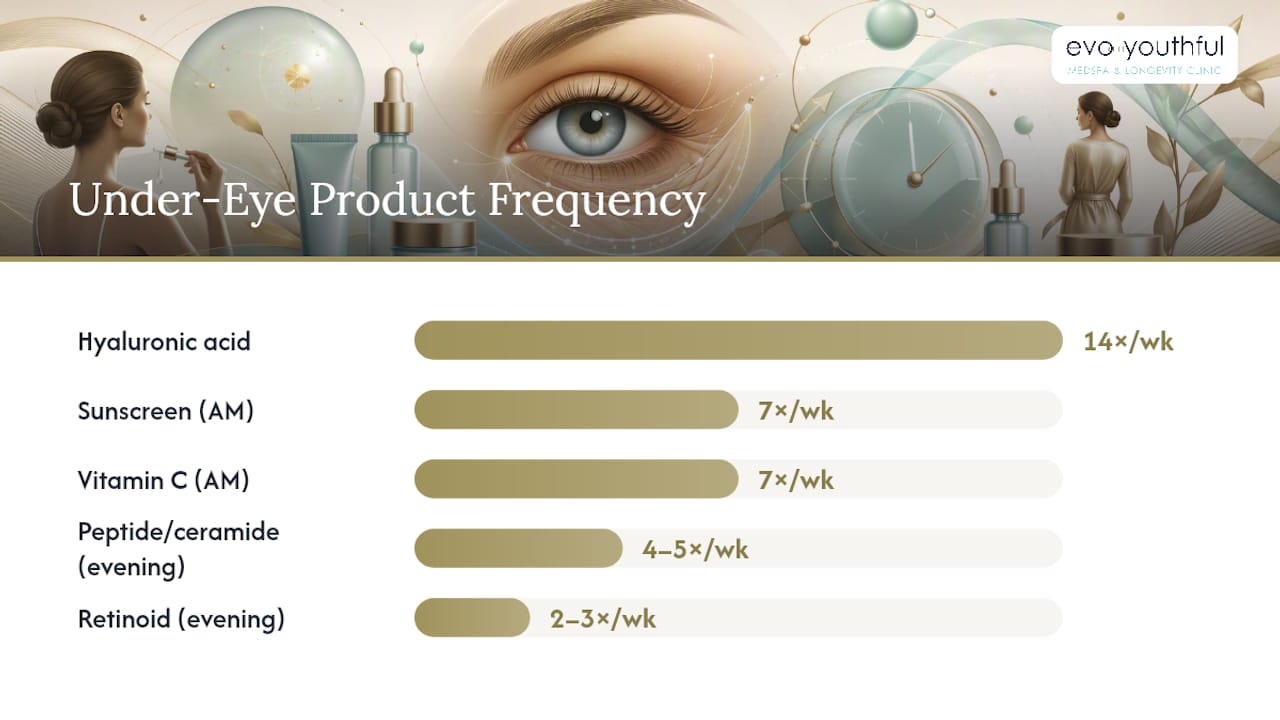
- Morning: broad-spectrum mineral sunscreen, applied with a light tapping motion using your ring finger, reapplied if you’re outdoors for extended periods. Mineral formulas (zinc oxide, titanium dioxide) tend to sting the eyes less than chemical filters.
- Evening, two to three nights a week initially: a low-strength retinoid, such as an over-the-counter retinol formulated for sensitive skin, applied in a thin layer at least a half-inch away from the lash line. Prescription tretinoin works faster but carries a higher irritation risk in this area and should be introduced under a clinician’s guidance.
- Remaining evenings: a peptide or ceramide-based eye cream to support the skin barrier while your skin adjusts to retinoid use.
- Layer in vitamin C in the morning, before sunscreen, if your skin tolerates it, since antioxidants help neutralize UV-generated free radicals that sunscreen alone doesn’t fully block.
- Hyaluronic acid serum on damp skin, both morning and night, to pull in water and temporarily plump the fine crepey texture while collagen-building ingredients work over the longer term.
Topical retinoids increase epidermal thickness and stimulate collagen types I and III, with visible improvement in fine lines typically showing up between 8 and 16 weeks of consistent use. That’s the realistic timeline. Anyone promising dramatic change in two weeks from a cream is overselling it.
Pro Tip: If retinoids sting or flake your under-eye skin, try buffering: apply a plain moisturizer first, wait five minutes, then apply the retinoid on top. This slows absorption slightly and cuts irritation without meaningfully reducing results.
Patch test any new product on your inner forearm for a few days before it goes anywhere near your eyes, and always apply eye-area products to fully dry skin. Wet skin increases penetration and irritation risk, especially with retinoids and vitamin C.
In-Clinic Treatments, Grouped by What They Actually Fix
Once topicals have done what they can, or if your concern is significant enough that you don’t want to wait months for gradual change, clinical options exist for each of the three categories above.
For surface texture, energy-based resurfacing is the strongest category. Fractional CO2 laser resurfacing produces intense, controlled collagen remodeling and can meaningfully improve crepey texture when settings are calibrated for the thin periocular skin, though it comes with real downtime, typically five to seven days of redness and peeling, and carries pigment change risk if overtreated, particularly in darker skin tones. Nonablative lasers and RF microneedling offer a gentler alternative with less downtime and more modest results per session, often requiring three to four treatments spaced weeks apart.
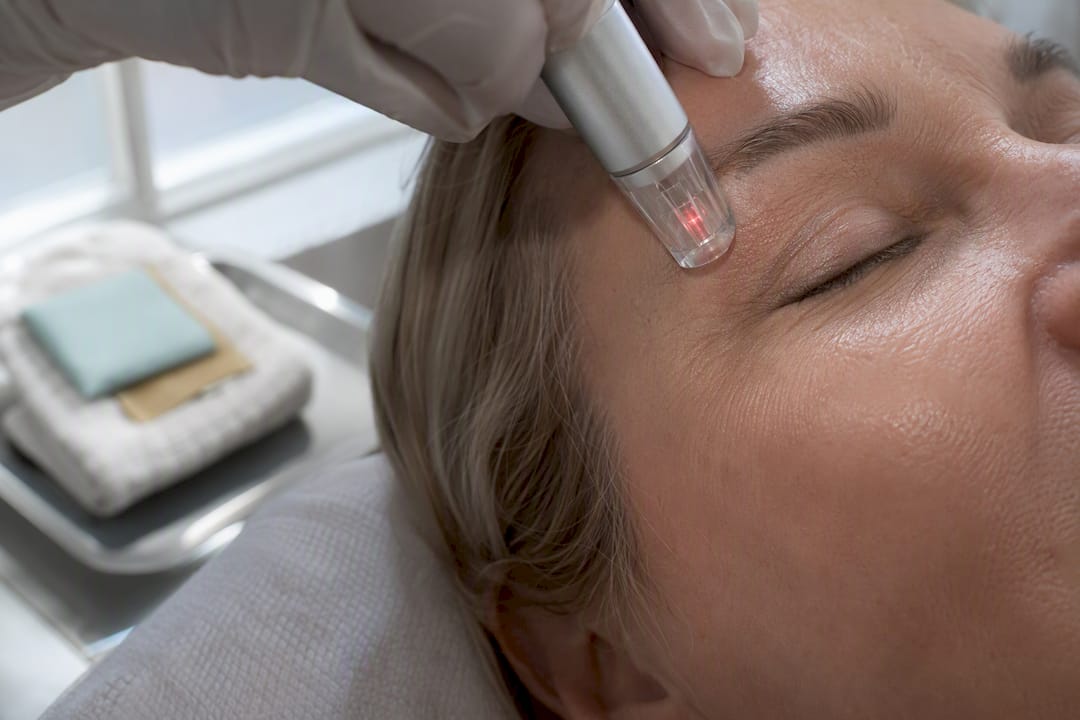
Regenerative injections, including PRF (platelet-rich fibrin), PRP, and newer polynucleotide treatments, work differently. Instead of resurfacing the skin’s surface, they use your own blood-derived growth factors or bio-stimulating molecules to encourage the tissue to rebuild collagen from within. These are typically done as a series of two to three sessions spaced several weeks apart, with minimal downtime beyond mild swelling for a day or two. They’re increasingly used as adjuncts alongside energy-based treatments to speed healing and improve overall skin quality rather than as a standalone fix for deep hollows.
For hollows and shadowing, hyaluronic acid tear-trough filler is the go-to structural fix, but it’s worth being precise about what it does and doesn’t address. Filler restores lost volume and softens shadows, but it does nothing for surface crepiness. If your skin is thin and crepey on top of a hollow, filler alone can actually make the texture more visible by stretching already-fragile skin over new volume. Results last several months depending on the product, and hyaluronic acid fillers can be dissolved if the outcome isn’t right, though this area demands an experienced injector given its proximity to delicate blood vessels.
For excess skin and fat, lower-eyelid blepharoplasty is the surgical option, reserved for cases where loose skin or herniated fat pads are the dominant problem rather than texture or volume loss. It’s the only option on this list that delivers a permanent structural change, but surgeons frequently recommend resurfacing afterward to address residual texture, since surgery alone rarely solves the skin quality issue that led to the sagging.
Expect gradual improvement across the board. Topical routines show change over months. Laser and regenerative treatments need several sessions and multiple months to reveal their full effect as new collagen matures. Filler works immediately. Surgery is permanent but is often just one part of a longer plan.
How to Decide What You Actually Need
Think of this as a staged ladder rather than a menu you pick from at random. Start at the bottom and only move up if the previous step doesn’t get you far enough.
- Prevention and topicals first. Give sunscreen and a tolerated retinoid routine a genuine three to four months before judging the result.
- Regenerative treatments or low-downtime resurfacing next, if texture is your main concern and topicals plateaued.
- Filler for hollows, once you’ve confirmed volume loss, not just texture, is driving the shadow you see.
- Surgery for excess skin or fat, reserved for cases where skin laxity or fat herniation is the dominant issue, usually followed by resurfacing to refine the result.
When you sit down for a consultation, ask direct questions: how many periocular procedures has this clinician performed, what do their results look like on skin similar to yours, and what’s their emergency protocol if a filler injection compromises blood flow, a rare but serious complication. A clinician who can’t answer that last question clearly is a red flag, full stop.
Pro Tip: Bring a photo of yourself from five or ten years ago to your consult. It helps the clinician (and you) see exactly how much is volume loss versus texture change, which sharpens the treatment plan considerably.
Cost climbs at each stage, from a skincare routine costing far less than a single laser session, to laser or PRF series running into four figures over a full course, to filler and surgery representing the largest single investments. Match your spending to the stage that addresses your actual problem, not the one with the flashiest before-and-after photos.
What to Expect: Risks and Realistic Timelines
The under-eye area’s thin dermis means every treatment carries slightly elevated risk compared to thicker-skinned areas of the face. Darker skin types face a higher chance of pigment changes from aggressive laser settings, which is why device selection and energy settings need to be tailored, not standardized. Over-aggressive lower-eyelid surgery carries a risk of ectropion, where the lower lid pulls away from the eye, and filler injected too superficially or with poor technique carries a rare but urgent vascular risk.
Timelines vary by treatment: topicals take months, resurfacing and regenerative injections take months to show full collagen maturation, filler works immediately, and surgery is permanent but often paired with resurfacing later. Contact your clinician promptly for unusual swelling, blanching, or pain after any injectable.
Clinical Guidance Behind This Approach
This article’s treatment framework reflects clinical practice from evoyouthful, developed under the guidance of Elizabeth Vogstrom, PA-C. At evoyouthful, under-eye evaluations start with identifying whether texture, volume, or muscle movement drives the concern, then match a staged plan accordingly, topicals first, followed by procedures suited to your anatomy. For a deeper look at how PRF, PRP, and filler decisions are made, or to review physician-curated skincare options for building your at-home routine, evoyouthful’s resources walk through the reasoning behind each choice.
A Provider’s Honest Take on Staged Care
Patients often want the fastest fix, and it’s tempting for a clinic to lead with the flashiest procedure. But stacking an aggressive laser on top of unaddressed volume loss, or injecting filler into skin that’s still crepey, tends to disappoint. A staged plan, prevention, then the least invasive effective step, then escalation only if needed, costs more patience up front but delivers results that actually hold up and age well. Individualized assessment beats a one-size plan every time. If you’re unsure where you fall on that ladder, a consult is the fastest way to find out.
— Elizabeth Vogstrom, PA-C
Getting Under-Eye Treatment at evoyouthful
If you’ve worked through sunscreen and retinoids and still see crepey texture, shadowing, or both, a medical aesthetics clinic can offer the next steps in one place instead of sending you between providers. A consult starts with the same texture-versus-volume-versus-movement assessment covered above, so the plan matches your anatomy rather than a generic package.

Depending on what that assessment finds, evoyouthful’s under-eye services include PRF injections to stimulate collagen regeneration with minimal downtime, and tear-trough filler for genuine hollowing. Costs and session counts vary by which combination fits your skin, and your provider will walk through that at your visit rather than quoting a generic number that may not apply to you. Follow-up care is built into the plan so results get maintained, not just achieved once. If you’re in the western Minneapolis suburbs and ready to find out which treatment actually matches your under-eye concern, book a consultation with evoyouthful to get a plan specific to your skin.
Sources
The clinical claims in this article draw on the Mayo Clinic’s overview of under-eye bags, Johns Hopkins Medicine’s expert guidance on treatment options, Healthline’s review of periorbital skin anatomy, the Cleveland Clinic’s breakdown of crepey skin causes and fixes, and a peer-reviewed review of retinoid mechanisms on NCBI. These sources cover the anatomy, treatment evidence, and safety considerations referenced throughout.
- How to get rid of bags under your eyes — Johns Hopkins Medicine
- Retinoids and skin — NCBI PMC review
- What’s causing your crepey skin and how can you fix it — Cleveland Clinic
Recommended
Ready to Start?
Schedule a Consultation
Have questions about what you just read? Our team is here to help.