
Clinic Rules for Under Eye PRF: When PRF, PRP, or Filler Is Right
Elizabeth Vogstrom, PA-C
evoyouthful Clinical Team
An evidence informed clinic guide to under eye PRF: which skin concerns it treats, what it can't fix, and when clinicians prefer PRP or filler.
Clinic Rules for Under Eye PRF: When PRF, PRP, or Filler Is Right
Under-eye PRF works best on skin quality: thinning, crepiness, and the vascular shadowing that makes dark circles look gray-blue. It does not reliably rebuild deep hollows or correct fat herniation, so if that’s your main concern, filler or a surgical consult is the better first step. Most patients undergo multiple sessions spaced several weeks apart, with improvement building gradually over time. Evidence is encouraging but still developing, so a personalized consult matters more than a generic protocol.
TL;DR:
- PRF is most effective for improving skin texture, crepiness, and vascular shadowing, not for correcting deep hollows or fat herniation.
- Most treatments require two to three sessions spaced four to six weeks apart, with visible results emerging around four weeks and continuing over several months.
- Bruising, swelling, and tenderness are common but typically resolve within a week, and risks are minimal due to its autologous nature.
- PRF yields gradual collagen production, making it suitable for skin quality issues, while filler remains the better choice for volume loss or structural hollows.
- Evidence shows PRF can increase skin density and thickness, but results vary by protocol, and research remains limited and inconsistent.
Table of Contents
- What Is PRF, and How Does It Work Under the Eyes?
- Are You a Good Candidate for Under-Eye PRF?
- PRF vs. PRP vs. HA Filler: Which One Fits Your Concern?
- What Happens During an Under-Eye PRF Appointment?
- What Are the Risks of Under-Eye PRF?
- What Does the Research Actually Show About PRF?
- How evoyouthful Approaches PRF Planning
- Ready to Talk to Someone About Your Under-Eye Concerns?
- Sources
What Is PRF, and How Does It Work Under the Eyes?
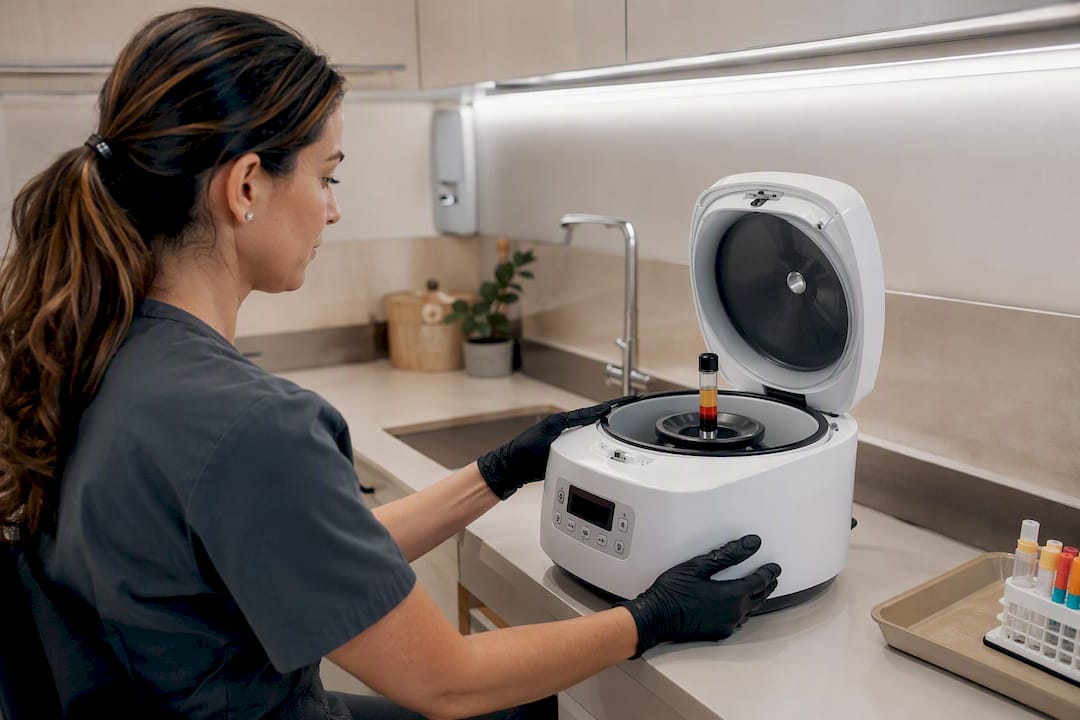
Platelet-rich fibrin (PRF) is an autologous concentrate made from your own blood, spun once at a low speed to produce a fibrin matrix loaded with platelets, growth factors, and white blood cells. That single-spin process is the entire point: no anticoagulants, no additives, just your blood separated into a gel-like scaffold that gets injected back into the treatment area.
Under the thin skin below your eyes, that fibrin matrix releases growth factors slowly, over roughly one to two weeks, which signals fibroblasts to produce new collagen. The effect builds over days and weeks rather than appearing instantly.
Platelet-rich plasma (PRP), by comparison, is processed with anticoagulants and typically spun to isolate a plasma layer without the fibrin scaffold, which releases its growth factors faster but doesn’t linger in the tissue the same way. That difference in release speed is why the two are grouped together in comparisons but behave differently in practice.
- PRF: single spin, fibrin scaffold, slow-release signaling, minimal additives
- PRP: plasma-focused processing, faster release, often used for pigmentation-heavy concerns
PRF is not a volumizer. It’s a regenerative skin-quality treatment, and treating it like a substitute for filler sets up disappointment.
Are You a Good Candidate for Under-Eye PRF?
If your under-eye skin is thin, crepey, or shows a bluish cast from visible blood vessels, PRF tends to perform well, and it’s generally considered safe across all Fitzpatrick skin types since it carries minimal pigment-related risk. If your concern is pronounced hollowing or fat pad herniation creating a bulge, PRF alone won’t correct that. That’s a structural issue better addressed with tear trough filler or, in more advanced cases, blepharoplasty.
Before booking, run through this:
- Review current medications, especially blood thinners, with your provider
- Flag recent isotretinoin use, since it affects skin healing
- Disclose pregnancy or breastfeeding status, as PRF is typically deferred
- Confirm you have no active skin infection near the treatment area
- Stay hydrated and take a baseline photo for comparison
Contraindications also include uncontrolled autoimmune conditions and active bleeding disorders. A brief pre-visit conversation about all of this saves time and sets realistic expectations at your first appointment.
PRF vs. PRP vs. HA Filler: Which One Fits Your Concern?
Each of these three tools solves a different problem, and the mismatch between what patients want and what they book is where most disappointment comes from.
PRF excels at improving skin texture and reducing crepiness, largely because its slow-release growth factors stimulate collagen over time. PRP has stronger evidence for treating hyperpigmentation, based on a systematic review that found PRF’s texture improvements sometimes fade over months while PRP’s pigmentation effects held up longer in several studies. HA filler is the only one of the three that meaningfully restores lost volume, but it carries its own risks under thin skin, including the Tyndall effect (a bluish discoloration from filler sitting too superficially) and the possibility of overfilling.
- Choose PRF alone when the main issue is skin quality and vascular shadowing
- Choose PRP when pigmentation is the dominant concern
- Choose HA filler when true volume loss or a visible tear-trough hollow is present
- Consider staged combinations when both skin quality and volume are compromised
Pro Tip: If you’re combining PRF with filler, ask your injector to space the treatments rather than layering both in one visit. Conservative, staged filler placement in the tear trough reduces the risk of lumps or a Tyndall effect while letting the PRF do its collagen-building work uninterrupted.
Providers who lean conservative often start with PRF and add filler only if volume remains a problem after skin quality improves, since pairing PRF with a measured filler approach tends to preserve a more natural result than jumping straight to a heavier filler correction.
What Happens During an Under-Eye PRF Appointment?
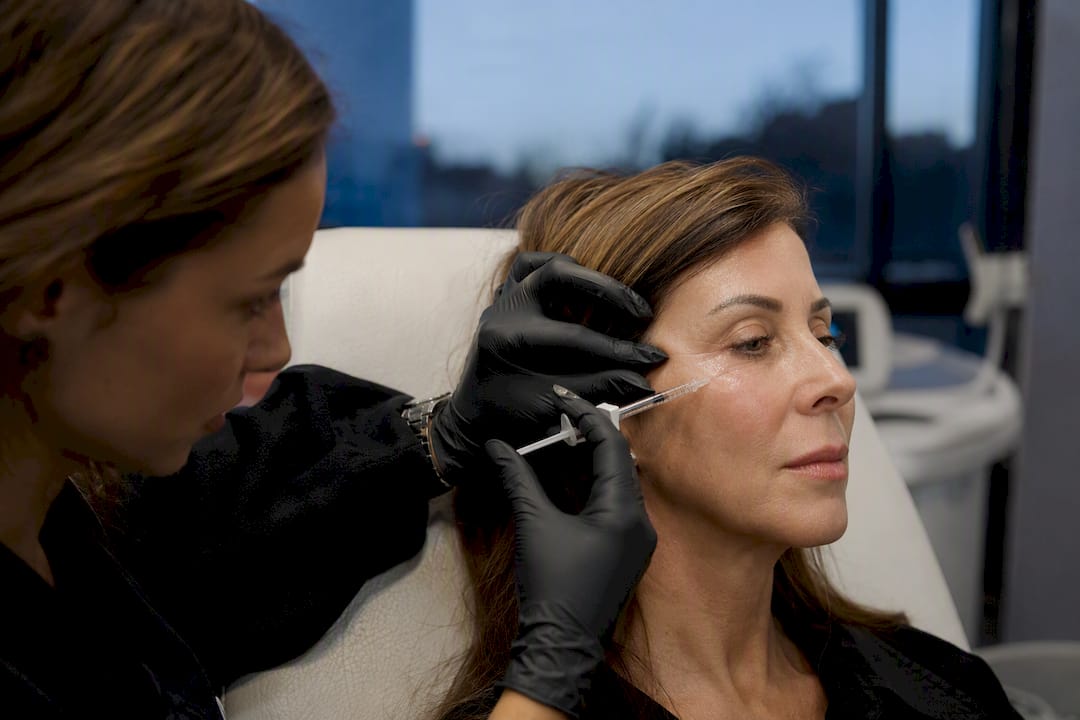
The process is simple compared to what patients expect, and it happens entirely at the clinic in one visit per session.
- Consultation to assess skin quality, vascular shadowing, and any structural hollowing
- A small blood draw, typically one or two tubes
- Centrifugation at a low speed to separate the fibrin matrix from red blood cells
- Injection using either a fine needle or a blunt cannula, depending on the treatment area and provider preference
- Immediate post-care instructions, usually gentle icing and avoiding strenuous activity for the rest of the day
Most patients complete a course of two to three sessions spaced four to six weeks apart, with visible skin-quality changes typically emerging around four weeks and building through eight to twelve weeks. Maintenance sessions are often recommended yearly once the initial course is complete.
Downtime is minimal but real. Bruising is common and usually resolves within several days; swelling tends to peak in the first 24 to 48 hours before settling. Some patients notice an immediate “filled” look right after injection, but that’s often just short-term swelling rather than true tissue change, which is why providers wait weeks before evaluating results. Pricing varies significantly by clinic, region, and session count, so treat any online estimate as a starting point rather than a quote, and confirm exact costs during your consult.
What Are the Risks of Under-Eye PRF?
Because PRF comes from your own blood, it avoids the allergic reaction and foreign-material risks associated with synthetic fillers, which is one reason clinicians describe it as having a favorable safety profile with mostly mild, transient effects.
- Bruising and mild swelling are the most common reactions and typically resolve within a week
- Tenderness at the injection site is normal for a day or two
- Rare complications, such as infection or nodule formation, are less likely when an experienced injector uses aspiration technique and a blunt cannula
- Treatment is generally deferred for pregnancy, breastfeeding, active skin infection, or uncontrolled autoimmune disease
If you have a history of bleeding disorders or are on blood thinners, raise it at your consult before scheduling. A good injector will ask about this anyway, but patients who bring it up first tend to get a more thorough risk conversation.
What Does the Research Actually Show About PRF?
The most rigorous look at this comparison, a systematic review of PRP versus PRF for periorbital rejuvenation, pooled 14 studies and found PRF associated with real improvements in texture, wrinkles, and crepiness. PRP came out ahead specifically for pigmentation, with more sustained effects in some of the studies reviewed. Both treatments scored high on patient satisfaction.
The review’s authors were candid about the evidence’s limits: PRF’s texture gains often diminished by the six-month mark in the studies examined, and the overall body of research remains small and inconsistent, with study designs, injection depths, and centrifugation protocols varying enough to make direct comparisons difficult.
Some studies measured outcomes with imaging tools like the DUB SkinScanner to track skin density and thickness, alongside patient-reported satisfaction scales such as GAIS and VAS. One study by researchers tracking lower eyelid skin after three PRF sessions reported statistically significant increases in density and thickness. That’s a real signal, but it comes from small sample sizes, and protocol differences (spin speed, gel formulation, injection depth) mean results from one clinic’s approach don’t automatically transfer to another’s. Treat PRF as a promising, evidence-supported option rather than a guaranteed outcome.
How evoyouthful Approaches PRF Planning
Every patient who comes in asking about dark circles gets the same first question from us: is this a skin-quality problem, a shadowing problem, or a volume problem? They’re not the same, and treating them the same is how patients end up disappointed. We differentiate carefully before recommending PRF alone, PRF with microneedling, or a conservative PRF-plus-filler combination. Bring a clean face and a list of current medications to your consult. It helps us plan faster and more precisely.
— Elizabeth Vogstrom, PA-C
Ready to Talk to Someone About Your Under-Eye Concerns?
If you’ve read this far, you already know PRF isn’t a one-size-fits-all fix, and figuring out whether it’s right for your skin takes an actual look at your anatomy, not a guess from a photo. evoyouthful offers PRF injections as part of a personalized consult where we assess whether your under-eye concerns stem from thin skin, vascular shadowing, or true volume loss, then map out a plan that might include PRF alone, a staged filler combination, or another route entirely.

If hormonal shifts are also part of what’s aging your skin from the inside out, it’s worth asking about that during the same visit. We often discuss bioidentical hormone therapy alongside aesthetic planning for patients who want a fuller picture of what’s driving visible aging. Schedule a consult at our Wayzata, MN clinic to get a real assessment instead of another guess based on internet research.
Recommended
Ready to Start?
Schedule a Consultation
Have questions about what you just read? Our team is here to help.