

Why Suburban Wellness Clinics Differ: What You Need to Know
Elizabeth Vogstrom, PA-C
evoyouthful Clinical Team
Discover why suburban wellness clinics differ in care models, services, and costs. Make informed choices for better health outcomes today!
Why Suburban Wellness Clinics Differ: What You Need to Know
Suburban wellness clinics differ in care model, service scope, and patient access in ways that directly affect your health outcomes. The term “wellness clinic” covers a wide range of facilities, from walk-in retail clinics inside pharmacies to concierge practices with annual membership fees to specialized medical spas offering regenerative therapies. Understanding these differences is not just academic. It shapes what screenings you receive, how much you pay, and whether your care is continuous or episodic. This article breaks down the key variables, including care models, billing structures, telehealth access, and community health trends, so you can make a confident, informed choice about where to seek care.
Why suburban wellness clinics differ by care model
The single biggest reason wellness clinics vary is the care model they operate under. Three models dominate suburban settings: retail or walk-in clinics, traditional primary care practices, and concierge or membership-based practices. Each one produces a fundamentally different patient experience.
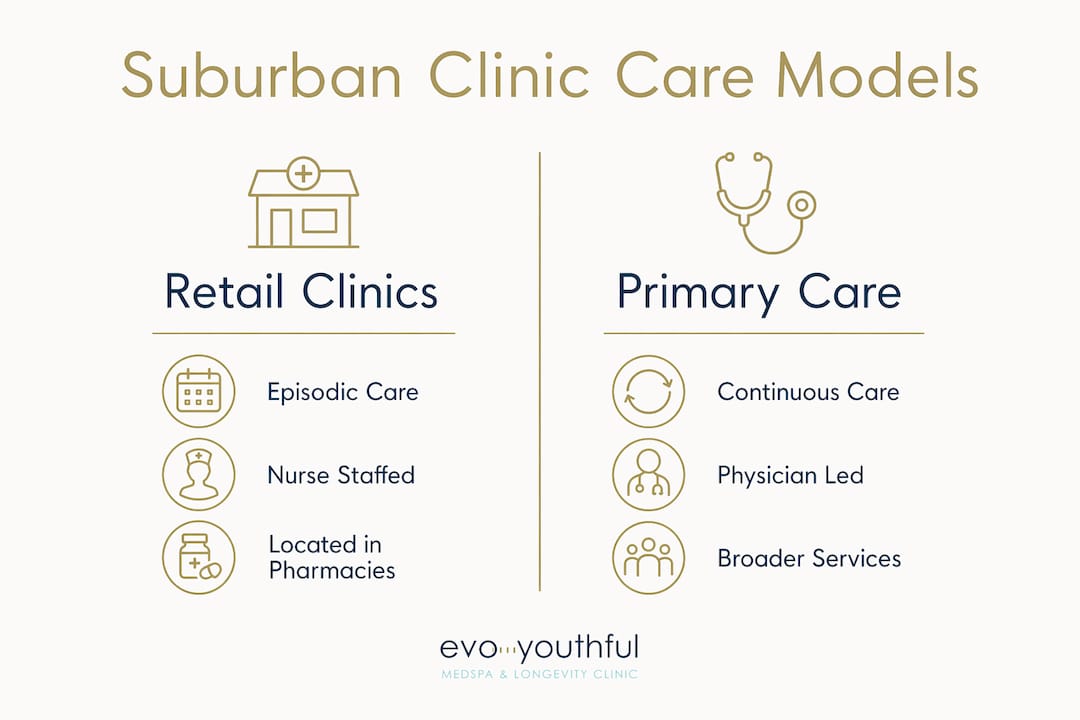
Retail clinics are typically staffed by nurse practitioners or physician assistants and located inside pharmacies or grocery stores. They focus on urgent or minor care, such as strep throat or a flu shot, with no appointment needed. The trade-off is limited access to your medical records and no management of ongoing conditions. Continuity is the defining gap. Retail clinics offer episodic care focused on immediate issues, while primary care practices are built for integrated chronic care management.
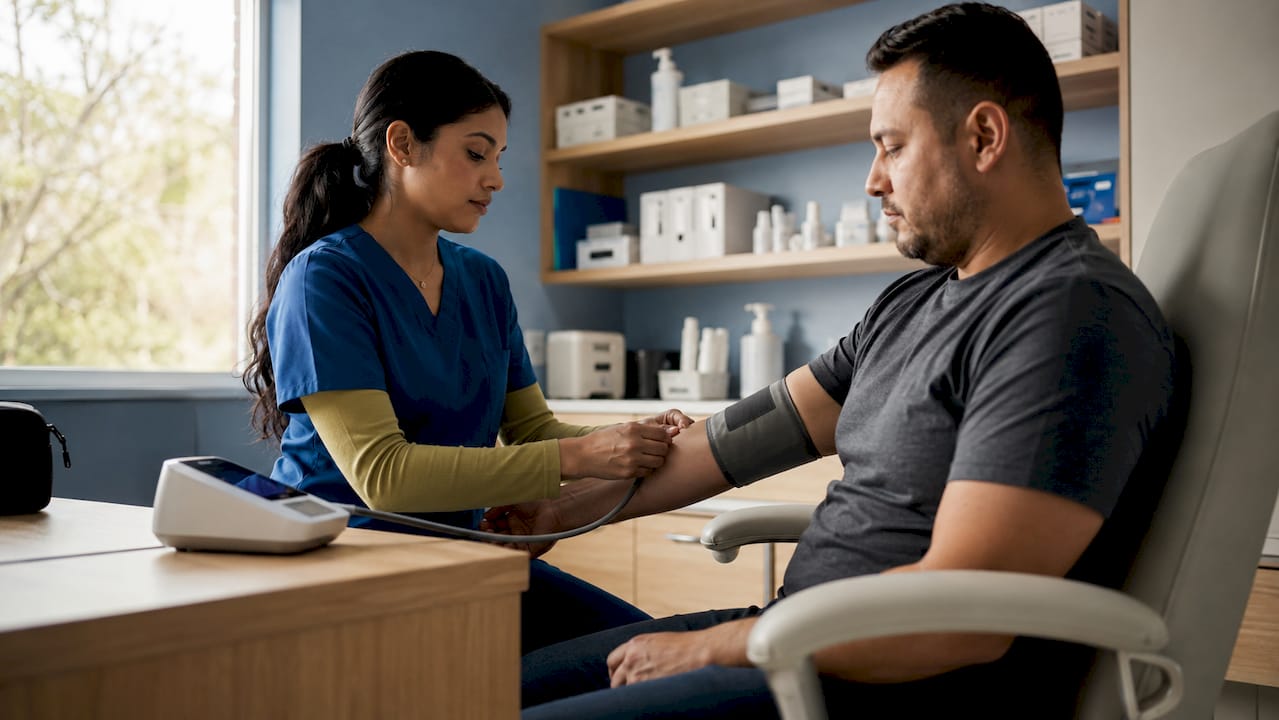
Primary care clinics schedule appointments, maintain full medical records, and coordinate referrals. They manage conditions like diabetes, hypertension, and thyroid disorders over time. This continuity produces better outcomes for patients with complex or chronic health needs. The [proximity to your clinic](https://evoyouthful.com/blog/why proximity to a clinic matters for your health) matters more than most people realize, because consistent access drives consistent care.
Concierge and direct primary care models add a membership or retainer fee on top of standard billing. Membership fees purchase better access and more clinician time but do not eliminate insurance billing complexities. Patients in concierge practices still encounter copays and insurance paperwork. What they gain is longer appointments, same-day scheduling, and more personalized wellness coordination. The value depends heavily on how much time and coordination is included, which varies widely across suburban clinics.
- Walk-in retail clinics: Best for minor, acute issues. No appointment needed, but no chronic care management or record continuity.
- Primary care practices: Manage ongoing health with full records, referrals, and preventive screenings. Require scheduled appointments.
- Concierge or membership practices: Offer enhanced access and longer visits for a retainer fee, with insurance still in play.
- Specialized medical wellness clinics: Focus on specific areas like regenerative medicine, aesthetics, or hormone therapy, often blending elements of all three models.
Pro Tip: Ask any clinic directly: “What care model do you follow?” The answer tells you immediately whether you will receive episodic or continuous care, and whether your records travel with you.
How do wellness visit types and billing differ at suburban clinics?
Not all wellness visits are the same, and the billing difference has real consequences for what you receive. Medicare’s Annual Wellness Visit (AWV) is a formally defined preventive service, offered once every 12 months, that includes a health risk assessment, an updated screening schedule, and a Personalized Prevention Plan Service (PPPS). It is not a physical exam.
A routine physical exam focuses on current complaints and targeted testing. Clinicians must meet specific screening checklist requirements to bill an AWV correctly, and a physical exam is only added if clinically indicated. Many suburban clinics market their services loosely under the “wellness” label, which can blur these distinctions and leave patients confused about what they actually received. The Medicare AWV is a formally defined encounter centered on prevention planning, not an informal checkup.
| Visit Type | Primary Focus | Includes Physical Exam? | Medicare Coverage |
|---|---|---|---|
| Annual Wellness Visit (AWV) | Prevention planning, health risk assessment | Not automatically | Yes, once every 12 months |
| Routine Physical Exam | Current complaints, targeted testing | Yes | Limited; may involve cost-sharing |
| Concierge Wellness Visit | Personalized coordination, extended time | Varies by practice | Depends on billing model |
| Specialized Clinic Visit | Condition-specific (e.g., hormones, aesthetics) | Rarely | Varies by treatment |
Patients should ask explicitly whether a scheduled visit meets formal preventive standards or will be billed as a physical exam. That one question can determine which screenings you receive and what you pay out of pocket. A boutique clinic evaluation guide can help you frame the right questions before you book.
Pro Tip: If you are on Medicare, confirm before your appointment whether the visit is coded as an AWV with PPPS or as a standard evaluation and management visit. The billing code changes what is covered at no cost to you.
How does telehealth affect suburban wellness clinic access?
Telehealth has changed what suburban patients can reasonably expect from their clinic. Virtual visits reduce outpatient wait times by approximately 25 days on average and lower no-show rates compared to in-person appointments. That is a meaningful improvement in care continuity for patients managing chronic conditions or following up after a procedure.
The catch is broadband access. Even in suburban areas, connectivity is not universal. 22.3% of rural Americans lack fixed terrestrial broadband, and suburban fringe communities often fall into similar gaps. A clinic that offers telehealth as a primary access point may inadvertently exclude patients who cannot reliably connect. Clinics offering remote monitoring must account for patient access to broadband and private spaces to deliver equitable care.
Telehealth works best as a supplement to in-person care, not a replacement. Follow-up consultations, medication reviews, and lab result discussions translate well to virtual formats. First visits, physical assessments, and procedures do not. The clinics that use telehealth most effectively are those that match the visit type to the format, rather than defaulting to virtual for convenience.
- Reduced wait times: Virtual follow-ups free appointment slots for patients who need in-person care.
- Improved follow-up rates: Patients are more likely to complete follow-up visits when they can do so from home.
- Broadband equity gaps: Suburban patients in lower-income or fringe areas may not benefit equally from telehealth options.
- Remote monitoring tools: Wearables and home testing kits extend clinic reach between appointments for patients who have reliable connectivity.
How do local community health trends shape suburban clinic services?
Suburban clinics do not operate in a vacuum. The demographics and health patterns of the surrounding community directly shape which services a clinic prioritizes. Suburban populations are aging, and demand for preventive care, chronic disease management, and regenerative therapies is rising alongside that trend.
A clinic serving a community with high rates of metabolic syndrome will likely build out weight management programs and nutrition counseling. A clinic near a younger, fitness-oriented suburb may emphasize sports recovery, hormone optimization, and aesthetic treatments. Clinics that pay attention to local health data tend to build more relevant, better-utilized service menus.
Mental health is another area where suburban clinics are expanding. Anxiety, depression, and cognitive decline are increasingly common concerns in suburban populations, and clinics that address brain health and cognitive function alongside physical wellness provide more complete care. Partnerships with local specialists, fitness centers, and nutritionists further extend what a single clinic can offer without requiring patients to manage multiple disconnected providers.
- Aging suburban populations: Drive demand for hormone therapy, joint health, and preventive screenings.
- Metabolic health trends: Prompt clinics to add weight management, nutrition, and blood sugar monitoring programs.
- Mental health awareness: Increase demand for anxiety, depression, and cognitive support services.
- Lifestyle-focused communities: Encourage clinics to offer recovery, aesthetics, and performance-oriented treatments.
Key takeaways
Suburban wellness clinics differ most significantly in care model, billing structure, telehealth access, and community health focus, and understanding these variables is the clearest path to choosing the right clinic for your needs.
| Point | Details |
|---|---|
| Care model determines continuity | Retail clinics offer episodic care; primary care and concierge models provide ongoing management. |
| AWV and physical exams are not the same | Medicare’s Annual Wellness Visit follows specific billing codes and covers prevention planning, not routine complaints. |
| Membership fees do not replace insurance | Concierge retainer fees buy access and time but do not eliminate copays or insurance paperwork. |
| Telehealth benefits depend on broadband | Virtual visits reduce wait times but may not be equally accessible to all suburban patients. |
| Community health trends shape services | Local demographics and chronic disease patterns drive which treatments and programs a clinic prioritizes. |
What I have learned from watching patients navigate suburban clinic options
By Elizabeth Vogstrom, PA-C
The question I hear most often is not “which clinic is best?” It is “why did my last clinic feel so different from this one?” The answer almost always comes down to care model and visit type, two things patients rarely think to ask about before booking.
Patients who come to me frustrated with their previous care often received episodic treatment at a walk-in clinic when what they actually needed was ongoing management. The clinic was not wrong for what it was. It was wrong for what that patient needed. Matching your health needs to the right model is the most underrated decision in suburban healthcare.
My honest recommendation: before you commit to any clinic, ask two questions. First, will the same provider see me at every visit? Second, is this visit coded as a wellness visit or a physical exam? Those two answers will tell you more about the clinic than any brochure will. Continuous relationships with a single provider consistently produce better outcomes, and that is not a soft preference. It is a clinical reality.
— Elizabeth Vogstrom, PA-C
Personalized wellness care at evoyouthful in Wayzata, MN
evoyouthful is a medical aesthetics and wellness clinic in Wayzata, MN, built around the kind of continuous, personalized care that suburban patients often struggle to find elsewhere.

The EVO Inner Circle membership gives patients priority access, extended appointments, and coordinated wellness planning, without the confusion of loosely defined “wellness” visits. Treatments like bioidentical hormone replacement therapy, peptide therapy, and ExoMind TMS address the specific health concerns that suburban patients are increasingly bringing through the door. Whether you are managing hormonal changes, cognitive concerns, or aesthetic goals, evoyouthful builds a plan around your actual needs. Schedule a consultation to see what personalized care looks like in practice.
FAQ
What makes suburban wellness clinics different from urban ones?
Suburban wellness clinics typically serve smaller, more consistent patient populations, which allows for more personalized care models. They also face different community health demands, including higher rates of chronic disease management and aging-related services.
Is a Medicare Annual Wellness Visit the same as a physical exam?
No. The Medicare AWV focuses on prevention planning and health risk assessment, while a physical exam addresses current complaints and targeted testing. They use different billing codes and cover different services.
Do concierge clinic membership fees cover everything?
No. Membership fees in concierge models purchase enhanced access and longer appointments but do not replace insurance. Patients still pay copays and navigate standard insurance processes.
How does telehealth affect care quality at suburban clinics?
Telehealth improves follow-up rates and reduces wait times, but its benefits depend on reliable broadband access. Patients in suburban fringe areas may face connectivity gaps that limit how much they benefit from virtual care options.
How do I choose the right suburban wellness clinic for my needs?
Ask whether the clinic follows a continuous care model, what billing codes they use for wellness visits, and whether telehealth is available as a supplement to in-person care. Matching your health needs to the right model is the most important first step.
Recommended
Ready to Start?
Schedule a Consultation
Have questions about what you just read? Our team is here to help.