
Why Rotator Cuff Injuries Are So Common After 40
Elizabeth Vogstrom, PA-C
evoyouthful Clinical Team
Learn why rotator cuff injuries are common after 40. Understand the causes, risks, and take action to protect your shoulder health.
Rotator cuff injuries are common primarily because the shoulder sacrifices stability for mobility, and the tendons that hold it together gradually break down with age and repetitive overhead use. StatPearls, the American Academy of Orthopaedic Surgeons (AAOS), and the American Academy of Family Physicians (AAFP) all point to degenerative wear-and-tear, not sudden trauma, as the dominant cause. If your shoulder aches at night or overhead tasks have become painful, the single most useful first step is scheduling an evaluation with your primary care provider or a physical therapist before the problem progresses.
- Dominant cause: Tendon degeneration from aging and repetitive overhead loading
- Secondary cause: Acute trauma (a fall, a sudden heavy lift)
- Top modifiable risks: Smoking, poor posture, and unchecked overhead workload
- First action: Reduce overhead load and seek clinical evaluation if pain disrupts sleep or daily tasks
Pro Tip: If shoulder pain wakes you at night more than twice a week, that pattern alone is enough reason to book an appointment. Night pain is one of the most consistent early warning signs clinicians look for.
Table of Contents
- Why does the shoulder’s structure make the rotator cuff so vulnerable?
- How rotator cuff injuries develop: degeneration, impingement, and tears
- How common are rotator cuff injuries, really?
- What are your treatment options for a rotator cuff injury?
- Are regenerative therapies like PRF injections worth considering?
- How can you protect your rotator cuff and reduce your risk?
- What is the realistic outlook for recovery?
- Key Takeaways
- A clinician’s perspective on shoulder pain and early action
- Authoritative sources and further reading
Why does the shoulder’s structure make the rotator cuff so vulnerable?
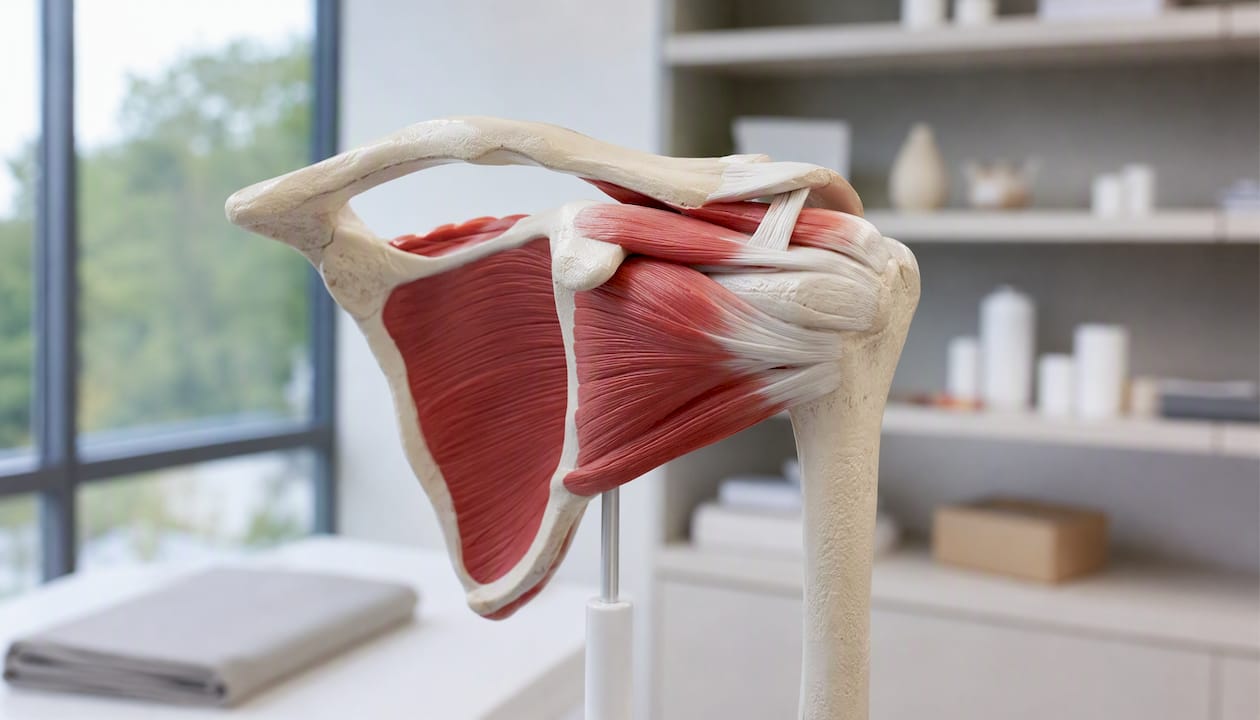
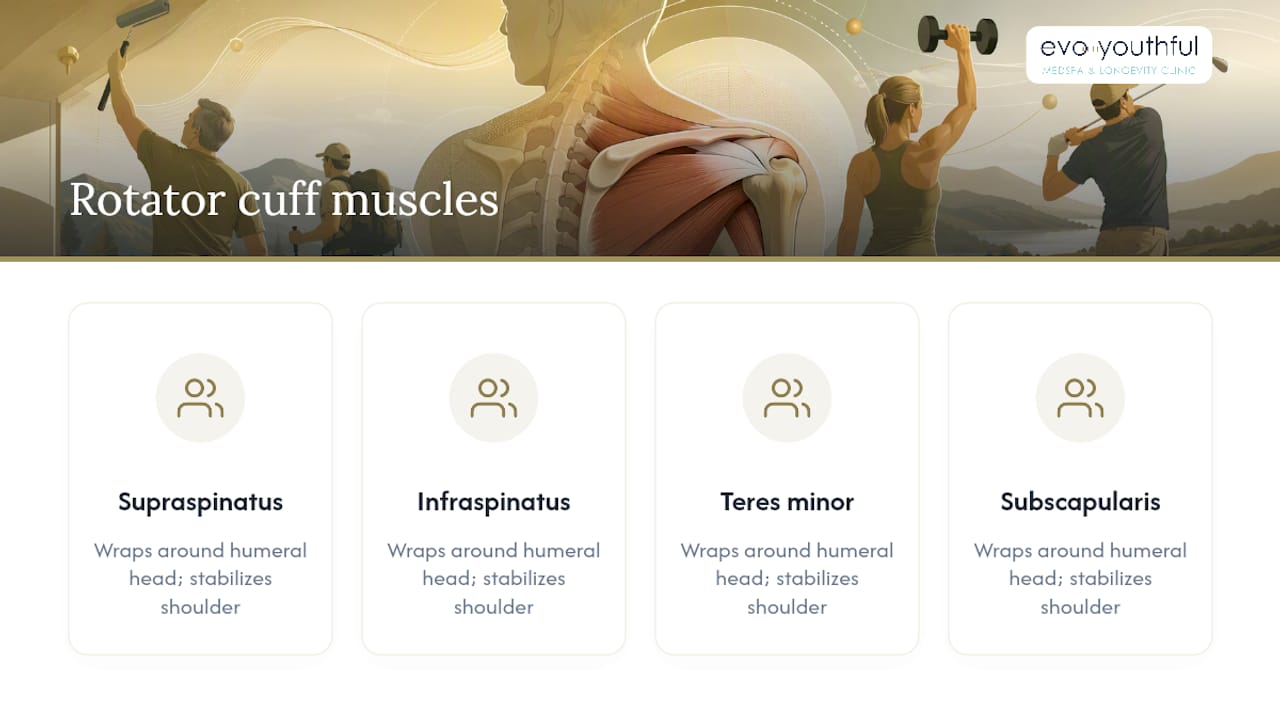
The rotator cuff is a group of four muscles and their tendons: the supraspinatus, infraspinatus, teres minor, and subscapularis. Together, they wrap around the head of the humerus (upper arm bone) and hold it centered in the shallow socket of the shoulder blade. That socket is intentionally shallow, which is exactly why your shoulder can reach behind your back, throw overhead, and rotate in nearly every direction.
The trade-off is real. Greater mobility means less inherent bony stability, so the rotator cuff tendons must work continuously to compensate. As the AAFP notes, the shoulder is the most mobile joint in the body, and that mobility makes the rotator cuff the primary stabilizer and the primary structure injured by repetitive stress. The sub-deltoid bursa, a fluid-filled cushion, sits directly above the cuff tendons. When the space narrows during overhead movement, both the bursa and tendons get pinched.
[Diagram recommended: label the four rotator cuff muscles, the acromion, the sub-deltoid bursa, and the humeral head to help readers visualize impingement.]
Pro Tip: Weak scapular stabilizers force the rotator cuff to overwork. Strengthening the muscles around your shoulder blade reduces the load on the cuff tendons directly.
How rotator cuff injuries develop: degeneration, impingement, and tears
Degeneration and repetitive microtrauma cause the vast majority of rotator cuff tears; acute trauma accounts for a much smaller share. The typical progression moves through recognizable stages.
- Bursitis and impingement: As the tendon swells, it competes for space under the acromion (the bony roof of the shoulder). Bone spurs on the acromion worsen the pinching. The bursa inflames in response, as MedlinePlus describes.
Consider two common scenarios. A painter who has spent 20 years rolling ceilings develops a partial supraspinatus tear gradually, with no single injury moment. A 55-year-old who catches themselves during a fall may sustain an acute full tear on a tendon that was already thinned by years of wear. The mechanism differs; the underlying tissue vulnerability is often the same.
Pro Tip: Pain that starts after a new activity (a weekend of overhead pruning, for example) often signals tendinopathy, not a tear. Relative rest for 1–2 weeks and ice can calm early-stage irritation before it progresses.
How common are rotator cuff injuries, really?
More than 2 million Americans seek care for rotator cuff problems every year, making shoulder injuries one of the most frequently treated musculoskeletal complaints in primary care and orthopedics.
| Age Group | Approximate Prevalence of Rotator Cuff Tears |
|---|---|
| Under 40 | Relatively uncommon; mostly traumatic |
| 40–60 | Rising; roughly 30% have some degree of tearing |
| Over 80 | Approximately 62% in imaging studies |
Prevalence rises sharply after 60, and a large proportion of those tears are asymptomatic. That fact matters: a tear on imaging does not automatically mean surgery or even significant pain.
What are your treatment options for a rotator cuff injury?
Most rotator cuff injuries respond to conservative care. The AAOS is clear that many degenerative tears are asymptomatic and that nonoperative management often succeeds.
| Treatment Tier | Approach | Typical Timeline |
|---|---|---|
| Conservative care | Rest, NSAIDs, physical therapy targeting cuff and scapular strength | 6–12 weeks for tendinitis/bursitis; longer for partial tears |
| Injections | Corticosteroid (subacromial) for pain relief; guided injections for precision | 1–3 injections; effect lasts weeks to months |
| Surgery | Arthroscopic repair for full-thickness tears or failed conservative care | 4–6 months rehabilitation post-op |
Surgery is not the default. Clinicians typically recommend it for large full-thickness tears causing significant functional loss, acute traumatic tears in younger patients, or cases where 3–6 months of conservative care has not restored acceptable function.
Pro Tip: Ask your clinician specifically whether your tear is partial or full-thickness, and whether it is degenerative or traumatic. Those two distinctions drive most treatment decisions and help you set realistic expectations.
Are regenerative therapies like PRF injections worth considering?
Platelet-rich fibrin (PRF) and platelet-rich plasma (PRP) injections are promising for some tendon injuries, but evidence is mixed and patient selection matters. These therapies concentrate growth factors from your own blood and deliver them directly to the injured tissue, aiming to support the healing environment where blood supply is naturally poor.
Clinicians typically consider regenerative injections when:
- Conservative care (physical therapy, NSAIDs) has not resolved symptoms after 6–12 weeks
- Imaging confirms a partial tear or tendinopathy without complete rupture
- The patient wants to avoid or delay surgery
- Corticosteroid injections have provided only short-term relief
PRF differs from standard PRP in that it releases growth factors more slowly, which may support a more sustained healing response. Contraindications include active infection, blood-thinning medications, and certain clotting disorders.
At evoyouthful in Wayzata, MN, PRF injections are offered as part of a personalized pain management approach. Before pursuing any regenerative therapy, ask your clinician about expected benefits, realistic recovery timelines, and out-of-pocket costs, since most insurance plans do not cover these treatments.
How can you protect your rotator cuff and reduce your risk?
Load management, posture correction, targeted strengthening, and smoking cessation are the four most evidence-supported strategies for reducing rotator cuff injury risk.
Strengthening exercises to prioritize:
- External-rotation band work: Attach a resistance band at elbow height, keep your elbow at your side, and rotate your forearm outward. This directly loads the infraspinatus and teres minor.
- Scapular retraction drills: Squeeze your shoulder blades together and hold for 5 seconds. Strengthens the mid-trapezius and reduces forward-shoulder posture.
- Side-lying external rotation: Lying on your non-dominant side, lift a light dumbbell through external rotation. A staple in physical therapy for cuff rehabilitation and prevention.
- Wall slides: Stand with your back flat against a wall and slide your arms upward in a Y or W shape. Trains scapular upward rotation under low load.
Ergonomic and lifestyle checklist:
- Keep frequently used items at or below shoulder height at your workstation
- Take overhead-task breaks every 20–30 minutes during painting, shelving, or similar work
- Quit smoking; the tendon vascularity benefit begins within weeks of cessation
- Address rounded-shoulder posture with a physical therapist before it narrows your subacromial space further
Pro Tip: Add rotator cuff strengthening to your routine two to three times per week, not daily. Tendons need recovery time between loading sessions, and daily high-volume work can perpetuate the microtrauma you are trying to prevent.
What is the realistic outlook for recovery?
Many patients improve meaningfully with conservative care over 6–12 weeks. Surgery is considered for persistent, function-limiting tears or acute large tears after trauma, not as a first response to a new diagnosis.
Factors that slow healing include advanced age, active smoking, poor tendon blood supply, and large tear size at the time of diagnosis. A degenerative tear found incidentally on imaging in an older adult with mild symptoms is often managed with physical therapy alone, with surgery reserved for cases where function deteriorates.
The decision between surgery and continued conservative care is best made collaboratively. If your symptoms plateau after 3–6 months of structured physical therapy, that is the appropriate moment to revisit the surgical conversation with an orthopedic surgeon.
A Cleveland Clinic summary notes that more than 2 million Americans seek rotator cuff care annually, yet many tears never require surgery. The goal is restored function, not a perfect tendon on imaging.
Key Takeaways
Rotator cuff injuries are common because aging tendons, the shoulder’s inherently unstable anatomy, and repetitive overhead loading combine to create a predictable pattern of wear that most adults will experience to some degree by their 60s.
| Point | Details |
|---|---|
| Degeneration is the dominant cause | Most tears develop gradually from aging and overhead overuse, not sudden injury. |
| Prevalence rises sharply with age | A significant portion of adults over 60 and a greater portion over 80 have rotator cuff tears detectable on imaging studies. |
| Smoking and posture are modifiable risks | Quitting smoking and correcting forward-shoulder posture meaningfully reduce tear risk and severity. |
| Many tears are asymptomatic | A tear on imaging does not automatically mean surgery; conservative care succeeds for most patients. |
| Seek evaluation when pain limits sleep or daily tasks | Early clinical assessment leads to better outcomes and more treatment options. |
A clinician’s perspective on shoulder pain and early action
Most patients I see with rotator cuff pain waited longer than they should have. By the time shoulder discomfort disrupts sleep consistently or makes dressing painful, the underlying tendon has usually been under stress for months. The good news is that the conservative-first approach works well for the majority of people, and starting it earlier almost always means a shorter recovery.
What I find underappreciated is how much posture and scapular strength matter. Patients often focus on the shoulder itself, but the shoulder blade’s position and movement quality determine how much space the rotator cuff tendons have during overhead motion. Fixing a forward-rounded posture can reduce impingement symptoms without a single injection or procedure.
Regenerative options like PRF injections have a reasonable role for partial tears and tendinopathy that has not responded to physical therapy, particularly in patients who want to avoid corticosteroids or are not surgical candidates. Patient selection and realistic expectations are everything. If you are considering this path, a thorough clinical evaluation should come first.
Authoritative sources and further reading
These sources informed this article and are worth bookmarking before your next clinician visit. Bring specific questions drawn from them; it makes the appointment more productive.
- Rotator Cuff Injury - StatPearls - NCBI Bookshelf
- Acute Shoulder Injuries in Adults | AFP
- Rotator Cuff Tears - OrthoInfo - AAOS
- Rotator Cuff Injuries | MedlinePlus
- Rotator Cuff Tear: Symptoms & Treatment - Cleveland Clinic
- Rotator cuff injury - Mayo Clinic
- Shoulder injuries and disorders - MedlinePlus
Recommended
Ready to Start?
Schedule a Consultation
Have questions about what you just read? Our team is here to help.