

Vaginal Atrophy Explained: What Women Need to Know
Elizabeth Vogstrom, PA-C
evoyouthful Clinical Team
Discover what is vaginal atrophy explained. Learn symptoms, causes, and effective treatments to improve your health and well-being.
Vaginal Atrophy Explained: What Women Need to Know
Vaginal atrophy, now more accurately called genitourinary syndrome of menopause (GSM), is the thinning, drying, and inflammation of vaginal and urinary tissues that occurs when estrogen levels decline. The most common signs are persistent vaginal dryness, burning or itching, pain during sex, and urinary changes like urgency or frequent infections. The reassuring truth: effective treatments exist, and a clinician can help you find the right approach for your history and goals.
Table of Contents
- What symptoms should you watch for?
- What causes vaginal atrophy?
- How do clinicians diagnose GSM?
- What are your treatment options for vaginal atrophy?
- What happens if GSM goes untreated?
- Special considerations for breast cancer survivors and complex histories
- When should you see a provider, and what should you bring?
- Key Takeaways
- A clinician’s perspective on GSM care
- Intimate wellness care at evoyouthful in Wayzata, MN
- Useful sources and further reading
What symptoms should you watch for?
GSM produces two overlapping clusters of symptoms: genital and urinary. Recognizing both helps you describe your experience clearly to a provider.
Genital symptoms:
- Vaginal dryness, often described as a persistent scratchy or raw feeling
- Burning or itching of the vulva and vaginal opening
- Pain or discomfort during sex (dyspareunia)
- Light spotting or bleeding after intercourse due to tissue fragility
- Narrowing or tightening of the vaginal opening over time
Urinary symptoms:
- Urgency or frequency of urination
- Burning with urination (dysuria)
- Recurrent urinary tract infections
- Stress or urge urinary incontinence
Mayo Clinic notes that these genital and urinary symptoms are now grouped under the GSM label precisely because they share the same hormonal root cause. Beyond the physical signs, GSM affects quality of life in ways that often go undiscussed: disrupted sleep, reduced interest in intimacy, and emotional distress that can strain relationships. If any of these symptoms sound familiar, you are not alone, and you do not have to simply accept them.
What causes vaginal atrophy?
The primary driver is estrogen decline. Harvard Health explains that estrogen is responsible for maintaining the thickness, elasticity, and moisture of vaginal tissue, so any condition or treatment that lowers estrogen can trigger GSM.
Common causes:
- Premature ovarian insufficiency (POI): — affects younger women and carries additional long-term health considerations
Symptoms typically develop slowly, often becoming noticeable years after menopause begins. That gradual onset is one reason women sometimes attribute dryness or urinary changes to other causes, such as recurrent infections or stress, before GSM is identified.
A few less common causes are worth flagging for your clinician: contact dermatitis, lichen sclerosus, and vaginal infections can mimic GSM symptoms. A thorough exam helps rule these out before treatment begins.
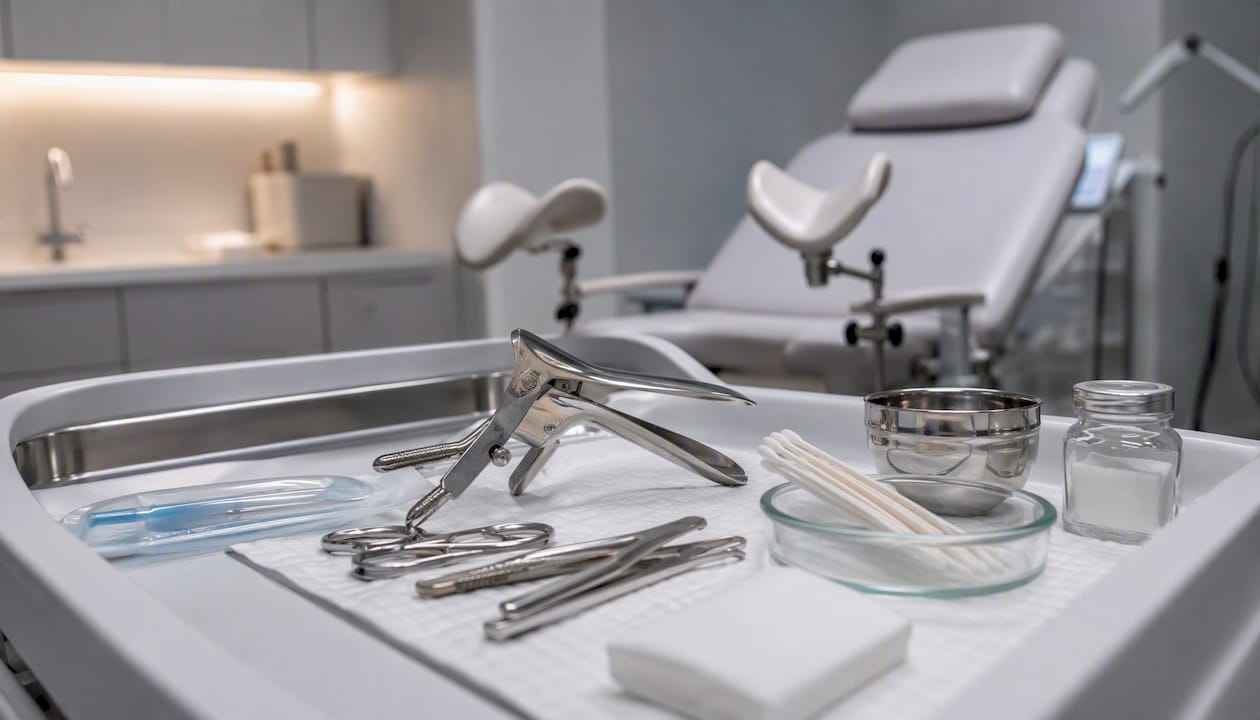
How do clinicians diagnose GSM?
Diagnosis is primarily clinical, meaning it rests on your symptom history and a physical exam rather than a single definitive lab test. Mayo Clinic’s diagnostic guidance outlines the standard evaluation sequence.
What the pelvic exam assesses:
| Exam Finding | What It Indicates |
|---|---|
| Pale, thin vaginal walls | Reduced estrogen effect on epithelium |
| Tissue friability (bleeds easily) | Fragile, atrophic mucosa |
| Introital narrowing | Advanced tissue changes, may affect penetration |
| Reduced vaginal rugae (folds) | Loss of normal elasticity |
| Elevated vaginal pH (above 5.0) | Disrupted acidic microenvironment |
Additional tests your provider may use:
- Urine test: rules out active UTI when urinary symptoms are present
- Vaginal pH strip: a simple in-office test; a pH above 5.0 supports a GSM diagnosis
- Microscopy or cultures: ordered when infection is suspected alongside atrophy
Questions worth bringing to your appointment:
- “What tests will confirm whether this is GSM or something else?”
- “Which treatment fits my medical history, including any prior cancer treatment?”
- “How long before I notice improvement?”
- “Do I need to stay on treatment long-term?”
A detailed symptom timeline, a list of current medications, and any prior treatments you have tried will help your provider move efficiently toward a plan.
What are your treatment options for vaginal atrophy?
Treatment for GSM is tiered, starting with the gentlest options and escalating based on symptom severity and individual health history. Cleveland Clinic’s overview covers the full range.
| Approach | How It Works | Typical Use Case | Main Safety Note |
|---|---|---|---|
| Vaginal lubricants | Reduce friction during sex | Mild, situational dryness | Generally safe for all; check ingredients |
| Vaginal moisturizers | Replenish moisture regularly | Ongoing dryness and irritation | Use regularly; avoid glycerin formulas |
| Local vaginal estrogen (cream, tablet, ring) | Restores estrogen directly to tissue | Moderate-to-severe GSM | Low systemic absorption; discuss with oncologist if cancer history |
| Systemic hormone therapy (oral/patch) | Addresses whole-body estrogen deficit | GSM plus other menopausal symptoms | Higher systemic exposure; individualized risk assessment needed |
| Vaginal DHEA (prasterone) | Converts locally to estrogen and androgen | Alternative to estrogen for some patients | Minimal systemic effect; prescription required |
| Pelvic floor physical therapy | Restores muscle function, reduces pain | Dyspareunia, incontinence, introital tightening | Requires trained pelvic floor specialist |
| Vaginal dilators | Gradually stretch narrowed tissue | Introital stenosis, pain with penetration | Best used with clinician or therapist guidance |
| Energy-based devices | Stimulate tissue remodeling | Adjunct or alternative for some patients | Mixed evidence; discuss regulatory status with your provider |
Key safety considerations:
- Women with a history of hormone-sensitive cancers should discuss any estrogen-based therapy with their oncologist before starting
- Local vaginal estrogen has significantly lower systemic absorption than oral estrogen, making it an option for many women who cannot use systemic therapy
- Energy-based devices marketed for vaginal rejuvenation carry regulatory cautions; review current evidence with your clinician before proceeding
Pro Tip: If painful sex is your primary concern, consider starting pelvic floor physical therapy and gradual dilator use before resuming penetrative activity. Addressing muscle tension and introital narrowing first often makes other treatments more effective and reduces the psychological avoidance that can develop around intimacy.
What happens if GSM goes untreated?
GSM is progressive. Without treatment, the tissue changes continue, and symptoms generally worsen over time rather than stabilizing on their own.
Potential complications of untreated GSM include:
- Recurrent urinary tract infections from altered pH and tissue vulnerability
- Introital narrowing that makes pelvic exams, tampon use, and sexual activity increasingly difficult or impossible
- Vaginal trauma and bleeding from fragile tissue
- Worsening urinary incontinence or urgency
- Avoidance of sexual activity, which can further reduce tissue health and strain relationships
Clinical perspective: GSM is a chronic condition, not a one-time problem with a one-time fix. Stopping an effective treatment typically leads to symptom recurrence within weeks to months. Most women benefit from ongoing management, whether that means continuing a vaginal moisturizer, maintaining low-dose local estrogen, or periodic pelvic floor therapy sessions.
The prognosis with treatment is genuinely encouraging. Symptoms are manageable for the vast majority of women, and many report significant improvement in comfort, urinary function, and sexual satisfaction once an appropriate plan is in place.
Special considerations for breast cancer survivors and complex histories
Women with a history of breast cancer face a more nuanced decision-making process when managing GSM. The NAMS 2020 position statement recommends individualized, multidisciplinary planning that includes oncology input before any hormone-based therapy is introduced.
Non-hormonal strategies should be the starting point: regular use of vaginal moisturizers, pH-balanced lubricants, and pelvic floor physical therapy address many symptoms without systemic hormonal exposure. For women whose symptoms remain severe despite these measures, low-dose local vaginal estrogen or vaginal DHEA may be considered in consultation with an oncologist, weighing the degree of systemic absorption against symptom burden and quality of life.
Shared decision-making is the standard of care here. No single protocol fits every patient, and the right answer depends on cancer type, treatment history, current medications, and personal priorities. NAMS and the International Society for the Study of Women’s Sexual Health both emphasize that GSM should be actively managed rather than dismissed, even in this population.
If you are managing GSM alongside a complex medical history, ask your provider specifically about hormone imbalance treatment options that minimize systemic exposure while still addressing tissue health.

When should you see a provider, and what should you bring?
You do not need to wait until symptoms are severe. Any persistent vaginal dryness, discomfort during sex, or new urinary symptoms that affect your daily life warrants a conversation with a clinician.
Red flags that call for prompt evaluation:
- Heavy or unusual vaginal bleeding
- Severe pelvic pain
- Signs of infection (unusual discharge, fever, odor)
- Urinary retention or inability to empty the bladder
- Sudden or rapidly worsening symptoms
Questions to ask at your appointment:
- “Is this GSM, or could something else be causing these symptoms?”
- “Which treatment is safest given my personal and family medical history?”
- “What is a realistic timeline for improvement?”
- “Are there options that don’t involve systemic hormones?”
- “Should I see a pelvic floor physical therapist?”
Bring a brief symptom diary covering when symptoms started, what makes them better or worse, and any treatments you have already tried. A current medication list is equally helpful, since antiestrogen drugs, antidepressants, and allergy medications can all contribute to dryness.
For guidance on finding and preparing for a local hormone therapy consultation, the hormone therapy provider steps guide at evoyouthful walks through what to expect.
Key Takeaways
GSM is a chronic, progressive condition caused by estrogen decline, but it is highly treatable when identified and managed with the right clinical support.
| Point | Details |
|---|---|
| GSM is the modern term | Vaginal atrophy is now called genitourinary syndrome of menopause, reflecting both vaginal and urinary symptoms. |
| Symptoms span two systems | Dryness, pain with sex, and urinary urgency or recurrent UTIs are all common signs of GSM. |
| Effective treatments exist | Options range from vaginal moisturizers and local estrogen to pelvic floor therapy and vaginal DHEA. |
| Complex histories need specialist input | Breast cancer survivors and others on antiestrogen therapy require individualized, oncology-coordinated care. |
| evoyouthful offers personalized care | The clinic in Wayzata, MN provides intimate wellness evaluations, BHRT, and pelvic floor therapy tailored to each patient’s history. |
A clinician’s perspective on GSM care
GSM is one of the most undertreated conditions seen in women’s health, and the reason is almost never medical. Most women who come in for an evaluation have been managing symptoms quietly for years, assuming dryness and discomfort are simply part of getting older. They are not.
What strikes me most is how quickly quality of life can improve once a woman has an honest conversation with a provider and a plan in hand. The tissue changes are real and progressive, but they respond well to treatment. The gap between “this is just menopause” and “this is a diagnosable, manageable condition” is often just one appointment.
The other thing worth saying plainly: the treatment menu is broader than most women realize. Local vaginal estrogen, vaginal DHEA, pelvic floor therapy, and non-hormonal moisturizers each address different aspects of GSM, and they can be combined. For women with complex medical histories, including those who have been through breast cancer treatment, there are still meaningful options. The conversation with your clinician should be about finding the right fit for your body and your history, not about whether treatment is possible at all.
Intimate wellness care at evoyouthful in Wayzata, MN
GSM does not have to be something you manage alone or simply endure. At evoyouthful, the approach to intimate wellness starts with a thorough evaluation, not a one-size-fits-all protocol. Services relevant to GSM include bioidentical hormone replacement therapy, pelvic floor therapy, and energy-based intimate rejuvenation with Emfemme 360, a non-surgical option worth discussing during your consultation. For women whose GSM is part of a broader hormonal picture, BHRT offers a personalized path to restoring hormonal balance from the inside out.

Every treatment plan at evoyouthful is individualized based on your medical history, symptom severity, and personal goals. Schedule a consultation at the Wayzata clinic to discuss which options are right for you.
This article provides general health information and is not a substitute for personalized medical advice. Please consult a qualified healthcare provider to evaluate your specific symptoms and determine appropriate treatment.
Useful sources and further reading
The following sources informed this article and are reliable starting points for deeper reading:
- Genitourinary Syndrome of Menopause - StatPearls - NCBI Bookshelf
- Vaginal atrophy - Symptoms & causes - Mayo Clinic
- Vaginal Atrophy: Causes, Symptoms, Diagnosis & Treatment - Cleveland Clinic
- Vaginal Atrophy (Atrophic Vaginitis) - Harvard Health
- The 2020 genitourinary syndrome of menopause position statement of The North American Menopause Society
- Vaginal atrophy (diagnosis & treatment) - Mayo Clinic
Recommended
Ready to Start?
Schedule a Consultation
Have questions about what you just read? Our team is here to help.