

What Is Longevity Medicine? A Guide for Adults 30–60
Elizabeth Vogstrom, PA-C
evoyouthful Clinical Team
Discover what is longevity medicine and how it can enhance your healthspan. Learn proactive strategies to prevent age-related decline.
What Is Longevity Medicine? A Guide for Adults 30–60
Longevity medicine is defined as a proactive medical specialty that targets the biological aging process to extend healthspan, the years you live free of chronic disease and disability. Unlike conventional care, which waits for symptoms before acting, this field uses advanced diagnostics, personalized interventions, and evidence-based lifestyle protocols to prevent age-related decline before it starts. The healthspan-lifespan gap is the central problem longevity medicine addresses. Average U.S. life expectancy sits around 77 years, yet the average American’s healthspan ends before age 65. That gap of over a decade is what longevity medicine works to close.
What is longevity medicine and how does it differ from traditional care?
Traditional medicine is reactive. You develop symptoms, you see a doctor, and you receive treatment. Longevity medicine, also called precision preventive medicine in clinical settings, flips that model entirely. It identifies biological drift years before disease appears, then intervenes while the window for meaningful change is still open.
The practical differences are significant:
- Biomarker tracking: Standard annual labs check for disease. Longevity panels track dozens of markers beyond normal ranges to catch early physiological decline.
- Biological age vs. chronological age: Longevity practitioners measure how old your body actually functions, not just how many years you have lived.
- Longitudinal data: Single snapshots miss trends. Longevity care collects data over time to detect patterns that predict future disease.
- Patient engagement: You are an active participant, not a passive recipient. Consistent follow-through on lifestyle protocols drives results.
- Complementary role: Longevity physicians complement rather than replace your primary care provider by focusing on early detection and prevention.
Pro Tip: Ask your doctor for a full lipid panel with particle size, fasting insulin, and hs-CRP at your next visit. These markers reveal metabolic aging that standard cholesterol tests miss entirely.
The shift from “are you sick?” to “how well are you aging?” is the defining feature of this specialty. For adults in their 30s, 40s, and 50s, that shift can mean the difference between a decade of vitality and a decade of managed decline.

What are the foundational health strategies in longevity medicine?
The largest gains in healthspan come from consistent, foundational lifestyle pillars, not from supplements or expensive therapies. This is the finding that surprises most people who come to longevity medicine expecting a prescription. The science is clear: simple, science-based strategies outperform costly biohacks in every major study.
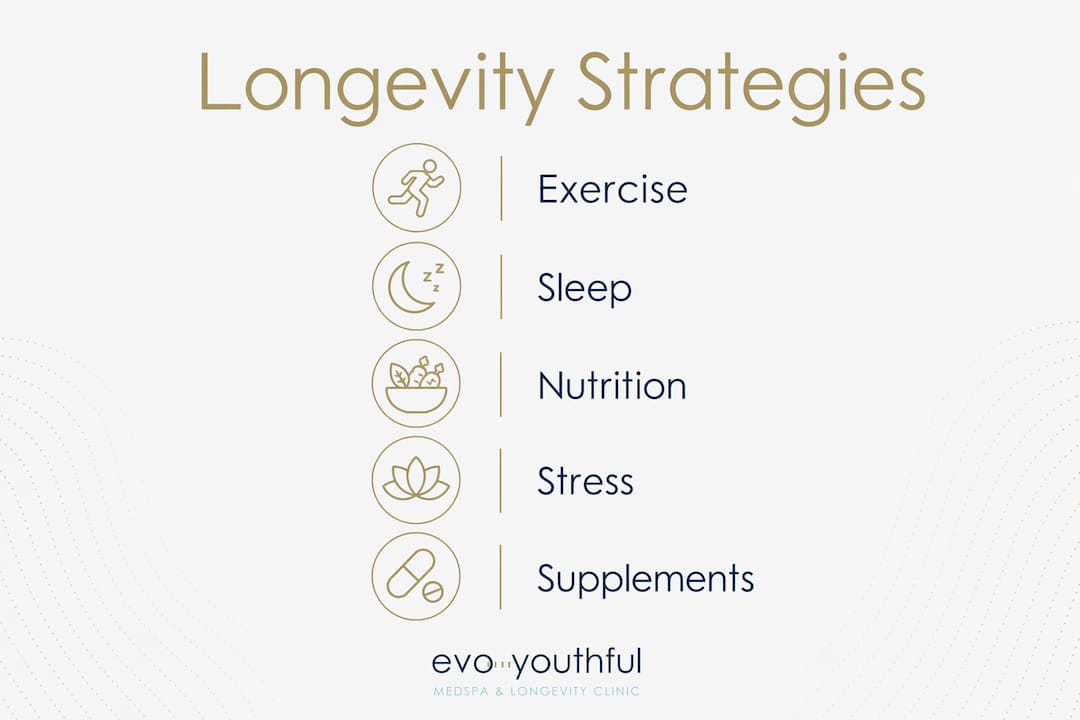
Here are the core pillars, ranked by evidence strength:
-
Aerobic exercise. Aim for 150 minutes of moderate-intensity or 75 minutes of vigorous aerobic activity each week. Cardiovascular fitness measured by VO2 max is the strongest predictor of all-cause mortality. Zone 2 cardio, the pace where you can hold a conversation but feel challenged, builds the mitochondrial density that keeps your metabolism young.
-
Resistance training. Muscle mass declines 3–5% per decade after age 30. Strength training two to three times per week preserves muscle, protects joints, and maintains insulin sensitivity. Losing muscle is not inevitable. It is a choice made by inactivity.
-
Sleep quality. Seven to nine hours of quality sleep per night is the clinical target. Poor sleep hygiene accelerates systemic inflammation, disrupts hormone regulation, and impairs cognitive repair. Sleep is not passive recovery. It is active biological maintenance.
-
Nutrition. Whole, minimally processed foods with adequate protein intake form the dietary foundation. The Mediterranean dietary pattern consistently shows the strongest association with reduced cardiovascular risk and systemic inflammation. No supplement replaces the anti-inflammatory effect of a diet built around vegetables, lean proteins, and healthy fats.
-
Social connection and mental health. Strong social connections and daily healthy habits impact aging more significantly than isolated supplements or therapies. Chronic loneliness elevates cortisol and inflammatory markers at levels comparable to smoking. Prioritizing relationships is a clinical recommendation, not a soft suggestion.
Pro Tip: Track your weekly exercise minutes for one month before adding any supplement or therapy. Most people discover the foundational gap before they ever need advanced interventions.
These five pillars are not glamorous. They are, however, the interventions with the deepest evidence base and the lowest cost. Any credible longevity program builds on them first.
Which advanced diagnostics and treatments does longevity medicine employ?
Longevity medicine uses clinical tools that go well beyond what most adults encounter in routine care. The goal is to identify biological aging at the cellular level and intervene before organ systems show measurable damage.
Comprehensive biomarker panels
Longevity practitioners track markers that target optimal health ranges rather than population averages. A standard lab flags you as “normal” if you fall within a wide reference range. A longevity panel flags early drift from your personal optimal, which may occur years before you cross into the “abnormal” zone. Common markers include fasting insulin, homocysteine, DHEA-S, sex hormones, inflammatory cytokines, and advanced lipid fractions.
Regenerative and hormonal therapies
Several clinical interventions have earned a place in evidence-based longevity protocols:
- Peptide therapy: Short chains of amino acids that signal cellular repair, growth hormone release, and tissue regeneration.
- Bioidentical hormone replacement therapy (BHRT): Restores declining hormone levels using compounds that match the body’s natural hormones, supporting energy, cognition, and metabolic health.
- PRF (Platelet-Rich Fibrin) injections: Use concentrated growth factors from your own blood to support tissue repair and regeneration.
- Cognitive support therapies: Treatments targeting brain health and neural function, such as transcranial magnetic stimulation, address cognitive aging directly.
The experimental boundary
Aging is not FDA-recognized as a disease, which means no drug is approved specifically to slow it. Some medications, including metformin, are prescribed off-label to influence metabolic aging pathways. These approaches remain experimental. Patients should treat foundational lifestyle changes as the core of any longevity program, with advanced therapies as supplementary tools.
| Intervention category | Evidence level | Examples |
|---|---|---|
| Lifestyle pillars | Strong, consensus-backed | Exercise, sleep, nutrition, social health |
| Biomarker monitoring | Strong, clinical standard | Advanced lipid panels, fasting insulin, hs-CRP |
| Hormonal therapies | Moderate, personalized | BHRT, testosterone optimization |
| Peptide and regenerative | Emerging, promising | Peptide therapy, PRF injections |
| Off-label pharmaceuticals | Experimental | Metformin for metabolic aging |
What are the benefits and realistic expectations of longevity medicine?
The primary benefit of longevity medicine is extending the years you live in good health, with full mobility, sharp cognition, and genuine quality of life. That is a different goal than simply living longer. Healthspan focuses on maintaining function, not just adding years to a calendar.
Realistic benefits for adults who engage consistently include:
- Reduced chronic disease risk: Early detection and intervention lower the probability of cardiovascular disease, type 2 diabetes, and cognitive decline.
- Improved physical function: Preserved muscle mass, cardiovascular fitness, and joint health translate directly to daily capability and independence.
- Sharper cognitive health: Biomarker-guided care and targeted therapies support brain function as you age, reducing the risk of early cognitive decline.
- Better metabolic health: Tracking and correcting insulin sensitivity, inflammation, and hormonal balance prevents the metabolic drift that drives most age-related disease.
- Closing the healthspan gap: The current gap between U.S. life expectancy and healthspan exceeds a decade. Consistent engagement with longevity strategies measurably narrows that gap.
The biggest misconception is that longevity medicine means anti-aging pills or expensive biohacks. Experts including Dr. Nir Barzilai, a leading aging researcher, are direct on this point:
“The most powerful longevity tools are disciplined lifestyle changes driven by data, not expensive supplements or experimental drugs. Robust lifestyle and biomarker frameworks are where the real gains live.”
You can explore how proactive wellness prevents decline at any age, but the core message is consistent across the research. Consistency with foundational habits produces the most meaningful and measurable improvements in healthspan.
Key Takeaways
Longevity medicine extends healthspan by targeting biological aging through personalized diagnostics, evidence-based lifestyle pillars, and regenerative therapies before chronic disease takes hold.
| Point | Details |
|---|---|
| Healthspan is the real goal | The U.S. healthspan-lifespan gap exceeds a decade; longevity medicine works to close it. |
| Lifestyle pillars come first | Exercise, sleep, nutrition, and social health deliver the strongest evidence-based results. |
| Advanced diagnostics matter | Biomarker panels track optimal ranges, not just population averages, to catch early decline. |
| Therapies are supplementary | BHRT, peptide therapy, and PRF support the foundation but do not replace lifestyle change. |
| Consistency drives outcomes | Longevity medicine requires ongoing engagement, not a one-time intervention or quick fix. |
What I’ve learned after years of working in longevity care
Most people arrive at a longevity clinic expecting a prescription. They want the pill, the injection, or the test that explains why they feel older than they should. What they find instead is a mirror. The data almost always points back to sleep, movement, food, and connection.
That is not a disappointing finding. It is a clarifying one. The science of aging and longevity has advanced enormously, and the tools we now have for biomarker tracking, hormone optimization, and cellular repair are genuinely impressive. But those tools work best when they are layered onto a solid foundation. I have seen patients invest in advanced therapies while sleeping five hours a night and eating poorly, and the results are predictably underwhelming.
What I find most encouraging is how quickly the body responds when you address the fundamentals. Patients who commit to resistance training, clean up their sleep, and get their hormones properly assessed often report feeling meaningfully better within 90 days. That is not placebo. That is biology responding to the right inputs.
The industry hype around longevity is real, and it can lead people toward expensive, unproven interventions before they have addressed the basics. My honest recommendation: get a comprehensive biomarker panel, build your lifestyle foundation, and then layer in clinical therapies where the data supports them. That sequence produces results. Skipping to the advanced therapies without the foundation rarely does.
Longevity medicine is not about living forever. It is about living well for as long as possible. That goal is achievable, and the path to it is clearer than most people realize.
— Elizabeth Vogstrom, PA-C
Personalized longevity care at evoyouthful in Wayzata, MN
evoyouthful offers clinical longevity services designed for adults who want proactive, data-driven care rather than reactive treatment.
The clinic’s longevity protocols include peptide therapy for cellular repair and regeneration, bioidentical hormone replacement to restore hormonal balance, nutrigenomics testing to personalize your nutrition plan based on your genetic profile, and ExoMind cognitive support for brain health. Every protocol at evoyouthful is built around your biomarker data and health goals, not a generic template. If you are ready to take a proactive approach to aging well, schedule a consultation with the evoyouthful team in Wayzata, MN.
FAQ
What is longevity medicine in simple terms?
Longevity medicine is a medical specialty that uses advanced diagnostics and personalized interventions to extend the years you live in good health. It targets biological aging before symptoms or disease appear.
How does longevity medicine differ from anti-aging treatments?
Anti-aging treatments typically focus on appearance. Longevity medicine focuses on biological function, tracking biomarkers, preserving muscle and cognition, and reducing chronic disease risk through evidence-based protocols.
What are the most effective longevity health strategies?
The most effective strategies are regular aerobic and resistance exercise, seven to nine hours of quality sleep, whole-food nutrition with adequate protein, and strong social connections. These foundational habits outperform supplements and experimental therapies in every major study.
Are longevity treatments safe?
Foundational lifestyle interventions are safe and well-supported by research. Advanced therapies like BHRT and peptide therapy are safe when prescribed and monitored by a qualified clinician. Off-label pharmaceutical approaches remain experimental and require careful medical oversight.
At what age should I start longevity medicine?
The most effective time to start is before symptoms appear. Adults in their 30s and 40s benefit most from early biomarker tracking and lifestyle optimization, though meaningful improvements in healthspan are achievable at any age through consistent engagement with longevity health strategies.
Recommended
Ready to Start?
Schedule a Consultation
Have questions about what you just read? Our team is here to help.