
Testosterone for Retirees: What Trials Show on Performance
Elizabeth Vogstrom, PA-C
evoyouthful Clinical Team
Discover how testosterone therapy can enhance athletic performance in retirees, boosting strength and muscle mass with proper training.
Testosterone for Retirees: What Trials Show on Performance
Yes, but conditionally: testosterone therapy produces measurable, generally modest improvements in muscle mass and some strength measures in older men with genuinely low testosterone, and those gains are largest when paired with structured resistance training. The retirees most likely to notice a real difference are those with documented, symptomatic hypogonadism, not simply low-normal levels that come with normal aging. The Testosterone Trials, a coordinated set of seven placebo-controlled studies in men 65 and older, and the TEAAM three-year trial both found real but bounded effects. Here’s the honest summary:
- Gains in lean mass and muscle power are real but typically modest, not the dramatic transformation marketing sometimes implies.
- The functional payoff, meaning strength you can actually use on stairs or in the yard, shows up most clearly when testosterone is combined with resistance training, not taken alone.
- Safety monitoring, including hematocrit and PSA checks, isn’t optional paperwork. It’s what determines whether therapy stays appropriate over time.
Key Takeaways
Testosterone therapy produces modest but measurable gains in lean mass and muscle power in older men with true hypogonadism, and those gains are strongest when combined with resistance training.
| Point | Details |
|---|---|
| Effects are real but modest | Trials show measurable lean mass and power gains, not dramatic athletic transformation. |
| Candidacy matters most | Symptomatic, lab-confirmed hypogonadism benefits more than low-normal age-related decline. |
| Training amplifies results | Combining testosterone with resistance training produces greater gains than either alone. |
| Monitoring is non-negotiable | Hematocrit and PSA checks at baseline, 3 months, and annually catch issues early. |
| evoyouthful offers a structured pathway | Baseline testing, individualized dosing, and coordinated training guidance support safer outcomes. |
Table of Contents
- Testosterone Benefits Athletic Performance in Retirees: What the Evidence Says
- How Does TRT Change Muscle Strength and Physical Performance?
- Who Actually Qualifies for Testosterone Therapy as an Older Adult?
- What Are the Testosterone Formulation and Dosing Options?
- What Are the Risks and How Should Testosterone Be Monitored?
- How Do You Maximize Muscle Gains From TRT?
- What Questions Should You Ask Before Starting TRT?
- How Does a BHRT Clinic Evaluate Older Men for TRT?
- A Clinical Perspective on Testosterone for Retirees
- How evoyouthful Supports Retirees Considering TRT
- Key Studies and Reviews Worth Reading
- Frequently Asked Questions
- Sources
Testosterone Benefits Athletic Performance in Retirees: What the Evidence Says
The strongest evidence on testosterone benefits for athletic performance in retirees comes from a handful of well-designed randomized trials, not from anecdote or marketing copy. Each answers a slightly different question, and together they paint a consistent, if unglamorous picture: real biological change, modest functional change.
The Testosterone Trials (T Trials) enrolled 788 men age 65 and older with unequivocally low testosterone and randomized them to gel or placebo for one year. The results showed moderate improvement in sexual function and hemoglobin, slight improvement in walking distance, mood, and bone density. On the safety side, the trials also documented increased PSA referrals and erythrocytosis (thickened blood) in some participants, along with a small increase in coronary artery plaque volume in an imaging substudy. This is the trial most clinicians point to when discussing realistic expectations for older men.
The 3-year TEAAM-style RCT went further, tracking physical performance for three full years rather than one. Men on testosterone showed statistically significant, though modest, improvements: differences of roughly 10.7 watts and 22.4 watts on separate stair-climb power tests, plus measurable gains in chest-press and leg-press power and lean body mass compared with placebo. That’s a meaningful signal for a study this long, but it’s not the kind of change that turns a sedentary retiree into a competitive lifter.
TRAVERSE, the large cardiovascular safety trial, was designed to answer a different question entirely: does testosterone raise heart attack or stroke risk in men with existing cardiovascular risk factors? Its reassuring cardiovascular findings gave clinicians more confidence prescribing testosterone to appropriately screened patients, though ongoing reviews still recommend individualized cardiovascular assessment rather than a blanket green light.
A 2024 comparative review adds an important corrective: exercise alone generally beats physiological-dose testosterone for improving strength and aerobic fitness. Testosterone’s real value shows up when it’s combined with training, where the two produce additive gains in lean mass beyond what either does solo.
Quick statistic snapshot:
- Stair-climb power differences of 10.7 to 22.4 watts favoring testosterone over placebo in the 3-year RCT.
- Roughly a quarter to nearly a third of men over 60 have low testosterone by some clinical cutoffs.
- Some trials show functional measures like walking distance improving only slightly, or only in perceived rather than objectively measured terms.
Headline trials at a glance:
- T Trials — one-year, placebo-controlled, 788 men 65+: modest sexual function, hemoglobin, and mood gains; PSA and blood-thickness signals worth watching.
- 3-year RCT (TEAAM-adjacent) — sustained gains in stair-climb power, lean mass, and press power over three years.
- Molecular/RET adjunct study — short-term testosterone plus resistance training amplified muscle protein synthesis beyond training alone.
- 2024 comparative review — exercise outperforms testosterone alone for strength and aerobic fitness; combining both wins on lean mass.
How Does TRT Change Muscle Strength and Physical Performance?
Testosterone doesn’t affect every physical domain equally. Understanding which ones respond, and by how much, helps set realistic expectations before you start.
Lean body mass responds most consistently. Nearly every major trial, including TEAAM, shows testosterone increases lean mass relative to placebo, generally in the range of a few pounds over a year of treatment. This is the most reliable, reproducible effect across the literature.
Maximal strength shows more variability. Chest-press and leg-press strength improved significantly in the 3-year trial, but the size of the effect was modest, not the kind of jump you’d see from a serious strength program alone. Testosterone appears to support the muscle-building side of strength gains more than it drives the neural side.
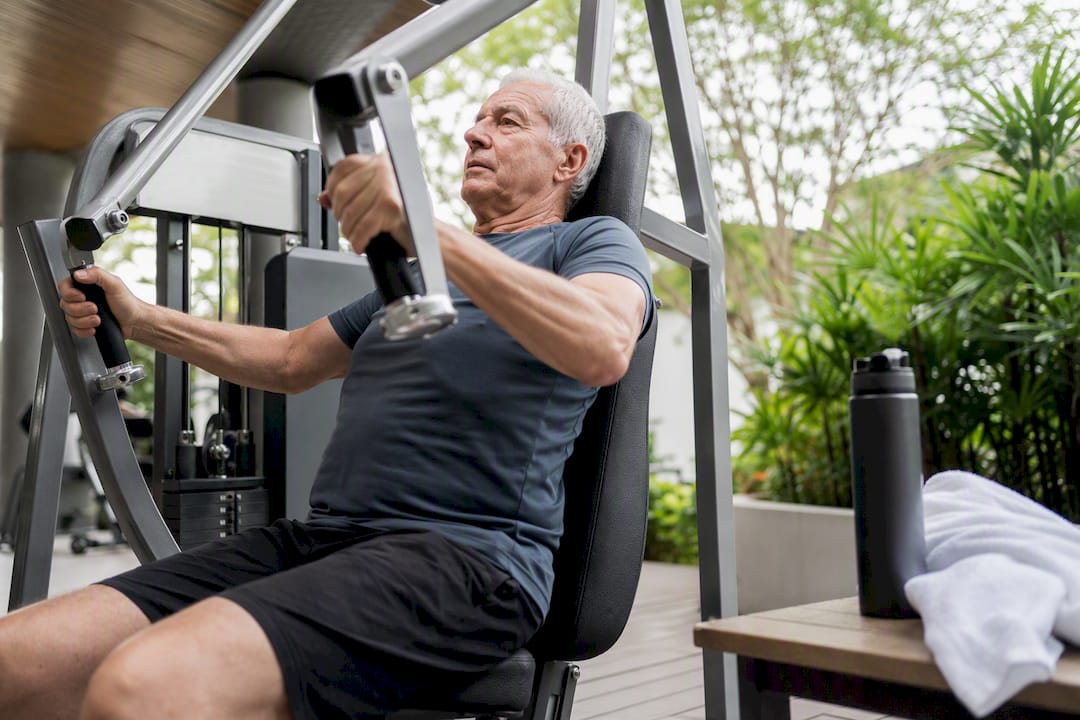
Muscle power, meaning how fast you can generate force, showed some of the clearest gains. Stair-climb power improved by 10.7 to 22.4 watts depending on the specific test protocol in the 3-year RCT, a difference retirees might notice as slightly easier stair climbing or quicker rising from a chair.
Aerobic capacity and endurance are where testosterone underperforms compared with exercise. A 2024 comparative review found that structured aerobic and resistance training beats physiological-dose testosterone for improving VO2peak and overall aerobic fitness. Testosterone is not a substitute for cardio.
Fatigability, or how quickly muscles tire during repeated effort, has less robust trial data, but some men report subjectively feeling less drained during daily activity, even when objective walking-distance measures move only slightly.
- Lean mass: consistent, modest gains across trials.
- Maximal strength: moderate gains, more variable between studies.
- Muscle power (stair-climb, chair rise): some of the more measurable functional gains.
- Aerobic endurance: exercise outperforms testosterone alone.
- Perceived fatigue: often improves more than objective measures do.
Why the numbers alone don’t tell the whole story: a randomized study pairing testosterone with six weeks of resistance training found greater gains in fat-free mass, muscle thickness, and strength than exercise alone, along with measurable increases in muscle protein synthesis and anabolic signaling. Testosterone appears to amplify what your muscles do in response to training. It doesn’t replace the training itself.
Pro Tip: Think of testosterone as raising the ceiling on what your muscles can build, not as a shortcut around the work. Neural adaptations, meaning your nervous system learning to recruit muscle fibers efficiently, still require repeated practice under load. Skip the training and you’re mostly leaving the biological potential on the table.
Who Actually Qualifies for Testosterone Therapy as an Older Adult?
Not every retiree with “low-normal” testosterone on a lab report is a good candidate. The trials that showed benefit enrolled men with unequivocal, symptomatic hypogonadism, and that distinction matters for both safety and realistic expectations.
A basic diagnostic checklist clinicians use:
- Persistent symptoms: reduced libido, unexplained fatigue or low vigor, mood changes, or declining mobility that isn’t explained by another condition.
- Two separate morning blood draws showing consistently low total testosterone, since single random tests are unreliable and levels vary by time of day.
- Exclusion of reversible causes, including sleep apnea, obesity-driven suppression, medication effects, and untreated depression.
- Review of comorbidities and body composition, since adiposity can lower measured testosterone without reflecting true glandular dysfunction.
Men with unequivocal hypogonadism, low measured testosterone plus clear symptoms, tend to benefit more and more predictably than men whose levels sit in a low-normal range attributable mainly to age or excess weight. For the latter group, weight loss and resistance training often move the needle on symptoms just as effectively, without the monitoring burden of hormone therapy.
Contraindications and exclusions worth knowing:
- Untreated or unstable prostate cancer.
- Certain hematologic conditions that raise clotting or blood-thickening risk.
- Active or recent thrombosis (blood clots).
- Men who still want to father children should discuss fertility implications before starting, since exogenous testosterone can suppress natural sperm production.
What Are the Testosterone Formulation and Dosing Options?
Clinicians prescribe testosterone in several forms, and the choice affects convenience, monitoring frequency, and how stable your blood levels stay day to day.
- Topical gels (AndroGel-type formulations) are applied daily to the skin. They’re convenient and easy to adjust, but absorption varies between individuals and transfer to others through skin contact is a real concern.
- Short-acting injections, typically testosterone cypionate, are given every one to two weeks, either self-administered or in-clinic. Levels can peak and trough noticeably between doses.
- Long-acting intramuscular undecanoate (Aveed) is dosed roughly every ten weeks after an initial loading phase, offering fewer injections but requiring in-office administration due to a rare pulmonary oil microembolism risk.
- Subcutaneous pellets are implanted every three to six months, providing steady levels without daily attention, though insertion requires a minor in-office procedure.
| Formulation & Dosing | Clinical Benefit Pattern | Safety Considerations | Best Suited For |
|---|---|---|---|
| Gel (daily) | Steady, adjustable levels | Skin transfer risk; variable absorption | Men wanting flexible daily dose adjustment |
| Cypionate injection (1-2 weeks) | Effective, well-studied | Hematocrit/PSA monitoring; peak-trough swings | Men comfortable with routine injections |
| Undecanoate (Aveed, ~10 weeks) | Stable long-interval levels | Rare embolism risk; in-office only | Men wanting fewer visits |
| Pellets (3-6 months) | Consistent, low-maintenance | Minor procedure; less dose flexibility | Men prioritizing convenience |
A fertility note: exogenous testosterone suppresses the signals your body uses to make sperm, which can reduce or halt fertility during treatment. Men who want to preserve fertility should discuss alternatives, including agents that stimulate natural testosterone production without suppressing sperm count, before starting standard TRT.
What Are the Risks and How Should Testosterone Be Monitored?
The T Trials and subsequent research identified a consistent set of safety signals, none of which should be dismissed, but none of which are automatic dealbreakers either. The point of monitoring is catching problems early, not avoiding treatment altogether.
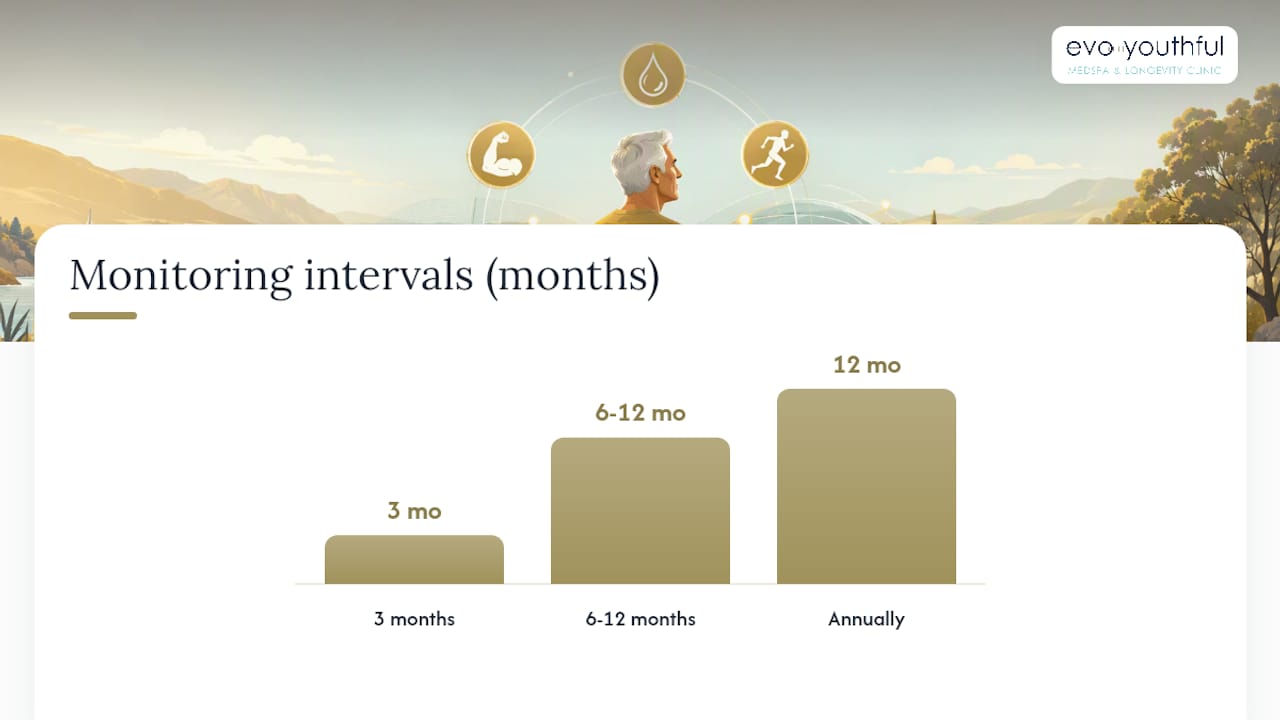
Erythrocytosis (elevated hematocrit) was one of the more common findings in the T Trials, where some men developed thickened blood requiring dose reduction or temporary discontinuation. Clinicians typically check hematocrit at baseline, then again at three months, six months, and annually thereafter. A hematocrit rising above roughly 54% generally triggers a dose hold or reduction.
PSA and prostate concerns showed up as increased urology referrals in the T Trials, though this reflected closer monitoring catching pre-existing issues as much as testosterone directly causing new ones. Baseline PSA plus a repeat check at three to six months is standard practice, with any significant rise prompting urology evaluation.
Cardiovascular signals were a major open question until TRAVERSE, a large safety trial, offered reassurance for men with existing cardiovascular risk factors. Some imaging substudies in earlier trials did find small increases in coronary plaque volume, which is why cardiovascular risk assessment remains part of the initial workup rather than an afterthought.
Sleep apnea can worsen with testosterone therapy in some men, so screening for or treating existing apnea before starting is standard.
Typical monitoring schedule:
- Baseline: morning testosterone (two separate draws), hematocrit, PSA, liver function, symptom review.
- 3 months: repeat hematocrit and PSA, symptom check, dose adjustment if needed.
- 6-12 months: full panel repeat, ongoing symptom and side-effect review.
- Annually thereafter: continued hematocrit, PSA, and clinical reassessment.
Individualized risk-benefit framing matters more than any single number. A man with a strong family history of prostate cancer or existing cardiovascular disease needs a different conversation than a healthy 68-year-old with clear-cut hypogonadism and no red flags.
How Do You Maximize Muscle Gains From TRT?
Testosterone sets the biological stage, but training and nutrition determine whether that translates into strength you actually use.
- Resistance train 2 to 3 times per week, focusing on multi-joint lifts (squats, presses, rows) that recruit large muscle groups.
- Include power-focused movements, like sit-to-stand or step-up variations, since these carry over most directly to stair-climb and daily mobility gains.
- Progress gradually, adding weight or resistance every few weeks rather than staying at the same load indefinitely.
Nutrition matters just as much as the lifting itself. Aim for roughly 1.2 to 1.6 grams of protein per kilogram of body weight daily to support muscle repair and growth. Harvard Health’s review of performance supplements notes that creatine is one of the few adjuncts with genuine evidence for supporting strength and power gains, alongside adequate carbohydrate intake to fuel training sessions.
- Protein target: 1.2 to 1.6 g/kg body weight per day.
- Creatine: a reasonable, well-studied adjunct for strength and power.
- Calorie balance: a moderate surplus, not aggressive restriction, supports lean mass gains during training.
Timeline callout: expect biological markers like lean mass to shift within 8 to 12 weeks, measurable strength gains by 3 to 6 months, and the fullest functional payoff, meaning noticeably easier stairs or daily tasks, closer to 6 to 12 months of consistent training combined with therapy. Reassess your program, and your therapy, at each major milestone rather than waiting a full year to check in.
What Questions Should You Ask Before Starting TRT?
A productive first conversation with your clinician covers more than just a prescription. Walk in prepared with a short checklist.
Before your appointment, clarify:
- Your specific goals: is this about muscle and strength, libido, general vitality, or some combination?
- Whether you’ve tried exercise and nutrition changes first, and for how long.
- Any personal or family history of prostate cancer, blood clots, or sleep apnea.
Questions worth asking your clinician directly:
- What benefits are realistic for someone in my situation, and on what timeline?
- What’s the monitoring schedule, and what lab values would prompt a dose change or pause?
- How is fertility affected, and are there alternatives if I want to preserve it?
- What does this cost per visit, and how often will I need to come in?
Red flags that should make you pause: a clinic that prescribes based on a single random testosterone test, promises supra-physiologic “optimized” dosing beyond normal ranges, or skips baseline PSA and hematocrit testing altogether. Two separate morning draws plus ongoing monitoring is the standard of responsible care, not an optional extra.
Pro Tip: Bring a written symptom log, sleep quality, energy levels, mood, libido, from the two weeks before your visit. It gives your clinician real data instead of a vague “I’ve been tired lately.”
How Does a BHRT Clinic Evaluate Older Men for TRT?
An experienced BHRT clinic follows a structured pathway rather than a one-visit prescription. That structure exists because testosterone therapy is a long-term commitment, not a single transaction.
A typical clinic pathway looks like:
- Intake conversation covering symptoms, goals, and medical history.
- Baseline testing: two morning testosterone draws, hematocrit, PSA, and a broader hormone panel.
- A shared-decision conversation weighing expected benefits against individual risk factors.
- A trial period targeting mid-normal testosterone levels, with a defined reassessment date.
- Scheduled monitoring visits at 3, 6, and 12 months, with dose adjustments as needed.
A first consult typically runs longer than a standard physical, since it involves education on training and nutrition alongside the medical evaluation.
Pro Tip: One-size-fits-all dosing is a genuine safety issue, not just an inconvenience. A dose that’s appropriate for a lean, active 65-year-old may be entirely wrong for a man with higher baseline hematocrit or cardiovascular risk factors.
A Clinical Perspective on Testosterone for Retirees
The gap between what testosterone promises in advertising and what it delivers in trials is real, and it’s worth saying plainly: this is a tool for correcting a documented deficiency, not a shortcut to athletic performance you didn’t earn through training.
The men who do best on therapy are the ones who treat it as one piece of a larger plan. Testosterone amplifies what resistance training builds. It doesn’t build much on its own. I’ve seen the disappointment that follows when someone expects a hormone to do the work that squats and protein intake actually accomplish.
Non-hormonal strategies, structured resistance training, weight management, sleep quality, deserve a genuine first attempt before hormone therapy enters the conversation, especially for men whose testosterone sits in a low-normal range rather than a clearly deficient one. When those steps aren’t enough and lab values confirm true hypogonadism, testosterone therapy becomes a reasonable, well-supported option, provided the monitoring commitment is taken seriously from day one.
How evoyouthful Supports Retirees Considering TRT
Deciding whether testosterone therapy makes sense for your goals shouldn’t rest on a single lab report or a rushed appointment. evoyouthful’s BHRT pathway in Wayzata starts with a full baseline workup, two morning testosterone draws, hematocrit, PSA, and a broader hormone panel, so your treatment plan reflects your actual physiology, not a generic protocol.

Unlike a quick prescription-only approach, evoyouthful pairs individualized dosing with coordinated guidance on resistance training and nutrition, since the trial evidence is clear that combining the two produces better functional outcomes than testosterone alone. Your first visit typically includes a detailed symptom and goals conversation plus the baseline lab work outlined above, giving you a realistic picture of what to expect before you commit to anything. Scheduled monitoring visits follow at defined intervals, so dose adjustments happen based on your actual numbers, not guesswork.
If you’re ready to find out whether you’re a genuine candidate, visit the BHRT for men page to see what the evaluation involves, or explore evoyouthful’s broader bioidentical hormone replacement therapy services to schedule a consultation.
Key Studies and Reviews Worth Reading
- The Testosterone Trials review: the foundational coordinated trial series in men 65+, showing modest benefits and key safety signals.
- The 3-year RCT on muscle performance: longest-running trial showing sustained gains in stair-climb power and lean mass.
- Annual Reviews synthesis: comprehensive expert review of benefits, risks, and open questions on long-term outcomes.
- 2024 testosterone vs. exercise comparison: clarifies that exercise outperforms testosterone alone for strength and fitness.
- Molecular adaptation study: mechanistic evidence on how testosterone amplifies resistance-training adaptations.
- Functional outcomes review: tempers expectations around objective walking-distance and mobility gains.
- 2025 long-term safety review: current guidance on individualized monitoring and cardiovascular safety context.
Frequently Asked Questions
Does testosterone therapy actually improve athletic performance in retirees? It produces modest, measurable improvements in lean mass and some strength and power measures, particularly when paired with resistance training. It’s not a substitute for structured exercise on its own.
How long does it take to notice benefits from testosterone therapy? Biological markers like lean mass often shift within 8 to 12 weeks, with strength gains typically visible by 3 to 6 months and fuller functional benefits by 6 to 12 months of consistent treatment and training.
What lab tests confirm I’m a candidate for TRT? Two separate morning total testosterone draws showing consistently low levels, alongside symptoms like low libido, fatigue, or reduced mobility. A single random test isn’t sufficient for diagnosis.
Is testosterone therapy safe for older men with heart disease risk? The TRAVERSE cardiovascular safety trial offered reassurance for men with existing risk factors, but individualized cardiovascular assessment remains part of responsible prescribing.
Can I keep my fertility while on testosterone therapy? Exogenous testosterone typically suppresses natural sperm production. Men who want to preserve fertility should discuss alternatives with their clinician before starting standard therapy.
Sources
- Testosterone Replacement in Men with Age-Related Low Testosterone: What Did We Learn From The Testosterone Trials? - PMC
- Effects of Testosterone Supplementation for 3 Years on Muscle Performance and Physical Function in Older Men - PMC
- Benefits and Risks of Testosterone Treatment in Men with Age-Related Decline in Testosterone | Annual Reviews
- Comparing the Impacts of Testosterone and Exercise on Lean Body Mass, Strength and Aerobic Fitness in Aging Men | Sports Medicine - Open
- Testosterone therapy induces molecular programming augmenting physiological adaptations to resistance exercise in older men
Recommended
Ready to Start?
Schedule a Consultation
Have questions about what you just read? Our team is here to help.