

High-End Anti-Aging Treatment Types: A Clinical Guide
Elizabeth Vogstrom, PA-C
evoyouthful Clinical Team
Explore high-end anti-aging treatment types including injectables, lasers, and surgical options. Find the best solution for your rejuvenation goals!
High-End Anti-Aging Treatment Types: A Clinical Guide
The six clinical families that cover virtually every high-end anti-aging treatment type are: injectables (neuromodulators, dermal fillers, lifting threads), energy-based devices (lasers, radiofrequency, microfocused ultrasound), resurfacing and peels (fractional CO2/erbium, deep chemical peels, microneedling with RF), regenerative biologics (PRP/PRF, exosomes, PDRN, peptides), surgical rejuvenation (facelift, neck lift, blepharoplasty), and body and facial contouring devices (HIFEM, combined RF plus fat reduction, cryolipolysis). Choosing among them depends on what you want to change: volume loss calls for fillers or fat grafting; dynamic lines call for neuromodulators; laxity calls for energy-based tightening or surgery; texture and pigment call for resurfacing; systemic aging calls for an inside-out regenerative plan.
A few orientation points before you go deeper:
- Injectables are the fastest entry point. Neuromodulators soften expression lines in days; fillers restore volume immediately. Both are reversible (hyaluronic acid fillers especially) and require no downtime.
- Energy-based treatments (RF, ultrasound, ablative and non-ablative lasers) remodel collagen over weeks to months. They are best for mild-to-moderate laxity and texture without surgery.
- Resurfacing and peels address surface quality: fine lines, pigment irregularity, pore size, and acne scarring. Depth of treatment determines downtime, from a weekend to two weeks.
- Regenerative biologics (PRP/PRF, exosomes, PDRN) support healing, stimulate cellular repair, and are often layered on top of other procedures rather than used alone.
- Surgical rejuvenation is indicated when there is excess skin or structural laxity that no device or injectable can adequately correct. Results last the longest of any category.
- Body and facial contouring devices address muscle tone, localized fat, and jawline definition as part of a broader anti-aging plan.
- Foundational daily care — a retinoid plus SPF routine — is not optional. Clinical reviewers consistently identify these two actives as the evidence-backed core that makes every in-office treatment work better and last longer.
Quick guidance: Before booking any procedure, optimize your daily topicals, confirm your clinician’s credentials, and ask about a combination plan rather than a single treatment. The most durable outcomes come from sequencing, not from one dramatic session.
Table of Contents
- What are the main high-end anti-aging injectables?
- How do energy-based treatments remodel collagen?
- What should you know about resurfacing and chemical peels?
- What do regenerative biologics actually do?
- When is surgical rejuvenation the right choice?
- How do body and facial contouring devices fit into an anti-aging plan?
- How do you choose the right anti-aging treatment for your goals?
- What results, timelines, and costs should you realistically expect?
- Why does an inside-out approach make procedural results last longer?
- Key Takeaways
- The case for restraint: why less is often the most sophisticated choice
- What evoyouthful offers and how to book your consultation
- Useful sources and further reading
What are the main high-end anti-aging injectables?
Injectables remain the most requested category in luxury aesthetic practice, and for good reason: they deliver visible change with minimal downtime and, in the right hands, look entirely natural.
Neuromodulators
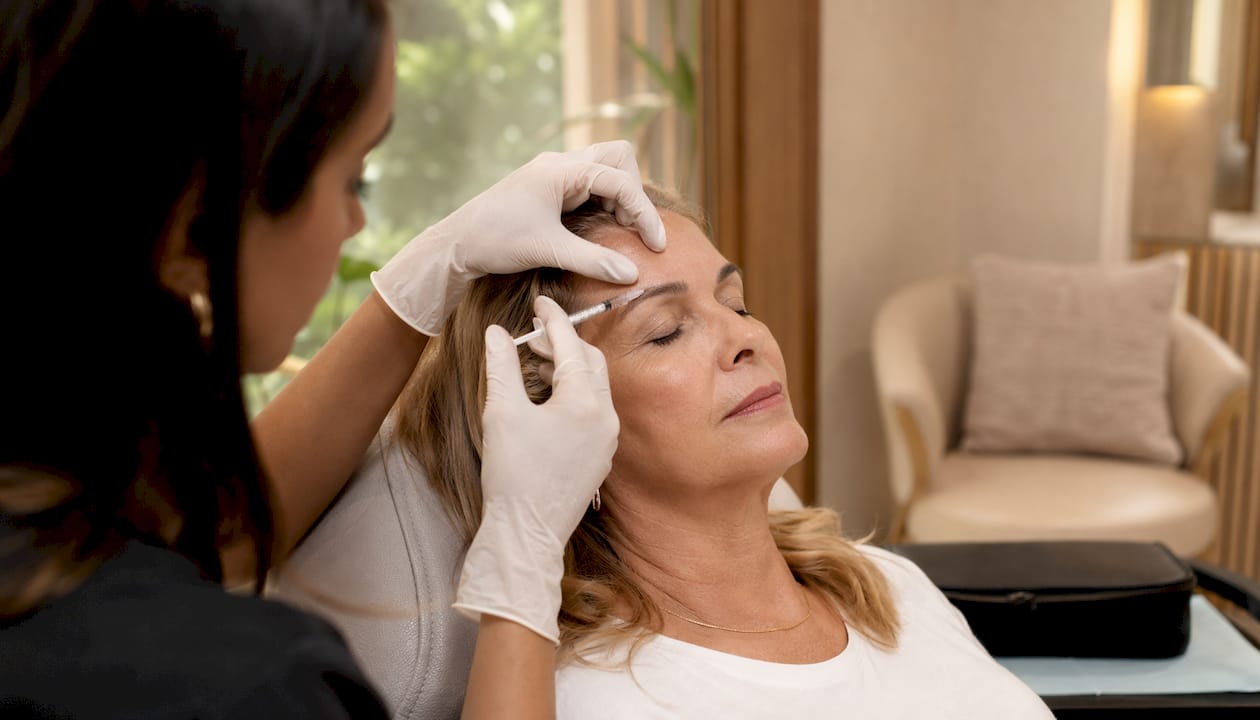
Botulinum toxin (commercially available as Botox, Dysport, Xeomin, and Daxxify, among others) works by temporarily blocking nerve signals to targeted facial muscles, softening the dynamic lines those muscles create. Crow’s feet, forehead lines, and the “11s” between the brows are the primary indications. Onset typically occurs within about a week, with full effect visible by two weeks. Duration ranges from 3–6 months for standard formulations, though newer longer-acting options are extending that window. Downtime is essentially zero. The main safety consideration is injector precision: misplaced units can cause temporary brow ptosis or asymmetry, which is why board-certified injectors with anatomy training matter.
Dermal fillers
Fillers restore volume and structural support that fat pads and bone resorb with age. The major material classes each have a distinct role:
- Hyaluronic acid (HA) fillers (Juvederm, Restylane families) are the most versatile. They treat fine lines, lip volume, cheek projection, and under-eye hollows. Duration typically ranges from several months to over a year depending on product viscosity and placement. Critically, HA fillers are reversible with hyaluronidase, which makes them the safest first choice for new patients. Results are immediate and can last from six months to two years.
- Calcium hydroxylapatite (CaHA) fillers (Radiesse) provide structural support and stimulate collagen production. They work well for deeper facial folds, hand rejuvenation, and jawline definition. Duration is generally around one year to a year and a half. Not reversible enzymatically.
- Biostimulatory agents (poly-L-lactic acid, such as Sculptra) work differently: they stimulate your own collagen over a series of sessions rather than adding immediate volume. Results build gradually over several months and can last over a year. Ideal for patients who want a gradual, natural-looking correction rather than an immediate change.
For facial volume loss, the choice of filler material depends on the depth of the deficit, the anatomy of the area, and whether reversibility matters to you.
Lifting threads
PDO (polydioxanone) and PLLA threads create a mechanical lift by anchoring to subcutaneous tissue and pulling lax skin upward. They also stimulate a mild collagen response along the thread tract. Best candidates have mild-to-moderate jowling or brow descent without significant excess skin. Results are visible immediately but modest, lasting about a year to a year and a half before the threads absorb. Threads are not a surgical facelift substitute; they work best as a bridge treatment or as an adjunct to fillers and energy devices.
Typical cost ranges: Neuromodulators typically cost several hundred dollars per session depending on units used. HA fillers are often priced in the low thousands per syringe at luxury clinics. Biostimulators are priced per vial with several hundred to low thousands of dollars per vial, often requiring multiple vials. Thread lifts can cost in the low to mid thousands depending on thread count and area.
Pro Tip: Always ask your injector to walk you through a vascular complication protocol before your first filler session. A provider who has hyaluronidase on hand, knows the facial danger zones, and can describe their emergency response plan is demonstrating the standard of care you should expect.
How do energy-based treatments remodel collagen?
Energy-based devices work by delivering controlled thermal or mechanical energy to specific tissue depths, triggering a wound-healing response that produces new collagen and elastin. The key distinction is where in the skin that energy lands.
Ablative vs. non-ablative lasers
Ablative lasers (CO2, erbium:YAG) vaporize the outer skin layers, forcing complete epidermal regeneration. The result is significant: deep wrinkle reduction, pigment correction, and texture improvement that can last years. The tradeoff is real downtime, typically 7–14 days of redness, swelling, and peeling. Fractional delivery (as in fractional CO2) treats columns of tissue while leaving surrounding skin intact, reducing downtime to 5–10 days while preserving meaningful efficacy.
Non-ablative lasers (1064 nm Nd:YAG, 1550 nm fractionated erbium) heat the dermis without removing the epidermis. Downtime is minimal, often 1–3 days of mild redness, but multiple sessions are needed and results are more gradual. They suit patients who cannot afford social downtime or who have mild-to-moderate concerns.
Radiofrequency (RF)
RF devices deliver electrical energy that heats the dermis and, in some platforms, the deeper SMAS layer. Monopolar RF (such as Thermage) penetrates deepest and is used for skin tightening on the face, neck, and body. Multipolar and fractional RF devices offer more controlled heating at shallower depths. RF microneedling (evoyouthful’s Exion Clear RF Microablation) combines mechanical microneedling channels with RF energy delivered at precise depths, making it one of the more versatile resurfacing-plus-tightening options available. Downtime for RF microneedling is typically 2–5 days of redness and mild swelling.
Microfocused ultrasound
Microfocused ultrasound (MFU, commercially known as Ultherapy) delivers focused acoustic energy to the SMAS layer, the same tissue plane surgeons address in a facelift. It is the only non-invasive modality with FDA clearance for brow lifting and submental tightening. Results build over 3–6 months as new collagen matures. One session per year is typical for maintenance. It is not painless, and results are more modest than surgery, but for patients with mild-to-moderate laxity who are not surgical candidates, it is a well-established option.

| Modality | Downtime | Sessions needed | Longevity | Typical cost range |
|---|---|---|---|---|
| Ablative fractional CO2 | 7–14 days | 1–2 | 3–5 years | $1,000–$3,000 |
| Non-ablative fractional laser | 1–3 days | 3–5 | 1–2 years | several hundred dollars per session |
| RF microneedling | 2–5 days | 3–4 | 1–2 years | low thousands per session |
| Monopolar RF (Thermage) | Minimal | 1 | 1–2 years | low to mid thousands |
| Microfocused ultrasound (MFU) | Minimal | 1 per year | 1–2 years | low to mid thousands |
Evidence note: Ablative fractional lasers and RF microneedling have the strongest clinical trial support for wrinkle reduction and skin tightening. MFU has solid evidence for brow and neck lifting. Monopolar RF has good real-world data but more variable outcomes depending on patient laxity. For darker skin types (Fitzpatrick IV–VI), non-ablative and RF modalities are generally safer; ablative lasers carry a higher risk of post-inflammatory hyperpigmentation and should be approached with caution and significant provider experience.
What should you know about resurfacing and chemical peels?
Resurfacing treatments address the surface and mid-dermis: fine lines, pigment irregularity, acne scarring, rough texture, and enlarged pores. The depth of treatment determines both the result and the recovery.
Superficial resurfacing includes light chemical peels (glycolic acid, lactic acid, low-concentration salicylic acid) and gentle non-ablative laser passes. These produce mild exfoliation, a brief flush of redness, and no real downtime. They are maintenance tools, not corrective ones. Repeated monthly sessions can improve overall skin quality over time, but they will not address deep wrinkles or significant laxity.
Medium-depth resurfacing includes trichloroacetic acid (TCA) peels at 20–35% concentration, medium-depth fractional lasers, and some combination peel protocols. These reach the papillary dermis, producing meaningful collagen stimulation and pigment correction. Downtime is 5–7 days of peeling and redness. Results are visible and can last 1–2 years with good sun protection.
Deep resurfacing includes phenol-based peels and full-field ablative CO2 laser. These reach the reticular dermis and produce the most dramatic correction of deep wrinkles and severe photodamage. Downtime is 10–14 days minimum, with residual pinkness lasting weeks. They are performed less frequently now because fractional delivery achieves comparable results with less risk, but for the right candidate with severe photodamage, a deep peel remains a powerful option.
Microneedling with RF sits in a category of its own: it resurfaces by creating controlled micro-injuries while delivering RF energy at depth, stimulating both epidermal renewal and dermal collagen remodeling simultaneously. For a detailed look at how collagen induction therapy works at a mechanistic level, the process is worth understanding before your consultation.
Candidate criteria to review before booking:
- Fitzpatrick skin type: Darker skin types (IV–VI) face higher risk of post-inflammatory hyperpigmentation with aggressive resurfacing. A test spot and conservative depth selection are standard precautions.
- History of herpes simplex (HSV): Any resurfacing procedure can trigger an outbreak. Prophylactic antiviral medication (typically acyclovir or valacyclovir) is standard protocol for patients with a history of cold sores.
- History of keloid or hypertrophic scarring: Deep resurfacing is generally contraindicated. Superficial options with careful monitoring are preferred.
- Active isotretinoin use: Most providers require a 6–12 month washout period before aggressive resurfacing due to impaired wound healing.
- Recent radiation to the face: Contraindication for most resurfacing modalities.
Aftercare essentials: Gentle non-foaming cleanser twice daily, fragrance-free barrier moisturizer, strict sun avoidance (no direct sun for 2–4 weeks post-procedure), and daily broad-spectrum SPF 30+ once healed. Reintroduce retinoids only after full re-epithelialization, typically 4–6 weeks post-treatment.
What do regenerative biologics actually do?
Regenerative biologics are the fastest-evolving category in premium facial rejuvenation, and also the one with the widest gap between clinical evidence and marketing claims. Understanding the mechanism helps you ask better questions.
PRP and PRF
Platelet-rich plasma (PRP) and platelet-rich fibrin (PRF) are autologous products, meaning they are derived from your own blood. A small blood draw is centrifuged to concentrate platelets and growth factors. When injected or applied topically after microneedling, these growth factors support tissue repair, stimulate fibroblast activity, and promote angiogenesis. PRF is a second-generation refinement: it uses a slower spin to produce a fibrin matrix that releases growth factors more slowly, potentially extending the regenerative signal. PRF injections are one of the cleaner autologous options available because the product comes from your own body, eliminating sourcing and sterility concerns that apply to lab-derived products.
The clinical evidence for PRP/PRF in skin rejuvenation is promising but still maturing. Studies show improvement in skin texture, hydration, and fine lines, particularly when combined with microneedling. It is not a replacement for structural correction with fillers or energy devices, but it is a meaningful adjunct.
Exosomes
Exosomes are nano-sized extracellular vesicles that carry proteins, lipids, and RNA between cells, acting as messengers in cellular communication. Lab-derived exosome products claim to deliver these signaling molecules to skin cells to restore elasticity and stimulate sustained turnover. The concept is scientifically sound; the clinical evidence in aesthetics is still early-stage. Most published data comes from small studies or in vitro research. The FDA has not cleared exosome products for injection in the United States, and sourcing and sterility standards vary widely between manufacturers. If a provider offers exosome injections, ask specifically about the product’s regulatory status, manufacturing source, and chain of custody.
PDRN
Polydeoxyribonucleotide (PDRN), derived from salmon DNA, is used in some high-end clinic protocols to promote regenerative hydration and reduce inflammation at a cellular level. It is more established in European and Asian aesthetic medicine than in the United States, where it is used primarily as a topical or micro-injection adjunct rather than a standalone treatment. Evidence supports its role in wound healing and skin hydration; long-term anti-aging data is more limited.
Pro Tip: When evaluating any biologic product, ask three questions: Is it autologous or lab-derived? What is the regulatory status in the U.S.? Can the provider show you peer-reviewed clinical data, not just brand-sponsored studies? The answers tell you more than any marketing brochure.
Questions to ask your provider about biologics:
- What is the exact product name and manufacturer?
- Is this product FDA-cleared for this specific use?
- How is the product stored and handled between manufacture and injection?
- What clinical outcomes should I realistically expect, and over what timeline?
- What is the follow-up protocol if I have an adverse reaction?
When is surgical rejuvenation the right choice?
Surgery becomes the appropriate conversation when the degree of laxity, excess skin, or structural change exceeds what any device or injectable can meaningfully correct. That is not a failure of non-surgical options; it is simply anatomy.
Indications for surgery over non-surgical alternatives:
- Significant jowling with platysmal banding in the neck (a facelift and neck lift address both simultaneously)
- Excess upper eyelid skin that impairs the visual field or creates a heavy, tired appearance (blepharoplasty)
- Deep nasolabial folds and marionette lines driven by descended fat pads and SMAS laxity, not just volume loss
- Prior non-surgical treatments that have reached their ceiling without satisfying results
A well-performed facelift addresses the SMAS layer, not just the skin, which is why results look natural rather than pulled. Longevity is the key advantage: a facelift typically provides structural improvement lasting multiple years, far beyond what any non-surgical modality achieves. Neck lifts and blepharoplasty carry similar longevity when performed by a skilled surgeon.
Realistic recovery timeline:
- The recovery timeline typically includes a first week with swelling and bruising when most patients remain home-bound, followed by suture removal and bruising fading during the second week. Many patients return to social activities within a few weeks, with scars maturing over subsequent months before final results are visible.
Surgical qualification checklist before you commit:
- Board certification by the American Board of Plastic Surgery or American Board of Facial Plastic and Reconstructive Surgery
- Hospital privileges at an accredited facility (even if surgery is performed in an office-based OR)
- A portfolio of before-and-after photos showing patients with anatomy similar to yours, not just the best outcomes
- A clear, written revision policy and what it covers
- A dedicated post-operative care team and 24-hour emergency contact
- Honest discussion of risks: hematoma, nerve injury, scarring, and anesthesia complications
Cost ranges for surgical rejuvenation in luxury U.S. markets vary widely depending on surgeon, region, and facility; typical fees can be in the mid to high thousands of dollars range for facelifts, blepharoplasty, and neck lifts.
How do body and facial contouring devices fit into an anti-aging plan?
Body and facial contouring devices address the muscle-and-fat layer that aging also affects, and they are increasingly integrated into comprehensive anti-aging plans rather than treated as separate body-image tools.
Leading device categories and what they target:
- HIFEM (High-Intensity Focused Electromagnetic) devices like Emsculpt NEO combine electromagnetic muscle stimulation with RF energy to simultaneously build muscle and reduce fat. A single session induces thousands of supramaximal muscle contractions. For the abdomen, buttocks, and thighs, this translates to measurable muscle hypertrophy and fat reduction. Typical protocol: 4 sessions over 2 weeks, with maintenance every 3–6 months. Cost range: $750–$1,500 per session.
- Cryolipolysis (CoolSculpting and similar platforms) uses controlled cooling to selectively destroy fat cells without damaging surrounding tissue. Best for localized fat deposits that are resistant to diet and exercise. Results appear over 8–12 weeks as the body clears treated fat cells. Not a weight-loss tool; a body-contouring one.
- RF-based fat reduction and tightening devices (such as Emtone, Velashape) combine RF with mechanical energy to address skin laxity and cellulite simultaneously. They complement HIFEM treatments well.
Facial applications: Jawline and submental contouring using RF microneedling, MFU, or targeted Kybella injections (deoxycholic acid for submental fat) are increasingly part of facial anti-aging plans. A defined jawline and lifted neck contribute significantly to a youthful facial appearance, and these can often be addressed non-surgically in patients with mild-to-moderate submental fullness. For a broader overview of body skin tightening options and candidacy, the modality choices parallel what applies to the face.
How do you choose the right anti-aging treatment for your goals?
The best outcomes come from a structured consultation process, not from selecting a treatment from a menu. Here is a practical framework for evaluating your options with a clinician.
- Start with an anatomy assessment. A qualified provider should analyze your skin quality, volume distribution, bone structure, and degree of laxity before recommending anything. Treatments chosen without this step are guesswork.
- Request standardized photo documentation. Before-and-after photos taken under consistent lighting and angles are the only reliable way to track change over time. If a clinic does not do this routinely, that is a process gap.
- Map realistic outcomes. Ask your provider to describe what a successful result looks like for your specific anatomy, not a generic “you’ll look refreshed.” Specific, anatomy-grounded outcome descriptions signal clinical experience.
- Ask about a combination strategy. Most patients benefit from sequencing multiple modalities rather than relying on one. A provider who recommends only what they offer in-house may not be giving you the full picture. Personalized protocols that stage treatments appropriately tend to produce more natural, lasting results.
- Discuss staging and timing. Some combinations are synergistic (RF microneedling followed by PRF, for example); others need spacing (ablative resurfacing and filler in the same session is generally not advisable). Ask specifically about the sequencing rationale.
- Prioritize if budget or time is constrained. If you cannot do everything at once, ask which single intervention will move the needle most for your primary concern. A good clinician can answer that clearly.
Red flags to watch for:
- A provider who recommends a full package of treatments at the first consultation without a thorough anatomy review
- Pressure to purchase a multi-session package before you have seen any results
- Before-and-after photos that show only dramatic transformations, with no patients who look like you
- Clinicians without verifiable board certification or who cannot name their training in the specific procedure they are recommending
- No discussion of risks, downtime, or what happens if you are not satisfied
When to seek a second opinion: Any time a provider recommends surgery without first discussing non-surgical alternatives, or any time a recommendation feels driven by upselling rather than your anatomy. A second opinion from a board-certified plastic surgeon or dermatologist costs relatively little and can confirm or redirect a treatment plan significantly.
What results, timelines, and costs should you realistically expect?
Understanding what each treatment family delivers, and when, prevents disappointment and helps you plan financially and logistically.
| Treatment family | Visible change | Peak result | Longevity |
|---|---|---|---|
| Neuromodulators | 3–7 days | 2 weeks | 3–6 months |
| Dermal fillers (HA) | Immediate | 2–4 weeks (settling) | six months to two years |
| Biostimulatory fillers | 3–6 months | 6 months | 2+ years |
| Energy-based (RF/MFU) | 1–3 months | 3–6 months | 1–2 years |
| Ablative resurfacing | 2–4 weeks post-healing | 3–6 months | 3–5 years |
| PRP/PRF biologics | 4–8 weeks | 3–4 months | 6–12 months |
| Surgical facelift | 4–6 weeks | 3–6 months | 7–10 years |
Common risks and when to escalate:
- Vascular occlusion from filler is rare but serious. Symptoms include blanching, severe pain, or skin mottling immediately after injection. This is a medical emergency requiring immediate hyaluronidase injection and possible further intervention. Do not leave the clinic if you notice these signs.
- Infection post-resurfacing presents as increasing redness, warmth, and purulent discharge beyond day 3–4. Contact your provider immediately; oral or IV antibiotics may be needed.
- Hyperpigmentation post-laser or peel is more common in darker skin types and is managed with topical hydroquinone, azelaic acid, and strict sun avoidance.
- Hematoma post-surgery typically presents within 24 hours as rapidly increasing swelling and pain on one side. This requires prompt surgical evaluation.
Maintenance and systemic care: The longevity figures above assume good foundational care. Daily broad-spectrum SPF use, consistent retinoid application, adequate sleep, and anti-inflammatory nutrition all extend procedural results. Hormonal optimization (discussed in the next section) can further shift the durability of collagen-stimulating treatments.
Why does an inside-out approach make procedural results last longer?
The clinical rationale is straightforward: skin is a living organ, and its capacity to heal, produce collagen, and maintain structural integrity depends on systemic factors that no topical or device can fully replace.
Hormonal status is one of the most underappreciated modifiers of skin aging. Estrogen supports dermal collagen density, skin thickness, and wound healing. Testosterone influences sebum production and tissue repair. When these hormones decline with age, the skin’s response to collagen-stimulating procedures diminishes. Bioidentical hormone replacement therapy can restore hormonal balance in ways that meaningfully support the skin’s healing response, making energy-based and resurfacing treatments more effective and longer-lasting.
Nutritional status matters too. Collagen synthesis requires adequate vitamin C, zinc, and amino acid availability. Chronic low-grade inflammation, often driven by diet, disrupts the wound-healing cascade that collagen-stimulating procedures depend on. Nutrigenomics testing can identify specific genetic variants that affect nutrient metabolism, allowing a clinician to tailor supplementation and dietary guidance to your biology rather than applying generic recommendations.
Sleep is when growth hormone is released and tissue repair occurs. Consistently poor sleep blunts the collagen response to any procedure. This is not a lifestyle platitude; it is a physiological fact with direct implications for procedural outcomes.
Optimizing systemic health before and during a procedural plan is not a luxury add-on. It is the difference between a result that lasts two years and one that lasts four. When hormonal balance, nutrition, and sleep are addressed alongside staged aesthetic procedures, the tissue you are treating is simply more capable of responding and maintaining that response. That is the clinical rationale for an integrated inside-out approach, and it is why the most sophisticated anti-aging plans address both layers simultaneously.
A practical sequencing example: At evoyouthful, a concierge anti-aging plan might begin with a hormonal and nutrigenomic assessment, followed by BHRT optimization over 60–90 days. Once systemic foundations are stable, staged procedures begin: RF microneedling for texture and early laxity, PRF injections as a healing adjunct, and neuromodulators for dynamic lines. Maintenance visits every 6–12 months sustain the result. This sequencing is deliberate: treating the tissue when it is hormonally and nutritionally supported produces a more durable outcome than layering procedures on a system that is already depleted.
Key Takeaways
High-end anti-aging treatment types work best when chosen by anatomy, sequenced deliberately, and supported by a strong daily care foundation and systemic health optimization.
| Point | Details |
|---|---|
| Match treatment to the problem | Laxity calls for energy devices or surgery; volume loss calls for fillers; texture calls for resurfacing; dynamic lines call for neuromodulators. |
| Foundational care is non-negotiable | A daily retinoid and broad-spectrum SPF routine amplifies every in-office procedure and extends its longevity. |
| Credentials and safety protocols matter | Confirm board certification, vascular complication protocols for filler, and a clear revision policy before committing to any provider. |
| Systemic optimization extends results | Hormonal balance, nutrition, and sleep directly affect collagen production and wound healing, making procedural outcomes more durable. |
| evoyouthful’s integrated approach | evoyouthful combines PRF injections, Exion Clear RF Microablation, BHRT, and nutrigenomics in sequenced concierge plans for lasting results. |
The case for restraint: why less is often the most sophisticated choice
The most common mistake in high-end aesthetic medicine is not under-treatment. It is over-treatment: too much volume, too aggressive a peel, too many modalities stacked without a coherent plan. The shift happening among leading practitioners is toward restrained, architecture-first corrections that restore structural integrity rather than add to it indiscriminately.
What does that mean in practice? It means assessing what has been lost, not just what can be added. It means choosing a biostimulatory filler to rebuild collagen scaffolding rather than stacking HA volume on top of a face that has already lost its structural foundation. It means using RF microneedling to tighten tissue before considering a thread lift, and considering a thread lift before recommending surgery. The sequence matters as much as the modality.
The evidence-forward approach also means being honest about what is well-established versus what is commercially exciting. PRP and PRF have meaningful clinical support as adjuncts. Exosomes are promising but not yet proven for injection in the U.S. context. A clinician who presents both with equal enthusiasm, without distinguishing their evidence levels, is not serving you well.
Integrated systemic care is not a marketing concept. When hormonal status, sleep quality, and nutritional sufficiency are addressed alongside procedural work, the tissue responds differently. That is physiology, not philosophy. The most durable outcomes I see come from patients who commit to both layers: the systemic foundation and the staged procedural plan, neither one treated as optional.
What evoyouthful offers and how to book your consultation
If you are ready to move from information to a personalized plan, evoyouthful’s clinic in Wayzata, MN is built for exactly this kind of concierge evaluation. The clinic combines procedural aesthetics with systemic regenerative care in a way that most standalone medspas do not offer.

Relevant services include PRF injections for autologous regenerative support, Exion Clear RF Microablation for resurfacing and tightening, ExoMind for cognitive and neural support as part of a longevity plan, and BHRT to optimize the hormonal foundation that makes procedural results last. These are offered as part of coordinated, staged plans rather than as isolated treatments.
To prepare for your first visit, bring your current topical regimen, a list of any prior procedures and when they were performed, and any before-and-after photos you have from previous treatments. Your first appointment includes a thorough anatomy and health history review, outcome mapping, and a staged treatment recommendation with clear timelines and cost transparency.
Schedule your personalized evaluation at evoyouthful.com to begin building a plan that addresses both what you see in the mirror and what is driving it from within.
Useful sources and further reading
The sources below informed this guide. They range from clinical reference material to editorial reporting on luxury aesthetic practice. Knowing the type of source helps you weigh what you are reading.
- Harvard Health: Skin Care for Aging Skin — Clinical editorial from Harvard Medical School covering retinoids, SPF, fillers, neuromodulators, and laser options. Use this as a foundational reference for evidence-backed basics.
- Mayo Clinic: Wrinkle Creams Guide — Patient-facing clinical overview of topical actives (retinol, vitamin C, niacinamide, bakuchiol). Useful for understanding over-the-counter versus prescription-strength options.
- Wirecutter / NYT: Best Skin-Care Products for Aging Skin — Rigorous product-testing editorial that consistently identifies retinoids and SPF as the evidence-backed core of any anti-aging routine. Good for evaluating topical product claims.
- Grazia: Inside the $1,300 Dior Haute Couture Facial — Editorial reporting on ultra-luxury facial sequencing. Useful context for understanding how luxury pricing reflects practitioner skill and multi-modality protocols rather than a single ingredient.
- Joanna Vargas: Glass Skin Dermafacial (PDRN protocol) — Clinic protocol page illustrating how PDRN is positioned in high-end facial practice. Read as a commercial protocol description, not a clinical trial.
- Joanna Vargas: The Exosome Facial Facelift — Clinic product page for exosome facial services. Useful for understanding how exosomes are marketed; compare claims against peer-reviewed literature before drawing conclusions.
- Lux Plastic Surgery: What Is Skin Rejuvenation? — Patient-facing clinical guide to skin rejuvenation options and safety from a UK aesthetic surgery practice. Useful background for understanding modality categories and candidacy.
- evoyouthful: Holistic Anti-Aging Approach Guide — Clinic-authored overview of treatment modalities and integrated wellness approaches available at evoyouthful in Wayzata, MN.
This article is general educational information, not medical advice. Treatment suitability depends on your individual anatomy, health history, and goals. Confirm current options and safety considerations with a board-certified clinician before proceeding with any procedure.
Recommended
Ready to Start?
Schedule a Consultation
Have questions about what you just read? Our team is here to help.