
Collagen Induction Therapy: How Microneedling Works
Elizabeth Vogstrom, PA-C
evoyouthful Clinical Team
Discover what collagen induction therapy is and how microneedling revitalizes your skin by stimulating collagen production for a firmer, smoother appearance.
What is collagen induction therapy?
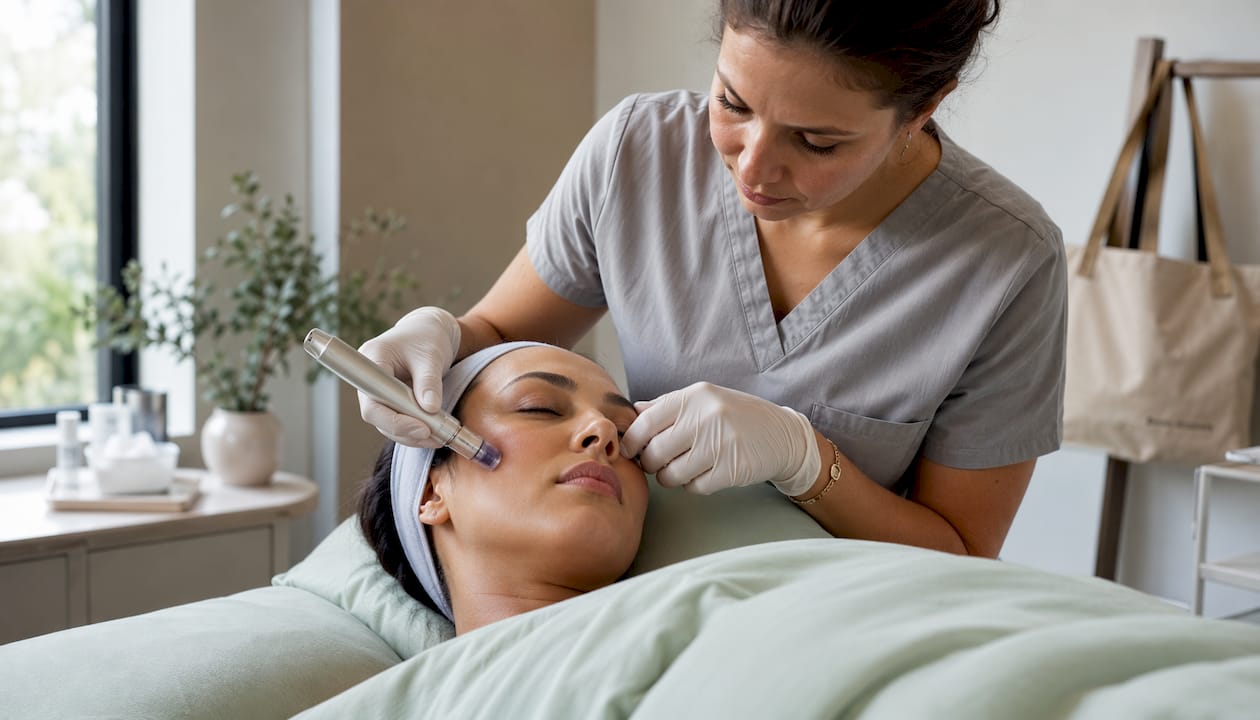
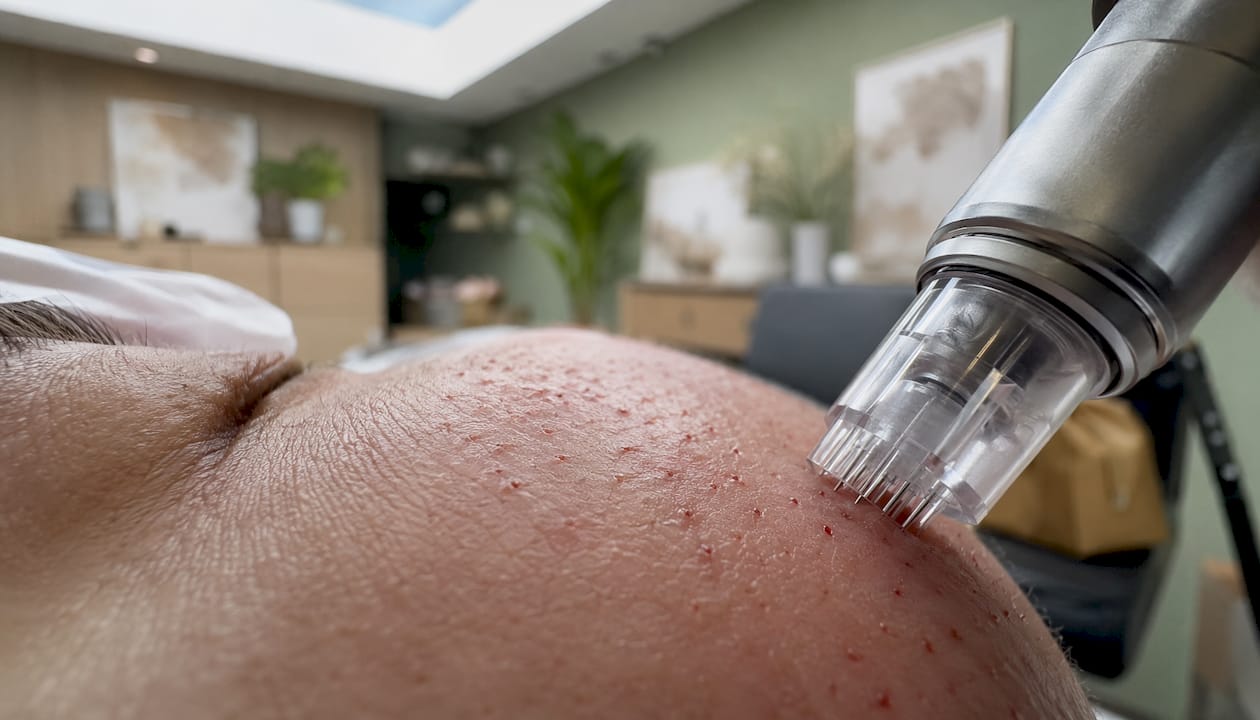
Collagen induction therapy, widely known as microneedling, is a minimally invasive skin treatment that uses sterile, fine needles to create thousands of controlled microscopic injuries in the skin’s surface. Those tiny punctures are intentional. They signal your body to activate its natural wound-healing response, which drives fibroblasts to produce fresh collagen and elastin fibers. The result is skin that gradually becomes thicker, firmer, and smoother without surgery or significant downtime.
Here is what the procedure involves at a glance:
- Controlled micro-injuries created by a device with fine, sterile needles
- Wound-healing cascade activated immediately after treatment
- Fibroblast stimulation that produces new collagen and elastin
- Gradual skin remodeling over weeks and months post-treatment
- Improvements in texture, firmness, and overall skin appearance
The term “collagen induction therapy” reflects the core mechanism: the treatment does not add anything foreign to your skin. It prompts your body to rebuild from within, which is why results feel natural and tend to last well beyond the treatment period itself.
How does collagen induction therapy work biologically?
The biological process behind microneedling is more layered than it might appear. When the needles penetrate the dermis, they create micropunctures that cause minimal surface damage while triggering a full wound-healing cascade beneath the skin. Your body reads these micro-injuries as a repair signal and responds accordingly.
The cascade begins with the release of growth factors, including platelet-derived growth factor, TGF-beta, fibroblast growth factor, and connective tissue growth factor. These proteins recruit fibroblasts, the cells responsible for building the structural proteins that give skin its firmness and elasticity. Fibroblasts migrate to the treatment area and begin laying down new collagen and elastin fibers within the intercellular matrix.
Clinical histology confirms that four microneedling sessions spaced one month apart produce a 400% increase in collagen and elastin at six months post-treatment, with a thickened stratum spinosum and normal rete ridges visible at one year.
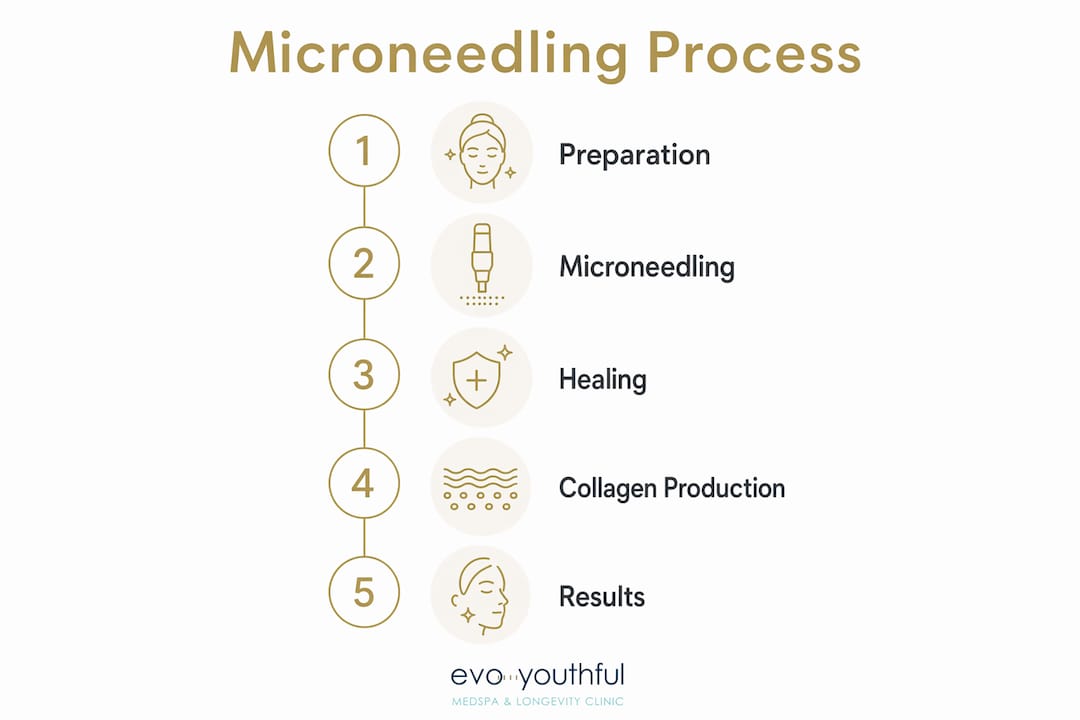
The key biological steps unfold in a predictable sequence:
- Immediate phase: Micropunctures trigger bleeding and platelet activation
- Inflammatory phase: Growth factors are released, recruiting repair cells
- Proliferative phase: Fibroblasts produce new collagen III and elastin
- Remodeling phase: A fibronectin matrix forms around day five, guiding collagen deposition
- Long-term phase: Collagen III persists and matures, tightening and thickening the skin
Neovascularization, the formation of new blood vessels, also occurs during this process. When treating scars specifically, the needles physically break down fibrous scar strands, allowing the area to revascularize and remodel with healthier tissue. The depth of new collagen formation reaches 5 to 600 µm when a 1.5-mm needle is used, covering a meaningful portion of the dermis.
What skin conditions and benefits does collagen induction therapy address?
Collagen induction therapy works across a wide range of skin concerns, which is part of why it has become one of the most requested treatments in medical aesthetics. The core benefit is structural: new collagen and elastin physically improve the skin’s architecture, and that change shows up in multiple ways.
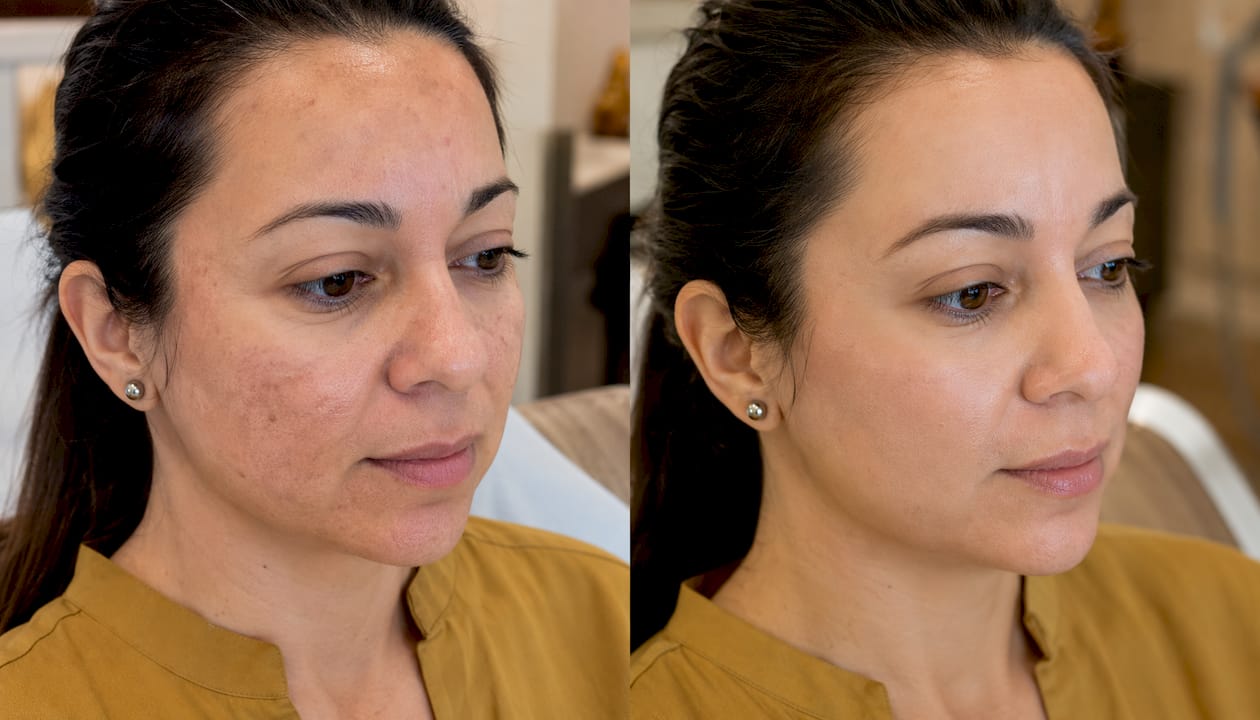
People with acne scarring often see some of the most dramatic improvements, because the needles break down fibrous scar tissue while simultaneously stimulating fresh collagen to fill and smooth the area. Fine lines, wrinkles, and general skin laxity respond well for the same reason. Skin that has lost firmness due to aging or sun damage regains thickness as the collagen matrix rebuilds.
Common conditions treated include:
- Acne scars (atrophic, rolling, and boxcar types)
- Fine lines and wrinkles, particularly around the eyes and mouth
- Skin laxity on the face, neck, and décolletage
- Enlarged pores and uneven skin texture
- Hyperpigmentation and uneven skin tone
- Stretch marks on the body
- Surgical and traumatic scars
One of the most clinically relevant advantages is that collagen induction therapy is generally safe for all skin types, including deeper skin tones that carry a higher risk of post-inflammatory hyperpigmentation with laser treatments. Because the procedure does not rely on heat or light energy, it avoids the pigmentation risks associated with many energy-based devices. Skin hydration also improves as the remodeled dermis retains moisture more effectively.
What should you expect during the collagen induction therapy procedure?
Understanding the collagen stimulating therapy steps before your first appointment makes the experience far less intimidating. A standard course of treatment typically involves 3–6 sessions spaced 4–6 weeks apart, giving the skin adequate time to complete each remodeling cycle before the next session begins.
Key procedural steps:
- Consultation: A provider assesses your skin concerns, medical history, and treatment goals
- Preparation: A topical numbing cream is applied 30–45 minutes before treatment
- Treatment: A medical-grade device passes over the skin, creating uniform microchannels
- Serum application: Immediately after treatment, the microchannels remain open for 5–10 minutes, allowing beneficial serums to penetrate deeply
- Post-care: Gentle moisturizer and broad-spectrum SPF are applied before you leave
Pro Tip: A pre-treatment regimen using retinoid or vitamin A/C creams primes fibroblasts and improves collagen yield during each session, which is why providers often recommend starting these products several weeks before your first appointment.
The sensations during treatment are typically described as mild pressure and a slight scratching feeling. Most people tolerate the procedure well with topical numbing. Sessions usually last 30–60 minutes depending on the treatment area.
| Phase | Timing | What Happens |
|---|---|---|
| Pre-treatment prep | 2–4 weeks before | Retinoid or vitamin C priming |
| Numbing | 30–45 min before | Topical anesthetic applied |
| Treatment session | 30–60 min | Microneedling device applied uniformly |
| Immediate post-care | First 24 hours | Gentle cleansing, SPF, no active ingredients |
| Visible redness resolves | 1–3 days | Mild swelling and redness fade |
| Initial glow | 1–2 weeks | Transient improvement from healing response |
| Collagen building | 1–6 months | Gradual structural skin improvement |
| Full results | 6–12 months | Optimal collagen remodeling complete |
Is collagen induction therapy safe, and what are the side effects?
Collagen induction therapy is considered safe for most people when performed by a trained professional in a clinical setting. The side effect profile is mild compared to more aggressive resurfacing procedures, and most people return to their normal routine within a few days.
Common side effects are temporary and resolve on their own:
- Redness and flushing lasting 1–3 days
- Mild swelling around treated areas
- Tenderness or sensitivity to touch for 24–48 hours
- Minor pinpoint bleeding during the procedure itself
- Temporary dryness or flaking as the skin heals
The distinction between professional clinical treatment and at-home dermarollers matters here. Professional microneedling offers precise needle depth control, sterile technique, and consistent pressure, all of which reduce the risk of chronic inflammation or improper healing that can occur with amateur devices. At-home rollers cannot replicate the uniform penetration depth that makes clinical results possible.
Contraindications to be aware of:
- Active acne breakouts or skin infections in the treatment area
- Blood clotting disorders or use of anticoagulant medications
- Active keloid scarring or history of poor wound healing
- Pregnancy
- Recent use of isotretinoin (typically within the past six months)
- Autoimmune conditions affecting the skin
If you have any of these conditions, a qualified provider will discuss whether collagen induction therapy is appropriate for you or whether an alternative approach better fits your situation.
How long do collagen induction therapy results last?
Results from collagen induction therapy build gradually rather than appearing overnight. The initial glow many people notice after a session comes partly from transient swelling, not from collagen remodeling. The real structural improvements emerge over 3–6 months as new collagen fibers mature and organize within the dermis.
Histological studies confirm that collagen III production can persist for 5 to 7 years after four microneedling sessions spaced one month apart. That said, the visible quality of your results depends heavily on what happens after treatment.
Factors that affect how long results last:
- Sun exposure: UV damage degrades collagen and accelerates aging; daily SPF is non-negotiable
- Skincare routine: Physician-curated skincare with retinoids and antioxidants supports ongoing collagen maintenance
- Lifestyle factors: Smoking, poor nutrition, and chronic stress all impair collagen synthesis
- Maintenance sessions: Scheduling maintenance treatments every 2–3 months helps sustain collagen gains
- Age and baseline skin health: Younger skin with stronger baseline collagen tends to respond more quickly
Without maintenance and consistent skin care, collagen gains may diminish over 6–12 months. The good news is that a single annual touch-up session, combined with a solid at-home routine, is often enough to preserve the improvements from an initial treatment series.
What do experts say about collagen induction therapy?
Clinical practitioners consistently emphasize one point: patience is part of the protocol. Collagen remodeling is a biological process that cannot be rushed, and the best outcomes come from consistency rather than intensity.
The FDA has noted that microneedling devices used by trained professionals, when combined with consistent daily care including sun protection and topical retinoids, represent a well-supported approach to skin remodeling. The emphasis on at-home care is not incidental. What you do between sessions directly influences how well your skin responds during them.
The gap between professional treatment and at-home devices is also worth understanding clearly. Medical-grade devices used in clinical settings offer controlled needle depth, sterile single-use cartridges, and uniform pressure across the treatment area. These factors are what produce the meaningful tissue remodeling seen in clinical studies. Consumer-grade dermarollers, by contrast, cannot maintain consistent depth or sterility across a full treatment, which limits both safety and results.
For people considering collagen induction therapy alongside other regenerative approaches, it pairs well with treatments that support skin health from the inside out. Skin health is not isolated from overall wellness, and providers who take a whole-person view tend to get better outcomes for their patients.
evoyouthful offers personalized skin rejuvenation in Wayzata, MN
If you are ready to take the next step toward healthier, firmer skin, evoyouthful in Wayzata, MN offers a clinical environment where collagen induction therapy is part of a broader, personalized approach to skin health and overall wellness.
At evoyouthful, treatments like Exion Fractional RF Microneedling combine the collagen-stimulating power of microneedling with radiofrequency energy for deeper skin remodeling. The team also offers complementary regenerative therapies, from PRF injections that amplify the healing response to physician-curated skincare that supports your results between sessions. Every treatment plan is built around your specific skin concerns, health history, and goals. No one-size-fits-all protocols.
Whether you are addressing acne scars, skin laxity, or the early signs of aging, the providers at evoyouthful will guide you through a treatment plan that makes clinical sense for your skin. Schedule a consultation today to find out which combination of treatments fits your needs.
Key Takeaways
Collagen induction therapy produces lasting structural skin improvements by triggering the body’s own wound-healing cascade, with histological studies confirming a 400% increase in collagen after four sessions and collagen III persisting for 5–7 years.
| Point | Details |
|---|---|
| Core mechanism | Fine needles create controlled micro-injuries that activate fibroblasts to produce new collagen and elastin. |
| Collagen increase | Four sessions spaced one month apart produce a 400% increase in collagen and elastin at six months post-treatment. |
| Treatment timeline | A standard course is 3–6 sessions spaced 4–6 weeks apart, with full results visible at 6–12 months. |
| Long-term results | Collagen III production can persist 5–7 years after a proper treatment series with maintenance support. |
| evoyouthful | evoyouthful in Wayzata, MN offers Exion Fractional RF Microneedling and personalized treatment plans for lasting skin improvement. |
Recommended
- Exion Fractional RF Microneedling | Advanced skin remodeling from within | evoyouthful Wayzata, MN
- Dermal Fillers | Restore volume and youthful contour | evoyouthful Wayzata, MN
- AgeJET Plasma Skin Therapy | Comprehensive skin rejuvenation with plasma energy | evoyouthful Wayzata, MN
- Sculptra | Stimulate your own collagen for lasting results | evoyouthful Wayzata, MN
Ready to Start?
Schedule a Consultation
Have questions about what you just read? Our team is here to help.