
Confirm Low T Before BHRT For Men: Guideline Steps and Risks
Elizabeth Vogstrom, PA-C
evoyouthful Clinical Team
Clinician backed BHRT for men. Learn how to confirm low T with repeat morning tests (about 300 ng/dL), compare delivery options, and follow monitoring rules.
Confirm Low T Before BHRT For Men: Guideline Steps and Risks
BHRT for men can meaningfully improve sexual function, lean muscle mass, and mood, but only when symptoms line up with confirmed low testosterone on repeat morning bloodwork. It is not a fix for normal aging alone. If you suspect low testosterone, the immediate next step is a repeat early-morning total testosterone test and a full clinical evaluation, not a prescription based on symptoms alone.
TL;DR:
- Only men with confirmed low testosterone levels and symptoms should consider BHRT, with repeat blood tests verifying levels before treatment.
- Compounded bioidentical hormones lack FDA-standardized quality control, making FDA-approved testosterone products safer and more predictable.
- The strongest evidence supports BHRT improving sexual function and lean muscle mass, with moderate benefits seen in bone density and mood.
- Regular monitoring of hematocrit, PSA, and testosterone levels is essential to minimize risks like blood clots and prostate changes during therapy.
- Delivery methods should match your lifestyle, with gels and patches offering steady levels, while injections and pellets may cause hormone fluctuations or irreversibility issues.
Table of Contents
- What Is BHRT for Men, and Which Hormones Are Involved?
- Who Qualifies for Testosterone Therapy?
- Does BHRT Actually Work? What the Evidence Shows
- What Are the Real Risks and How Is Therapy Monitored?
- Gels, Injections, or Pellets: Which Delivery Method Fits?
- What Happens During a BHRT Evaluation at a Clinic?
- Where Standard Advice on Low T Falls Short
- Ready to Get Your Testosterone Checked?
- Sources
- FAQ
What Is BHRT for Men, and Which Hormones Are Involved?
BHRT stands for bioidentical hormone replacement therapy, and for men it almost always means testosterone-based treatment. “Bioidentical” simply means the hormone is molecularly identical to what your body produces, which describes most FDA-approved testosterone products on the market today, not some separate alternative category.
The confusion sets in around compounded preparations. These are custom-mixed at compounding pharmacies and marketed as more “natural” or personalized, but they skip the standardized testing and quality controls the FDA requires of approved products. Major clinical reviews recommend caution with compounded bioidentical hormone therapy specifically because dosing consistency and long-term safety data are harder to verify.
Common delivery forms include topical gels, transdermal patches, injectable testosterone (short or long acting), and subcutaneous pellets. Each works differently in your body, and the right one depends on your labs, your lifestyle, and how your body responds to monitoring.
Who Qualifies for Testosterone Therapy?
Candidacy for BHRT for low testosterone rests on two pillars: symptoms your provider can document, and lab values that confirm a genuine deficiency. Fatigue, low libido, erectile dysfunction, muscle loss, and mood changes matter, but they mean little without bloodwork behind them.
Your clinician will typically order:
- Two separate early-morning total testosterone tests, since levels fluctuate throughout the day (typically under around 300 ng/dL is considered)*
- Free testosterone and sex hormone-binding globulin (SHBG) when total testosterone falls in a gray zone
- Baseline hematocrit and PSA to establish a pre-treatment reference point
- LH and prolactin when the pattern suggests a pituitary or secondary cause
- A fertility discussion if you may want biological children later
Most guidelines treat a total testosterone under about 300 ng/dL as the threshold worth investigating further, though some clinicians consider a borderline range and weigh it against symptom severity. Before starting therapy, it is worth ruling out reversible causes. Sleep apnea, obesity, certain medications, and untreated depression can all suppress testosterone, and correcting them sometimes resolves symptoms without hormone therapy at all.
Does BHRT Actually Work? What the Evidence Shows
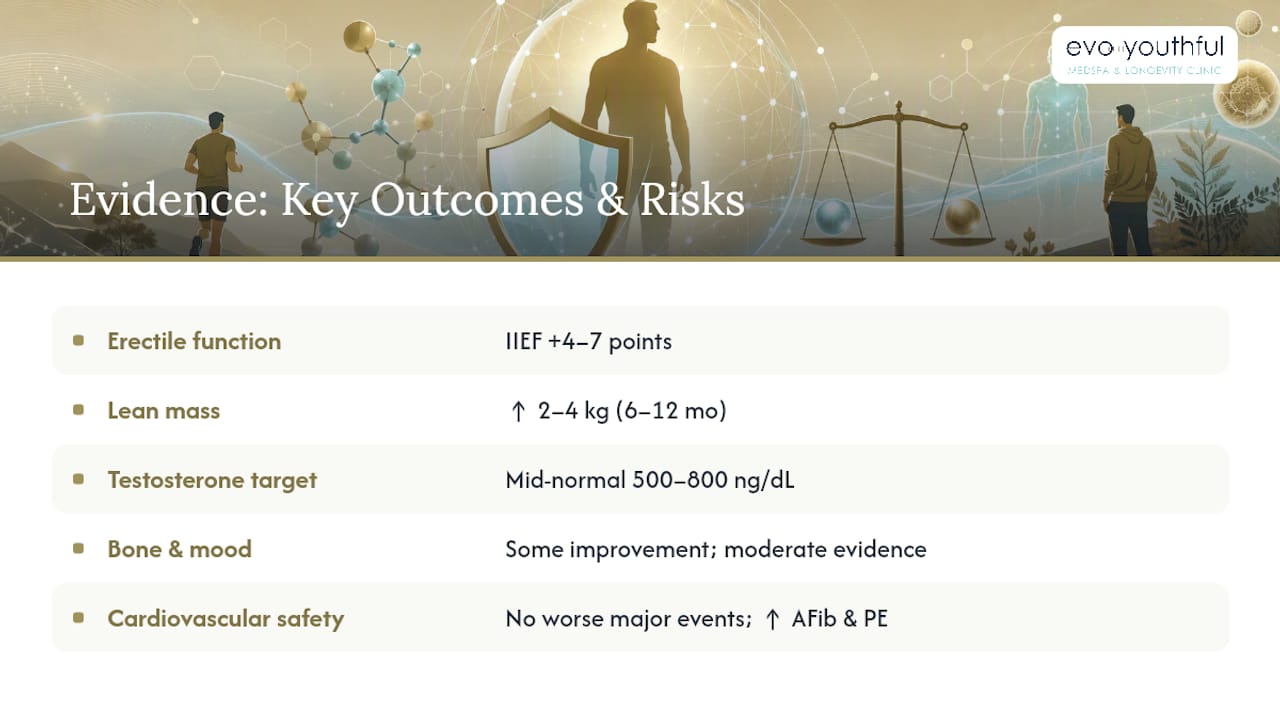
The evidence is strongest for two outcomes: sexual function and lean body mass. A narrative review of men in their 40s with confirmed hypogonadism found meaningful gains after starting therapy.
By the numbers: Men treated for confirmed low testosterone showed IIEF (erectile function) score improvements of 4 to 7 points and lean-mass gains of 2 to 4 kilograms over 6 to 12 months, according to a narrative review of testosterone therapy in men in their 40s.
Bone density and mood also improve, with bone-health options including some non-drug strategies that may complement therapy, though the evidence there is more moderate than definitive. Research on men aged 50 and older shows consistent gains in sexual desire, bone mineral density, and insulin sensitivity when testosterone is maintained in the mid-normal range, generally cited around 500 to 800 ng/dL.
Where the evidence gets murkier: vague complaints like general vitality, energy, or cognitive sharpness respond less predictably to treatment than sexual and physical measures do. Some of that gap comes down to overlapping causes like sleep quality and stress that testosterone alone can’t touch.
Safety data has also evolved. The large TRAVERSE trial found testosterone therapy was not worse than placebo for major cardiac events in a higher-risk group of men, though it noted some increased occurrence of atrial fibrillation and pulmonary embolism, with no significant difference in heart attack or stroke risk.
That data, from the TRAVERSE trial, reshaped how cautiously clinicians now discuss cardiovascular risk with patients starting therapy.
What Are the Real Risks and How Is Therapy Monitored?
Three safety signals matter most with testosterone therapy: red blood cell overproduction (erythrocytosis), prostate changes, and fertility suppression. None of them are reasons to avoid treatment outright, but they are reasons your provider checks labs on a schedule rather than prescribing and disappearing.
A typical monitoring path looks like this:
- Baseline hematocrit, PSA, and total testosterone before the first dose
- Follow-up labs at 3 to 6 months to check testosterone response, hematocrit, and PSA
- Dose adjustment or a switch in delivery method if hematocrit climbs too high
- Annual monitoring once levels and symptoms stabilize
- Phlebotomy (therapeutic blood donation) or a treatment pause if hematocrit exceeds high thresholds that guidelines recommend monitoring for.
The AAFP’s 2024 guideline backs this cadence, and the AUA’s testosterone deficiency guideline recommends keeping levels in the middle of the normal range rather than chasing the top of it, which lowers hematocrit risk without sacrificing benefit.
Testosterone therapy also suppresses your body’s own sperm production, sometimes significantly. If you want to preserve fertility, ask about clomiphene or hCG as alternatives or add-ons. They stimulate your body’s natural testosterone production instead of replacing it outright, which keeps sperm production intact.
Pro Tip: Ask your provider for your hematocrit trend, not just the latest number. A steady climb across two or three visits is often more meaningful than a single elevated reading.
Gels, Injections, or Pellets: Which Delivery Method Fits?
The right formulation depends on how your body handles hormone swings and how closely you can commit to monitoring.
- Topical gels: Daily application, steady hormone levels, lower hematocrit risk, but transfer risk to others through skin contact.
- Patches: Similar steady-state benefit to gels, though skin irritation is a common complaint.
- Injections: Short-acting versions need more frequent dosing but allow faster adjustments; long-acting versions are more convenient but tend to push hematocrit higher.
- Pellets: Inserted under the skin every few months, appealing for convenience, but professional guidance cautions that pellets cannot be removed once placed, which limits your ability to adjust or stop quickly if side effects appear.
FDA-approved formulations carry a real advantage over compounded versions: predictable dosing backed by manufacturing standards, versus compounded products where potency can vary batch to batch. Cost and insurance coverage vary widely across all options, so it’s worth asking your clinic directly what applies to your plan before committing to a delivery method.
What Happens During a BHRT Evaluation at a Clinic?
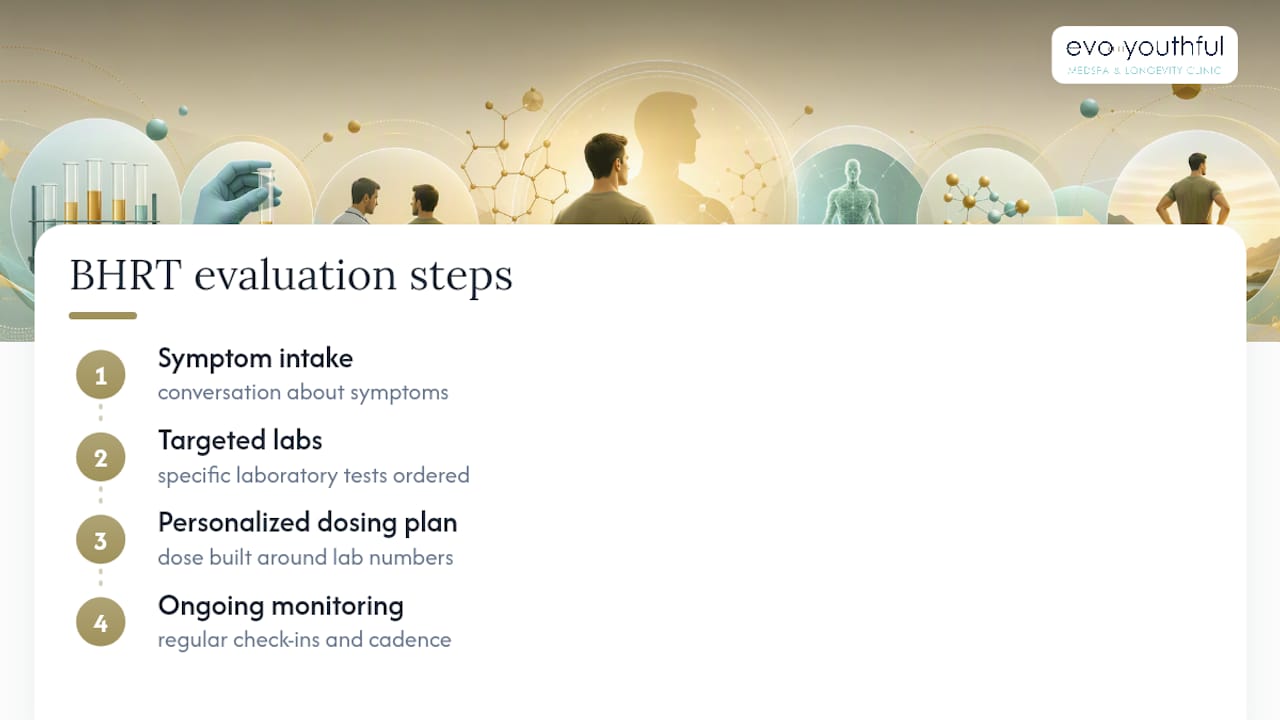
A BHRT evaluation typically starts with an intake conversation about symptoms, followed by targeted labs. The clinical team builds a personalized dosing plan around specific numbers, then sets a monitoring cadence to track response over time.
The Advanced BHRT Membership is built for men who want ongoing management rather than a one-time prescription, with regular check-ins baked into the plan. If you’re in the Wayzata area, BHRT services for men are structured around this same evaluate-then-treat approach, adjusted as your labs evolve.
Where Standard Advice on Low T Falls Short
Most articles on this topic treat testosterone therapy as either a miracle fix or a risk to avoid entirely. Neither framing serves the men actually dealing with this. The real judgment call is narrower than either extreme: does this man have symptoms that match a confirmed lab deficiency, and can his provider commit to monitoring him properly over time?
Where I think the conventional advice fails most often is the rush to treat fatigue and low mood as automatically hormonal. Sleep apnea, weight gain, and untreated depression mimic low testosterone symptoms constantly, and treating those first sometimes resolves the issue without a prescription at all. That is not a reason to avoid BHRT. It is a reason to insist on the lab work before starting it.
The other blind spot is compounded pellets marketed as “more natural.” They are not inherently safer, and their irreversibility makes early side effects harder to manage. If you’re going to start therapy, an FDA-approved formulation with a monitoring plan you can actually stick to will usually serve you better than convenience alone.
Prioritize the diagnostic work first. The treatment decision gets much easier once the numbers are in front of you.
— Elizabeth Vogstrom, PA-C
Ready to Get Your Testosterone Checked?
If you’ve read this far, you probably already suspect something is off, and guessing isn’t a strategy. evoyouthful’s bioidentical hormone replacement therapy program starts every case with real diagnostic labs, not a symptom checklist, so your treatment plan reflects your actual numbers instead of a generic protocol.

Your first visit includes a full intake, targeted bloodwork covering testosterone, hematocrit, and PSA, and a personalized plan built around your results. Men who want ongoing management without re-booking every lab cycle can also ask about the Aesthetic & Wellness and Advanced BHRT Membership options, which build monitoring visits into the plan. If low testosterone symptoms have been affecting your energy, mood, or relationships, the clinic’s hormone imbalance page outlines what treatment looks like locally in Wayzata. Schedule a consultation to get your labs drawn and find out where you actually stand.
Sources
- Testosterone Therapy in Men in Their 40s: A Narrative Review (PMC)
- The Clinical Utility of Compounded Bioidentical Hormone Therapy - NCBI Bookshelf
- Testosterone Replacement Therapy for Male Hypogonadism | AAFP (2024)
This article is general information, not a substitute for advice from a qualified doctor. Consult a qualified healthcare professional about your own circumstances before acting on anything here.
FAQ
Why don’t some doctors prescribe bioidentical hormones?
Many clinicians are cautious about compounded bioidentical formulations specifically, since they lack the regulatory testing and consistency standards applied to FDA-approved testosterone products. FDA-approved testosterone, which is also bioidentical, does not carry the same hesitation when prescribed for confirmed hypogonadism.
How much does BHRT cost on average?
Costs vary widely depending on the delivery method, dosing, and whether insurance covers your diagnosis, so there’s no single reliable figure to quote. evoyouthful’s BHRT treatment page lists current program details, and membership options can offset ongoing monitoring costs.
What happens when a man starts hormone therapy?
Most men notice improvements in libido and energy within a few weeks, with lean mass and mood changes developing over several months. Providers recheck testosterone, hematocrit, and PSA at 3 to 6 months to confirm the dose is working safely before settling into annual monitoring.
Which hormone is most responsible for libido in men?
Testosterone is the primary driver of male libido, and low levels are one of the most consistent predictors of reduced sexual desire. Restoring testosterone to a mid-normal range has shown measurable improvements in sexual desire and function in clinical research.
Recommended
Ready to Start?
Schedule a Consultation
Have questions about what you just read? Our team is here to help.