
Evidence First: Andropause Symptoms and Treatment for Men, Sex Gains
Elizabeth Vogstrom, PA-C
evoyouthful Clinical Team
Evidence first brief for men: why TRT best helps sexual symptoms, fertility preserving alternatives, diagnosis steps, and safety checks.
Evidence First: Andropause Symptoms and Treatment for Men, Sex Gains
Age-related testosterone decline, often called andropause or late-onset hypogonadism, is treatable when a blood test confirms low testosterone alongside real symptoms. Testosterone replacement therapy (TRT) is the primary medical treatment, and it works best for sexual symptoms like low libido and erectile difficulty. Getting there requires proper diagnostic testing first, and safety monitoring for as long as you stay on therapy.
TL;DR:
- Testosterone decline affects only 10% to 25% of men over 40, with symptoms overlapping common conditions like obesity and depression.
- Proper diagnosis requires multiple morning blood tests, baseline safety labs, and testing for confounding factors before starting therapy.
- Treatments include gels, patches, injections, pellets, and medications to preserve fertility, with formulation choice depending on individual lifestyle.
- TRT reliably improves sexual function but shows inconsistent effects on energy, mood, or cognition, with reevaluation recommended after three to six months.
- Risks such as blood thickening and prostate effects demand regular monitoring, and fertility-preserving options should be considered if conception is desired.
Table of Contents
- What Is Andropause (Late-Onset Hypogonadism) and What Symptoms Show Up?
- How Do Doctors Diagnose Low Testosterone?
- What Treatment Options Exist for Andropause?
- Does Testosterone Therapy Actually Work? What to Realistically Expect
- What Are the Risks of Testosterone Therapy and How Is It Monitored?
- Will Testosterone Therapy Affect My Fertility?
- When Should You Consider Specialized BHRT Care?
- Clinician Perspective: Balancing Benefits and Harms in Real Practice
- Ready to Get Your Testosterone Levels Checked?
- Sources
- FAQ
What Is Andropause (Late-Onset Hypogonadism) and What Symptoms Show Up?
“Andropause” is the popular term. “Late-onset hypogonadism” is what your clinician will actually write in your chart, and the distinction matters. Andropause suggests every man eventually hits some universal hormonal wall, similar to menopause. The clinical reality is more selective: testosterone declines by roughly 1% per year after age 40, but only a minority of older men, somewhere between 10% and 25% depending on the definition used, end up with levels low enough combined with symptoms to meet diagnostic criteria.
That distinction changes how you should think about your own symptoms. Two categories tend to show up:
- Sexual symptoms: reduced libido, fewer spontaneous or nocturnal erections, and erectile dysfunction.
- Nonsexual symptoms: persistent fatigue, low mood, loss of muscle mass, increased abdominal fat, disrupted sleep, and foggy thinking.
Here is the part men often miss: fatigue, low mood, weight gain, and brain fog overlap heavily with obesity, sleep apnea, depression, and thyroid disease. A clinician who jumps straight to “it’s your testosterone” without ruling those out is skipping a step. If you want a fuller rundown of what counts as a genuine low testosterone symptom versus a red herring, that overlap is worth understanding before you request a lab order.
How Do Doctors Diagnose Low Testosterone?
Diagnosis is not a single blood draw. It is a process, and skipping steps is one of the most common reasons men end up on therapy they did not need, or miss out on therapy that would have helped them.
- Morning, fasting testosterone test. Testosterone peaks in the morning and drifts downward through the day, so an afternoon draw can produce a falsely low number. Clinicians ask for fasting samples before 10 a.m.
- Repeat the test. A single low reading is not a diagnosis. Guidance from the American Family Physician review on testosterone replacement therapy calls for confirming a low result with a second morning draw before treatment enters the conversation.
- Check it against a threshold, with context. Many clinics use a total testosterone of about 300 ng/dL as the cutoff for considering hypogonadism, though lab reference ranges vary and your symptoms carry real weight alongside the number itself.
- Baseline safety labs. Before anyone discusses treatment, expect a complete blood count for hematocrit, a PSA test, liver function tests, and a lipid panel.
- Endocrine follow-up when needed. If your testosterone is very low or the picture is unclear, your clinician may order LH, FSH, and prolactin levels, or refer you to endocrinology to rule out a pituitary issue.
- Screen for the impostors. Sleep apnea, untreated obesity, thyroid dysfunction, and certain medications (opioids, some antidepressants, chronic corticosteroids) can all suppress testosterone or mimic its symptoms. A thorough workup addresses these before or alongside hormone therapy.
This is not bureaucracy for its own sake. A hormone panel that only measures total testosterone once misses the picture entirely, which is part of why a comprehensive hormone panel matters more than a single number on a lab printout.
What Treatment Options Exist for Andropause?
Once diagnosis confirms hypogonadism, treatment splits into two lanes: testosterone replacement itself, and approaches that raise your own natural production or address root causes without shutting down your body’s hormone signaling.
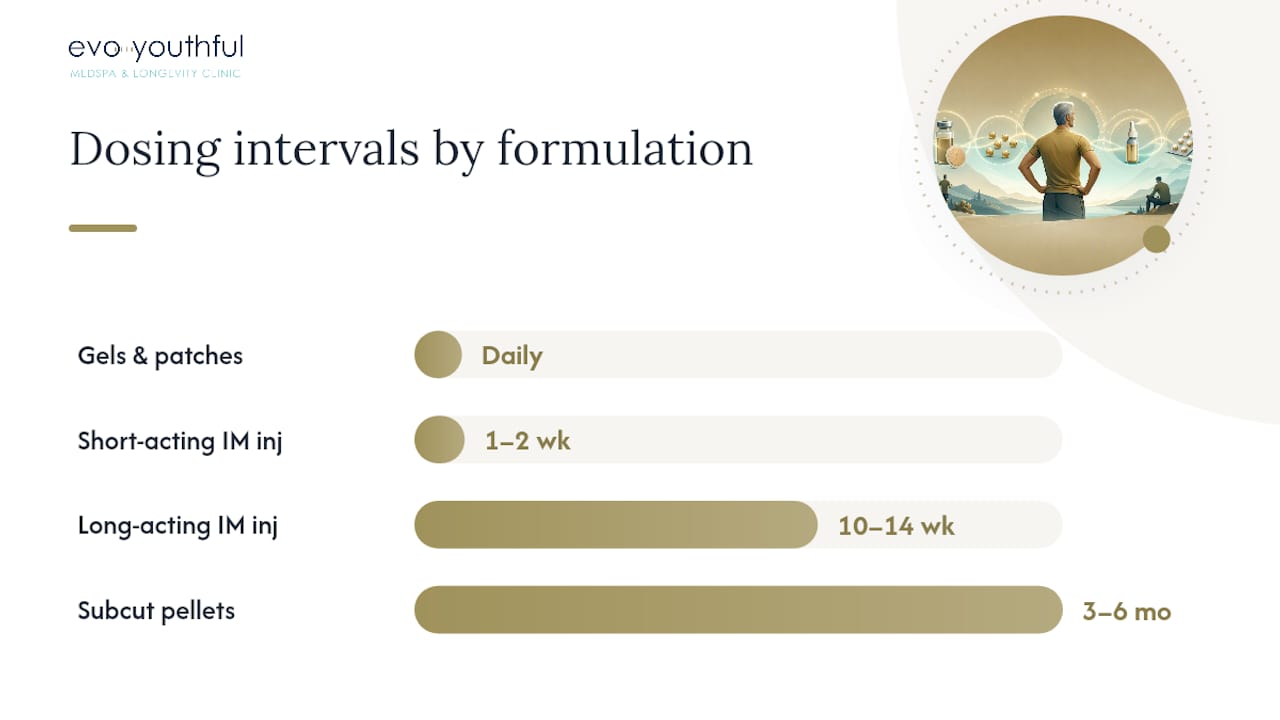
Testosterone formulations come in several forms, and the right one depends on your lifestyle, tolerance for needles, and how closely you can follow a dosing schedule:
- Transdermal gels and patches: applied daily, they produce steady blood levels that avoid the peaks and crashes of injections. The tradeoff is a real risk of transferring testosterone to a partner or child through skin contact, so timing showers and covering the application site matters.
- Short-acting intramuscular injections: typically given every one to two weeks, these are among the most cost-effective options and remain widely used for that reason.
- Long-acting injectable testosterone undecanoate: dosed roughly every 10 to 14 weeks after an initial loading phase, this formulation trades convenience for less flexibility if a dose needs adjusting.
- Subcutaneous pellets: inserted under the skin every three to six months, pellets skip daily dosing entirely but require a minor procedure to place and remove.
- Oral testosterone undecanoate: available in some markets with specific dosing and monitoring considerations that your prescriber will walk you through.
Clinicians tend to favor gels for steady concentrations in older men, while injections remain the practical, budget-friendly workhorse for many practices.
Fertility-preserving alternatives matter for men who are not ready to close the door on having children. Clomiphene citrate and human chorionic gonadotropin (hCG) can raise your own testosterone production by stimulating the pituitary gland, rather than replacing it externally, which helps preserve sperm production in a way exogenous testosterone does not.
Lifestyle and comorbidity management is not a footnote. Resistance training, meaningful weight loss, and treating sleep apnea can modestly raise testosterone on their own, and optimizing blood sugar control in men with diabetes often improves symptoms that get blamed on hormones alone.
Pro Tip: Ask your prescriber which formulation matches your actual routine, not just what’s most common. A man who travels weekly for work may do far better on a long-acting injection than a daily gel he’ll forget half the time.
Every formulation above requires a prescription and clinician supervision. Dosing is individualized based on your labs, symptoms, and response, not a one-size-fits-all protocol.
Does Testosterone Therapy Actually Work? What to Realistically Expect
Here is where a lot of marketing overstates the case, and where you deserve a straight answer.
The clearest evidence: TRT reliably improves sexual function in men with confirmed hypogonadism. That is the benefit with the strongest backing across clinical trials.
Evidence for energy, vitality, physical strength, and cognitive sharpness is a different story. Trials show weak or inconsistent results for those outcomes, and both the American College of Physicians and a broader narrative review of hypogonadism guidelines advise against starting TRT solely to chase more energy or sharper thinking. If your main complaint is fatigue with normal sexual function, testosterone probably is not the fix, and your clinician should say so before writing a prescription.
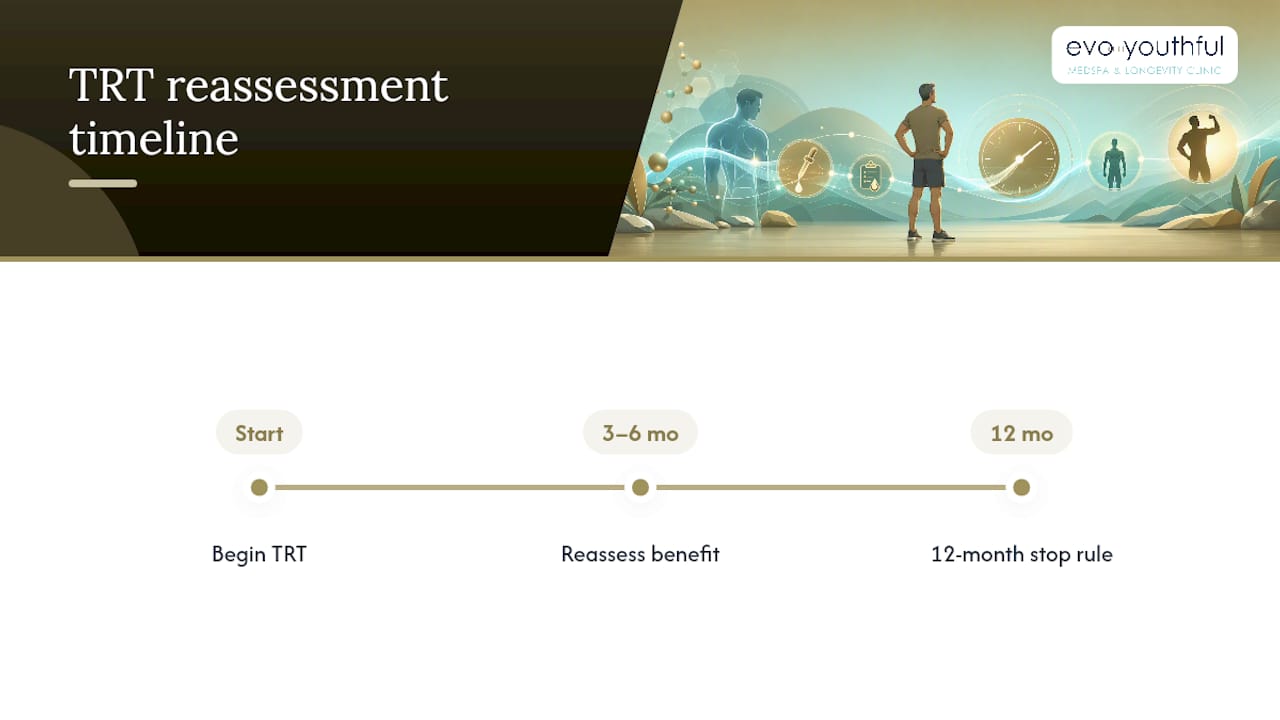
Timelines matter too. Most guidance points to reassessing benefit at three to six months, once levels have stabilized and enough time has passed to notice a real change. The ACP guideline specifically recommends reevaluating outcomes within 12 months and stopping therapy if there’s no meaningful improvement by that point. That is not a minor caveat. It’s a built-in exit ramp that protects you from staying on a treatment that is not doing anything.
One more nuance worth sitting with: these recommendations are labeled “conditional” with “low to moderate certainty” in the underlying evidence. That does not mean TRT does not work. It means the science supports a targeted use case, not a blanket anti-aging solution, and your expectations should be calibrated accordingly. If you want data on how testosterone performs specifically for physical function in older men, that trial evidence is worth a closer look before you commit to therapy for that reason alone.
What Are the Risks of Testosterone Therapy and How Is It Monitored?
TRT is not risk-free, and any clinician who glosses over that is doing you a disservice. The main concerns, in order of how often they actually come up in practice:
- Erythrocytosis (thickened blood from an elevated red blood cell count). This is the single most common lab-triggered reason to adjust or stop therapy.
- Prostate effects, including PSA changes that need tracking, particularly in men over 50 or with a family history of prostate cancer.
- Worsened sleep apnea, since testosterone can aggravate airway obstruction during sleep in susceptible men.
- Cardiovascular considerations, an area where research is still evolving and warrants an honest conversation with your prescriber about your individual risk factors.
- Reduced fertility, covered in more detail below.
- Skin reactions at gel application sites or patch locations.
The monitoring schedule that keeps these risks in check is fairly standardized. Baseline hematocrit and PSA are drawn before you start, testosterone and hematocrit are rechecked at three to six months, then annually once your levels stabilize. A hematocrit above 54% is a widely used cutoff that prompts a dose reduction, a treatment pause, or occasionally a therapeutic blood donation. Your clinician will also stop therapy outright if labs turn unsafe, if you show no symptomatic benefit after a fair trial, or if a serious adverse event occurs.
Pro Tip: Before you start, ask for a written monitoring schedule with specific dates and a named contact for abnormal results. Verbal instructions get forgotten. A printed plan does not.
Will Testosterone Therapy Affect My Fertility?
If fathering a child, now or later, is on your radar, this section deserves your full attention before you start anything.
Exogenous testosterone commonly suppresses your body’s own sperm production, sometimes for a year or longer even after you stop. That happens because external testosterone signals your brain to shut down the natural hormone cascade that drives sperm production in the testes.
If preserving fertility matters to you, alternatives exist:
- Clomiphene citrate, which stimulates your own testosterone production without shutting down sperm output.
- hCG, often used alone or alongside other treatments to maintain testicular function.
- Referral to a reproductive specialist, particularly if you and a partner are actively trying to conceive.
- Sperm banking, worth discussing before starting standard TRT if fertility preservation is a priority.
Bring up your fertility goals at the very first visit, not after you’re already on therapy. A baseline semen analysis, when appropriate, gives you and your clinician real data to work from instead of guesswork.
When Should You Consider Specialized BHRT Care?
A structured clinic pathway looks different from a rushed primary care visit squeezed between other appointments. At evoyouthful, the process typically starts with a detailed symptom review, followed by a comprehensive hormone panel and baseline safety labs, then a shared decision-making conversation about which treatment path, if any, fits your goals and your fertility plans.
Services relevant to men navigating this decision include:
- Bioidentical hormone replacement therapy tailored to your labs and symptoms.
- Comprehensive hormone panel testing that looks beyond a single testosterone number.
- Ongoing follow-up monitoring built around the same safety checkpoints outlined above.
- ExoMind for men whose primary complaint is cognitive fog rather than sexual symptoms.
- ExoMind for men whose primary complaint is cognitive fog rather than sexual symptoms.
- Lifestyle and wellness support addressing sleep, weight, and metabolic factors that often masquerade as low testosterone.
Not every man is a candidate for TRT without specialist input. Men with untreated prostate cancer, uncontrolled sleep apnea, or a hematocrit already near the upper limit typically need those issues addressed, or a specialist consult, before hormone therapy is on the table. A consultation is where that gets sorted out, not guessed at.
Clinician Perspective: Balancing Benefits and Harms in Real Practice
In practice, TRT helps a specific man most: one with confirmed low labs and real sexual symptoms who understands this is not a vitality shortcut. I ask every patient about fertility goals and expected timelines before a prescription is ever written, and I encourage documenting your goals together with your clinician so both of you know what “working” actually looks like at the three-month mark.
— Elizabeth Vogstrom, PA-C
Ready to Get Your Testosterone Levels Checked?
If you have read this far, you already know the guesswork approach, ordering a random testosterone test through a mail-in kit and self-treating, skips nearly every safety step outlined above. evoyouthful’s BHRT for men evaluation starts with a real conversation about your symptoms, followed by comprehensive labs and baseline safety testing done properly the first time.

An initial appointment covers your symptom history, a full hormone panel, baseline hematocrit and PSA, and a treatment plan built around your specific labs and goals, not a generic protocol. For men who want ongoing monitoring without re-booking every lab separately, the Advanced BHRT Membership bundles follow-up care into one plan. Before your visit, bring a list of your symptoms, current medications, and any prior lab results you have on hand. Ready to find out where your levels actually stand? Schedule your BHRT evaluation and get real answers instead of guesses.
Sources
- Testosterone Treatment in Adult Men With Age-Related Low Testosterone: A Clinical Guideline From the American College of Physicians
- Testosterone replacement therapy for male hypogonadism (American Family Physician, 2024)
This article is general information, not a substitute for advice from a qualified doctor. Consult a qualified healthcare professional about your own circumstances before acting on anything here.
FAQ
What Is Andropause for Men?
Andropause refers to the gradual decline in testosterone that happens as men age, medically termed late-onset hypogonadism when it’s confirmed by low labs plus symptoms. Testosterone drops about 1% per year after age 40, but only a subset of men develops symptoms severe enough to need treatment.
How Can You Avoid or Slow Andropause?
You cannot stop the aging-related decline in testosterone entirely, but you can influence how much it affects you. Resistance training, sustained weight loss, and treating sleep apnea can modestly support healthier testosterone levels and often improve symptoms even without medication.
How Long Does Andropause Usually Last?
Andropause is not a temporary phase like a cold. It reflects a gradual, ongoing decline that continues through the rest of a man’s life once it begins. Treatment addresses the symptoms it causes, and most guidance calls for reassessing whether therapy is helping at the three to six month mark, with a full reevaluation by 12 months.
Can Andropause Be Reversed?
The underlying decline in testosterone production is not reversible, but the symptoms it causes often are, particularly sexual symptoms, with appropriate treatment. Testosterone replacement therapy is the primary medical option, and the ACP recommends stopping it if there’s no meaningful improvement within a year.
Is Testosterone Therapy Available Through evoyouthful?
Yes, evoyouthful offers bioidentical hormone replacement therapy for men, including comprehensive hormone testing and ongoing monitoring. Pricing is not published, so current details are available directly through the BHRT service page.
Recommended
Ready to Start?
Schedule a Consultation
Have questions about what you just read? Our team is here to help.