
Does PRF for Scars Actually Work? What the Evidence Shows
Elizabeth Vogstrom, PA-C
evoyouthful Clinical Team
Discover the surprising effectiveness of PRF for scars, especially atrophic acne scars, backed by compelling clinical evidence. Learn more!
Does PRF for Scars Actually Work? What the Evidence Shows
PRF for scars works best on atrophic acne scars, and the clinical evidence backing it is stronger than most patients expect. In split-face comparative studies, platelet-rich fibrin outperformed platelet-rich plasma on the same patients’ faces, producing better texture grades and higher satisfaction on the PRF-treated side. The advantage comes down to biology: PRF forms a fibrin scaffold that releases growth factors gradually, while PRP dumps its payload fast and clears out.
Here’s what that means for you in practice:
- Best candidates: atrophic (indented) acne scars, especially when PRF is paired with microneedling
- Typical course: a limited number of sessions spaced a few weeks apart
- Main risk: temporary bruising and swelling at injection sites, not serious complications
- Next step: a consultation with a credentialed clinician who can assess your scar type and explain their specific PRF protocol
If your scars are raised, thick, or keloid, PRF is not your primary answer. This is a treatment built for scars that sit below the skin’s surface, not ones that rise above it.
Key Takeaways
PRF improves the appearance of atrophic acne scars most reliably when combined with microneedling, across a course of three to four sessions spaced weeks apart.
| Point | Details |
|---|---|
| PRF beats PRP for acne scars | Comparative split-face trials show PRF produces better quartile grading and higher patient satisfaction than PRP. |
| Fibrin matrix drives results | PRF’s clot releases growth factors over roughly 7 to 28 days, supporting sustained collagen remodeling. |
| Scar type determines fit | Atrophic acne scars respond well; raised hypertrophic and keloid scars need different treatments entirely. |
| Combination beats monotherapy | Pairing PRF with microneedling or subcision consistently outperforms PRF used alone. |
| evoyouthful offers supervised protocols | evoyouthful pairs PRF injections with Exion fractional RF microneedling under documented, medically supervised care. |
Table of Contents
- What Is PRF for Scars, and How Is It Different From PRP?
- What Does the Research Say About PRF for Acne Scars?
- Which Scar Types Respond Best to PRF Treatment?
- What Happens During a PRF Treatment Session?
- How Many PRF Sessions Do You Need, and When Will You See Results?
- What Are the Risks and Aftercare Steps for PRF?
- Does Combining PRF With Microneedling or Lasers Improve Results?
- How Do You Choose a Provider for PRF Scar Treatment?
- How Does evoyouthful Approach PRF for Scar Treatment?
- What Should You Actually Prioritize When Considering PRF for Scars?
- Ready to Talk to Someone About Your Scars?
- Sources
What Is PRF for Scars, and How Is It Different From PRP?
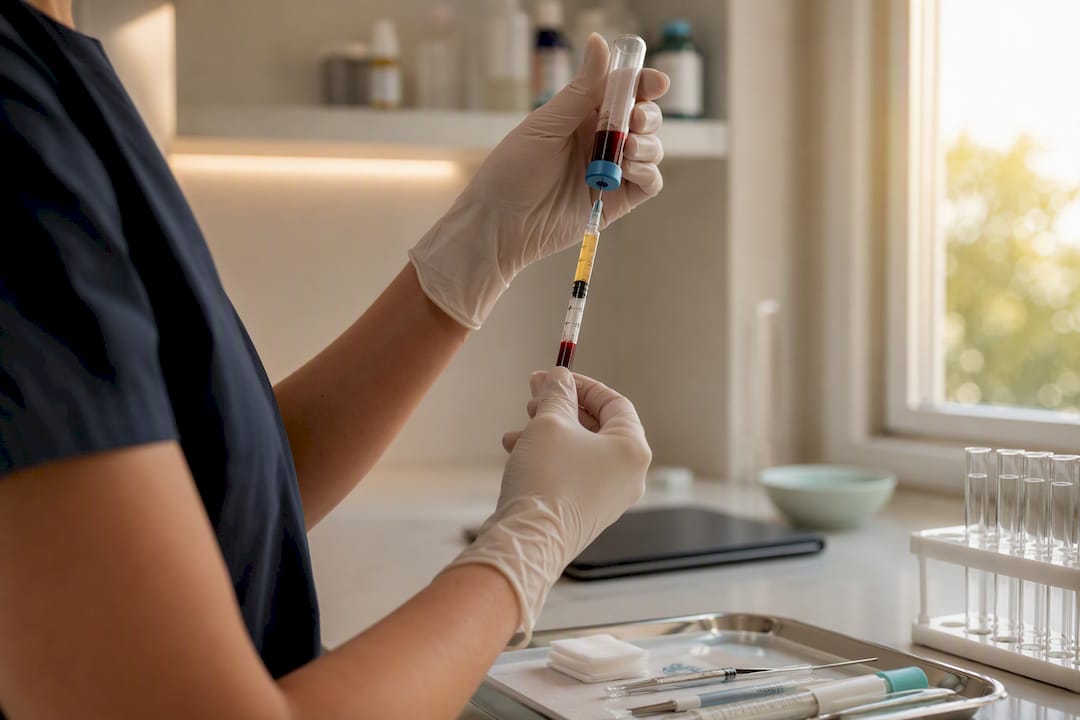
Platelet-rich fibrin (PRF) is a concentrate made from your own blood, spun down in a centrifuge to isolate platelets, white blood cells, and fibrin, then reintroduced into the skin through injection or applied topically during microneedling. Unlike platelet-rich plasma (PRP), PRF skips the anticoagulant step. That single difference changes everything about how it behaves in your skin.
Without an anticoagulant, the blood naturally clots into a fibrin mesh that traps platelets and growth factors inside it. That mesh acts like a slow-release capsule. Research on PRF biology shows it can sustain growth factor release for a period of several days to a few weeks, compared with PRP’s much faster, more immediate release. For scar remodeling, which depends on prolonged collagen signaling rather than a single burst, that sustained delivery matters.
You’ll hear a few variants mentioned in consultations:
- i-PRF (injectable PRF): a liquid form used for fine injections, often into acne scars or under fine lines
- A-PRF (advanced PRF): processed at lower centrifuge speeds, yielding a fluffier clot with more cellular content
- L-PRF (leukocyte-rich PRF): denser, membrane-like, often used topically after microneedling
Preparation details are not a footnote. Centrifuge speed, tube type, and how quickly the sample gets used after the blood draw all change the fibrin architecture and cell content, which in turn changes how the product performs clinically.
Pro Tip: Ask your provider what centrifuge protocol they use and how soon after the draw they inject or apply the PRF. A rushed or inconsistent process can produce a weaker, less effective product even though it’s labeled the same way.
What Does the Research Say About PRF for Acne Scars?
The strongest evidence for PRF in scarring comes from comparative acne scar trials, and it consistently favors PRF over PRP. A comparative study on fluid PRF versus PRP treating atrophic acne scars found that patients receiving PRF showed better improvement on standardized quartile grading scales and reported higher satisfaction than those treated with PRP on the comparison side.
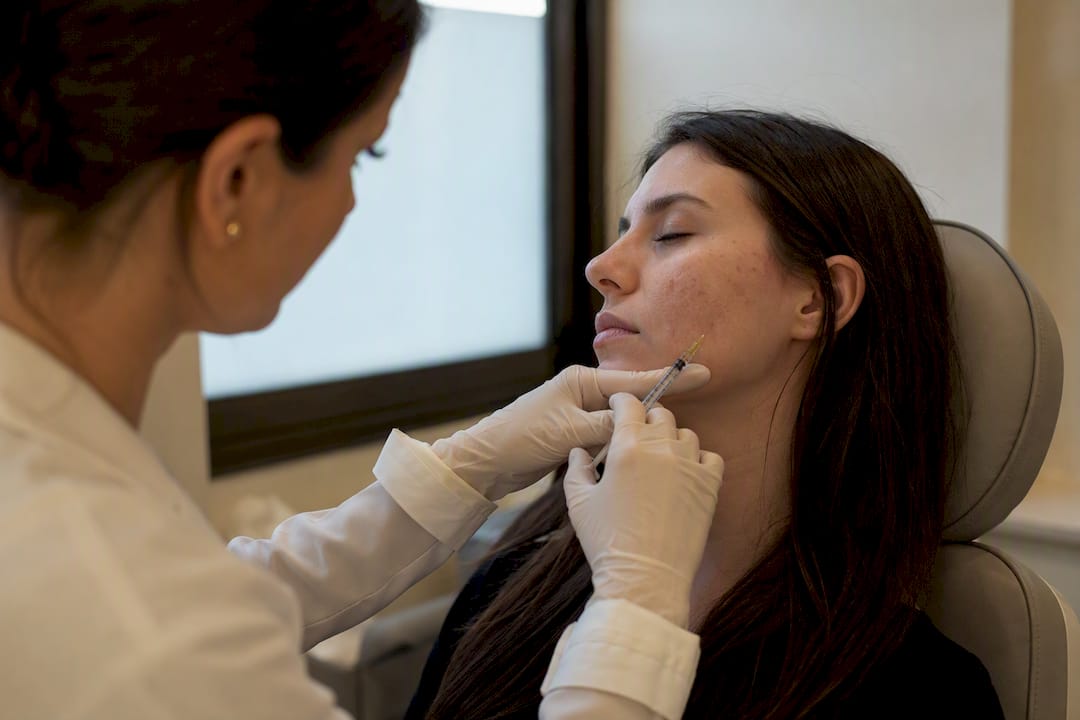
Most trials in this space use a split-face design: one side of the face gets PRF, the other gets PRP or a control, and clinicians grade both sides using the same scale. This setup controls for individual variation in skin type, scarring severity, and healing capacity, which is why split-face data tends to carry more weight than trials that compare two separate patient groups. The PMC-indexed version of this trial reports that PRF-treated sites also showed faster, more visible textural change when paired with microneedling than microneedling alone.
Outcome measures typically include:
- Goodman and Baron grading, a standard atrophic scar severity scale used across dermatology research
- Quartile improvement scales, tracking what percentage of scars improved by 25%, 50%, 75%, or more
- Patient satisfaction surveys, capturing subjective response alongside clinical grading
Where does the evidence get thinner? Sample sizes in most PRF scar trials run small, often a few dozen participants per arm, and protocols vary between studies in centrifuge speed, number of sessions, and injection technique. That variability makes it hard to state one universal “PRF works X% better” figure. What the data does support consistently is a directional finding: PRF tends to outperform PRP for atrophic acne scars, particularly when combined with needling. The evidence is more tentative for other scar categories, which is exactly where clinical judgment and scar-type matching come in.
Which Scar Types Respond Best to PRF Treatment?
Not every scar is a good candidate, and knowing which category yours falls into changes the conversation with your provider.
- Atrophic acne scars. This is where PRF has its strongest evidence base. Rolling, shallow boxcar, and mild depressed scars respond well, especially when PRF is layered with microneedling, which creates micro-channels that let the fibrin matrix work directly within the dermis.
- Icepick and deep boxcar scars. These narrow, deep scars often need more than PRF alone. Subcision, which releases the fibrous bands tethering the scar to deeper tissue, is frequently paired with PRF to fill the space subcision creates.
- Surgical scars. PRF can support healthy healing and reduce visible redness in the months after a surgical incision, particularly when applied early in the remodeling window.
- Hypertrophic and keloid scars. This is where PRF’s benefit is limited. These raised scars stem from an overactive healing response, and adding more growth factor signaling can, in some cases, work against the goal. Steroid injections, silicone sheeting, and laser treatments are the better-established options for raised scar tissue.
If you’re unsure which category your scarring falls into, that’s a normal starting point for a consultation, not something you need to diagnose yourself.
What Happens During a PRF Treatment Session?
A PRF appointment follows a fairly predictable rhythm, and knowing the steps ahead of time takes a lot of the anxiety out of it.
- Pre-visit preparation. Your provider will likely ask you to stop NSAIDs, aspirin, and certain supplements like fish oil for several days beforehand if your prescriber confirms it’s safe to pause them. This isn’t optional advice. Blood-thinning agents increase bruising risk substantially.
- Blood draw. A small amount of blood is drawn, similar to a standard lab draw, usually one to a few tubes depending on the treatment area.
- Centrifugation. The blood spins in a centrifuge for several minutes. Speed and duration are chosen deliberately. Because PRF clots naturally, it needs to be processed and used almost immediately, which is why timing discipline in the clinic matters as much as the equipment itself.
- Application. Depending on your scar type, the PRF is either injected directly into the scar tissue, spread topically after microneedling so it absorbs through the micro-channels, or both in the same session.
- Aftercare instructions. You’ll get guidance on activity restrictions, sun exposure, and what bruising or swelling to expect in the coming days.
Most sessions run 45 minutes to an hour, blood draw included. Numbing cream or a local anesthetic is common before injections, and most patients describe the discomfort as brief pressure or pinching rather than significant pain.
Pro Tip: If you bruise easily or have an event coming up, ask about scheduling PRF at least two weeks out. Bruising typically resolves within 5 to 10 days, but it’s worth planning around.
How Many PRF Sessions Do You Need, and When Will You See Results?
Most published protocols use three to four PRF sessions spaced several weeks apart, giving the skin time to respond to one round of growth factor signaling before the next. That interval isn’t arbitrary. Collagen remodeling is a biological process that unfolds over weeks, not days, so stacking sessions too close together doesn’t accelerate results.
You may notice two distinct phases of change:
- Immediate effect: a subtle plumping or lift in treated areas within days, partly from the injection volume itself and mild inflammatory response
- Delayed effect: the real remodeling, where new collagen gradually fills in atrophic scarring, typically becoming visible over 6 to 12 weeks and continuing to improve for months after the final session
Split-face trial data on PRF versus PRP found that improvement in scar grading tends to build progressively across the treatment course rather than appearing after a single session, which is part of why patients who quit after one visit often feel underwhelmed.
Results from a full course generally hold for many months, though skin continues to age and collagen naturally breaks down over time. Some patients return for a single booster session six months to a year later to maintain the improvement, particularly if they’re also managing ongoing acne or sun exposure that affects collagen quality.
What Are the Risks and Aftercare Steps for PRF?
Because PRF uses your own blood, the safety profile is favorable compared with synthetic fillers or more invasive procedures. That doesn’t mean it’s risk-free.
Expected, short-term effects include:
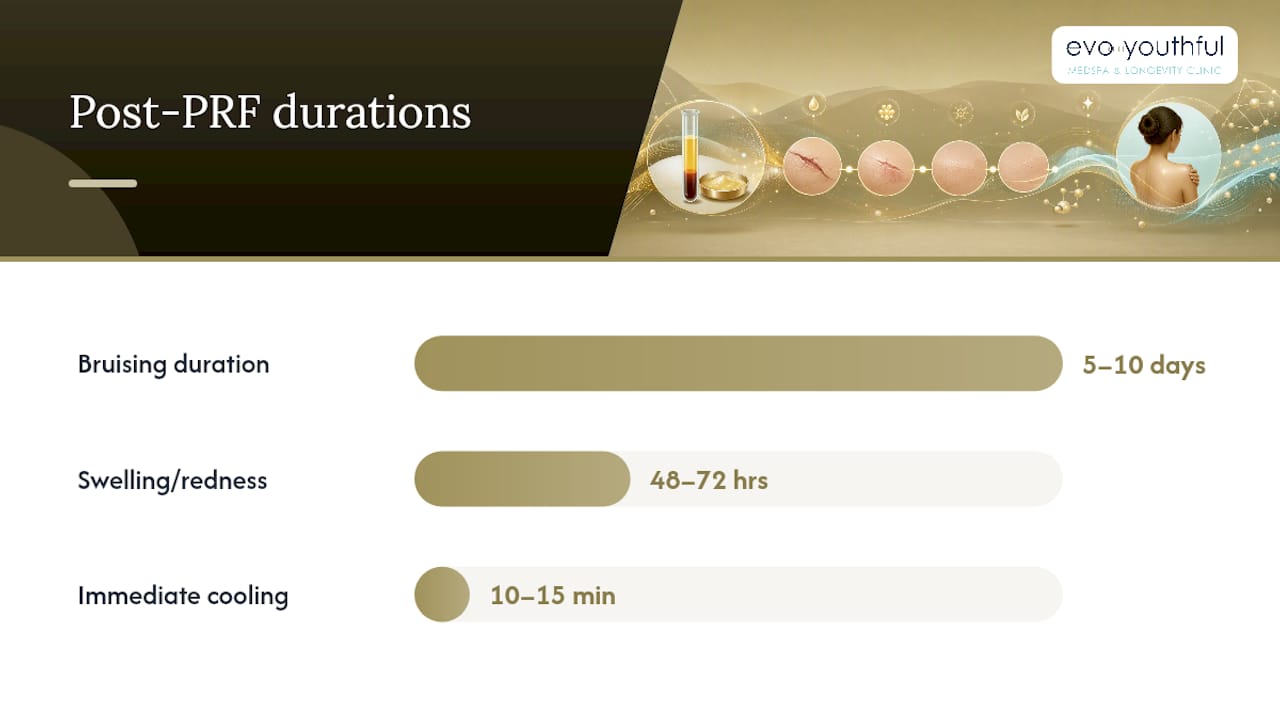
- Bruising, usually resolving within 5 to 10 days
- Swelling and redness at injection sites, typically settling within 48 to 72 hours
- Mild tenderness, especially in areas with thinner skin like under the eyes
Rarer but more serious concerns include infection at the injection site or an allergic-type reaction to numbing agents used during the procedure. Any spreading redness, fever, or worsening pain beyond the first few days warrants a call to your provider, not a wait-and-see approach.
Aftercare that actually moves the needle:
- Apply broad-spectrum sunscreen daily, since new collagen formation is sensitive to UV damage during remodeling
- Avoid picking at any pinpoint scabbing from microneedling combined treatments
- Skip retinoids and exfoliating acids for a few days post-treatment unless your provider says otherwise
- Contact your clinic promptly if you notice signs of infection rather than waiting for your next scheduled visit
Pro Tip: Cooling the treated area with a clean ice pack for 10 to 15 minutes right after your session can noticeably reduce swelling, particularly around the eyes and cheeks.
Does Combining PRF With Microneedling or Lasers Improve Results?
PRF rarely performs as a standalone act in serious scar treatment plans. Its real strength shows up in combination.
- PRF plus microneedling is the most studied pairing, and for good reason. Microneedling creates thousands of micro-channels in the skin, and applying PRF immediately afterward lets the fibrin matrix penetrate directly into the dermis rather than sitting on the surface. Trials comparing this combination against microneedling alone report greater textural improvement and higher patient satisfaction with the addition of PRF.
- PRF plus subcision addresses scars that are tethered to deeper tissue, common in icepick and deep boxcar patterns. Subcision releases the tether, and PRF fills the resulting space, supporting healthier tissue regrowth rather than scar reformation.
- PRF alongside laser resurfacing is used in some protocols to support faster healing and reduce redness duration after ablative or fractional laser sessions, though this combination depends heavily on sequencing.
Sequencing matters here. Same-day combination treatments are common, but a staged approach, laser first with PRF introduced at a later session, may suit patients with more sensitive or reactive skin. This is a conversation to have directly with your provider, not something to decide from a blog post, since the right sequence depends on your specific scar pattern and skin response history.
How Do You Choose a Provider for PRF Scar Treatment?
The outcome of a PRF treatment depends heavily on who’s performing it and how carefully they’ve built their protocol. The same label, “PRF,” can mean meaningfully different products depending on centrifuge settings and technique, so vetting your provider isn’t optional homework.
Look for these credentials and practices:
- Board certification or documented aesthetic training, along with a clear scope of practice if you’re seeing a physician assistant or nurse practitioner
- Willingness to explain their specific PRF protocol, including centrifuge speed, tube type, and how quickly the sample is processed after the draw
- A documented treatment plan, not a one-and-done session with no follow-up
- Before-and-after documentation from real patients treated for a similar scar type to yours
Questions worth asking directly:
- How many PRF sessions do you typically recommend for my scar type, and why?
- What happens if I don’t see improvement after the first two sessions?
- Do you combine PRF with microneedling or subcision, and how do you decide?
Red flags include vague answers about their process, no written consent or aftercare instructions, inconsistent sterile technique, or no plan for follow-up assessment. If a provider can’t explain what happens to your blood between the draw and the injection, that’s worth pausing over.
How Does evoyouthful Approach PRF for Scar Treatment?
This section is written from the clinical perspective of Elizabeth Vogstrom, PA-C, whose background in aesthetic and regenerative medicine informs evoyouthful’s approach to scar treatment protocols.
At evoyouthful, PRF for acne and surgical scars is frequently paired with Exion fractional RF microneedling, combining radiofrequency energy with the regenerative signaling of PRF in a single, sequenced protocol. Safety steps include a pre-treatment consultation to review medications and supplements, sterile single-use kits for blood processing, and a defined post-procedure follow-up window to track healing.
Scar treatment isn’t a single-visit fix. It’s a course of care that respects how collagen actually rebuilds, session by session, over months rather than days.
What patients can expect from an initial visit:
- A visual and tactile scar assessment to determine type and depth
- A discussion of realistic timelines based on the evidence for their specific scar category
- A written treatment plan outlining session count and expected intervals
Detailed case outcomes and patient-reported results specific to evoyouthful’s PRF program will be added as that documentation is compiled.
What Should You Actually Prioritize When Considering PRF for Scars?
The conventional pitch on PRF often oversells the “one treatment fixes everything” narrative, and that’s where I think patients get set up for disappointment. The evidence doesn’t support PRF as a solo miracle. It supports PRF as a strong regenerative component within a plan that usually includes microneedling, sometimes subcision, and always realistic timeline expectations.
What gets underrated is provider technique. Two clinics can both offer “PRF” and produce different results because centrifuge speed, tube choice, and processing time genuinely change what gets injected into your skin. If a provider can’t answer specific questions about their protocol, that tells you more than any before-and-after photo.
What I’d prioritize first: scar type matching. Raised scars are not PRF’s strength, and no amount of enthusiasm from a provider changes that biology. Atrophic acne scarring is where the data is genuinely convincing, particularly alongside microneedling. Start there, ask hard protocol questions, and treat the three to four session course as the real commitment, not a single appointment you’re hoping will do the whole job.
— Elizabeth Vogstrom, PA-C
Ready to Talk to Someone About Your Scars?
If you’ve read this far, you’re probably past the “does PRF even work” question and closer to “does it make sense for my scars specifically.” That’s exactly what a consultation is for. evoyouthful provides medically supervised PRF injections integrated with advanced remodeling therapies like fractional RF microneedling, rather than treating PRF as a stand-alone add-on service.

A consultation at evoyouthful includes a hands-on assessment of your scar type and depth, an honest conversation about which combination approach fits your skin, and a written plan with realistic session counts and timing based on the actual evidence, not guesswork about what “should” work. If your scarring involves broader skin quality concerns, our team can also walk you through complementary options like Sculptra for collagen support. Book a consultation through our PRF injections page to get a scar assessment and find out whether a PRF-based plan is the right next step for you.
Sources
- Fluid platelet-rich fibrin (PRF) versus platelet-rich plasma (PRP) in the treatment of atrophic acne scars: A comparative study
- Fluid Platelet-Rich Fibrin (PRF) Versus Platelet-Rich Plasma (PRP) in the Treatment of Atrophic Acne Scars: A Comparative Study — PMC
- Platelet-rich fibrin — ScienceDirect topic overview
This article is general information, not a substitute for advice from a qualified doctor. Consult a qualified healthcare professional about your own circumstances before acting on anything here.
Recommended
- PRF Hair Restoration: What the Evidence Actually Shows | evoyouthful Blog
- PRF Injections | Harness your body’s own healing power | evoyouthful Wayzata, MN
- Sculptra | Stimulate your own collagen for lasting results | evoyouthful Wayzata, MN
- Exion Fractional RF Microneedling | Advanced skin remodeling from within | evoyouthful Wayzata, MN
Ready to Start?
Schedule a Consultation
Have questions about what you just read? Our team is here to help.