
PRF Hair Restoration: What the Evidence Actually Shows
Elizabeth Vogstrom, PA-C
evoyouthful Clinical Team
Discover how PRF hair restoration enhances hair growth with proven results. Learn about personalized treatment and ideal candidacy today!
PRF Hair Restoration: What the Evidence Actually Shows
Platelet-rich fibrin (PRF) does help many patients grow thicker, denser hair, and the current evidence puts injectable PRF (i-PRF) at least on par with platelet-rich plasma (PRP), often ahead of it, for both results and comfort. That verdict comes from case series and, more recently, a randomized multicenter trial comparing the two. It is not a one-visit fix.
- PRF works best on scalp areas with surviving, miniaturized follicles, not areas that are fully bald.
- A course of several sessions, not a single injection, is what the data actually supports.
- The right next step is a scalp assessment with a qualified provider who can confirm you are a reasonable candidate before you spend money on a protocol that will not help.
Key Takeaways
PRF works by using a fibrin scaffold to release your body’s own growth factors gradually, and current trial data shows it outperforms PRP for hair count gains while causing fewer adverse events.
| Point | Details |
|---|---|
| i-PRF beats PRP in trials | A 2026 randomized trial found i-PRF produced a 26.5% average hair count increase versus 14.5% for PRP at 24 weeks. |
| Protocol details matter | Low-speed centrifugation (roughly 700 rpm, 4 to 5 minutes) preserves platelets and growth factors better than older, faster spins. |
| Expect a course, not one visit | Most plans involve 3 to 6 initial sessions spaced 4 to 6 weeks apart, plus maintenance every 6 to 12 months. |
| Side effects are typically mild | Bruising, tenderness, and minor swelling resolve within days; anticoagulant use and blood disorders are key contraindications. |
| evoyouthful offers assessed, protocol-driven PRF | The clinic pairs a scalp evaluation with documented injection protocols and follow-up tracking rather than a one-size-fits-all session. |
This article is general information, not a substitute for advice from a qualified doctor. Consult a qualified healthcare professional about your own circumstances before acting on anything here.
Table of Contents
- How Does PRF Hair Restoration Work?
- What Types of PRF Are Used for Hair Treatment?
- What Happens During a PRF Hair Restoration Session?
- Does the Clinical Evidence Support PRF for Hair Loss?
- How Long Does It Take to See Results and Can You Combine PRF With Other Treatments?
- Is PRF Safe, and Who Should Avoid It?
- How Much Does PRF Hair Treatment Cost?
- How Do You Choose a Provider for PRF Hair Restoration?
- How Does a Clinic Like evoyouthful Deliver PRF Treatment?
- When Is PRF Actually the Right Tool?
- How Does evoyouthful Approach PRF Hair Restoration?
- Sources
How Does PRF Hair Restoration Work?
PRF works by concentrating your own platelets, white blood cells, and growth factors into a fibrin matrix that releases those healing signals into the scalp gradually, over days rather than minutes. PRP, by comparison, is a liquid plasma concentrate that dumps most of its growth factors almost immediately after activation. That difference in release speed is the whole reason PRF exists as a distinct treatment.
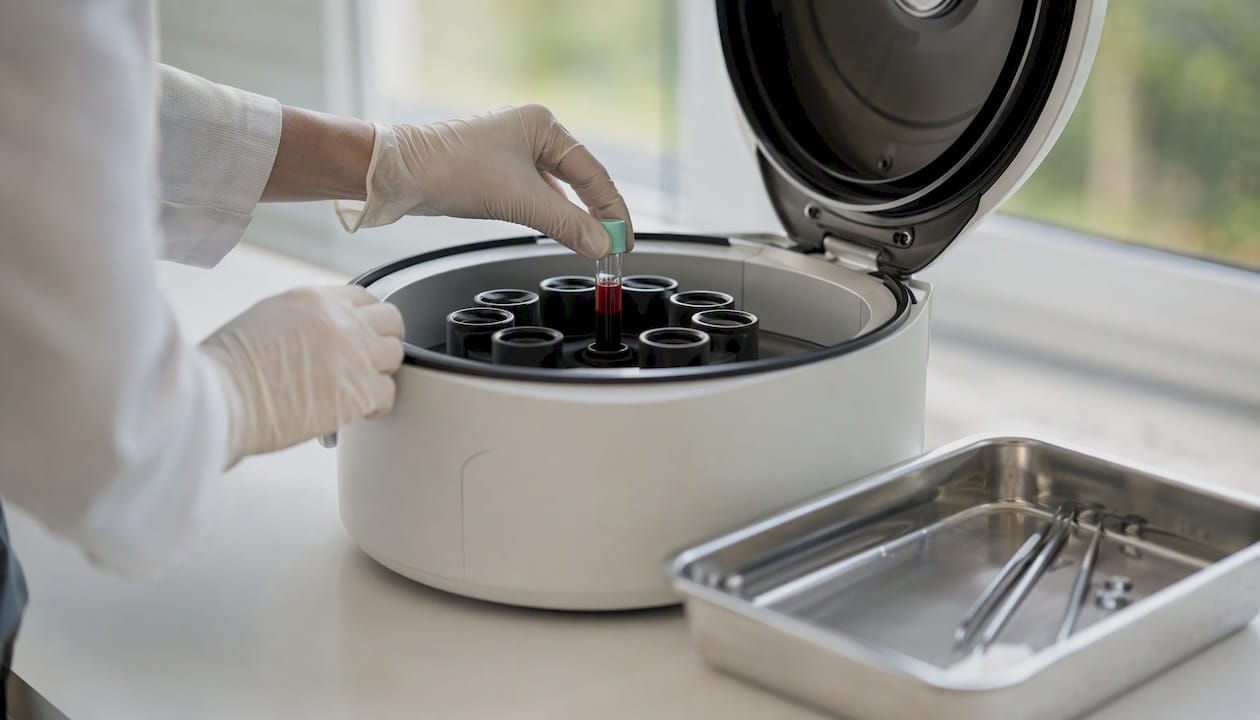
The process starts with a blood draw, similar to a routine lab test. The blood goes into a centrifuge spun at low speed, which matters more than it sounds. Older, faster centrifugation protocols strip out platelets and leukocytes along with the red cells. Low-speed centrifugation preserves them, a concept sometimes called the low-speed centrifugation concept, and it is the basis for injectable PRF (i-PRF).
- Blood draw from the patient’s arm, typically 20 to 26 milliliters depending on protocol.
- Centrifuge separates the sample without destroying platelets or growth-factor-carrying cells.
- The liquid PRF layer is drawn off and injected into the scalp within about 20 minutes, before it fully clots.
A 2026 randomized trial comparing PRP, i-PRF, and concentrated growth factors (CGF) found i-PRF produced a 26.5% average increase in target-area hair count at 24 weeks, nearly double PRP’s 14.5% increase in the same trial.
What Types of PRF Are Used for Hair Treatment?
Clinics use several PRF preparations, and the differences come down to how liquid or solid the final product is and how it gets delivered into the scalp.
- Solid or gel PRF: The classic form, a dense fibrin clot often cut into pieces or used as a scaffold; less common for scalp injections since it is harder to inject through a fine needle.
- A-PRF (advanced PRF): Prepared at slightly different centrifuge speeds to yield a softer clot with more cellular content than first-generation PRF.
- Injectable PRF (i-PRF): A liquid formulation kept in motion long enough to inject directly into the scalp, the workhorse for hair restoration.
- i-PRF+: A refined injectable protocol, often using two tubes of blood spun at roughly 700 rpm for about 5 minutes, designed to boost cellular yield further.
Published protocols vary, but a common early technique spins whole blood at 700 rpm for 4 minutes in a plastic tube, which activates the sample more gently than glass. A clinical review of PRF methods notes most published studies use similarly low centrifugal force and brief spin durations, though protocols are still far from standardized across clinics.
Pro Tip: Liquid i-PRF stays injectable for roughly 20 minutes before it begins to clot. Ask your provider how quickly they inject after the spin. A rushed or delayed injection can affect how much of that regenerative material actually reaches your follicles.
What Happens During a PRF Hair Restoration Session?
A typical PRF session runs 45 minutes to an hour, most of it spent waiting on the centrifuge rather than in a needle. After a brief scalp assessment and consent discussion, the process moves fast.
- Provider draws blood, usually 20 to 26 milliliters, similar to a standard lab panel.
- Sample spins in the centrifuge for roughly 4 to 5 minutes at low speed.
- Scalp is cleansed and sometimes numbed with topical anesthetic.
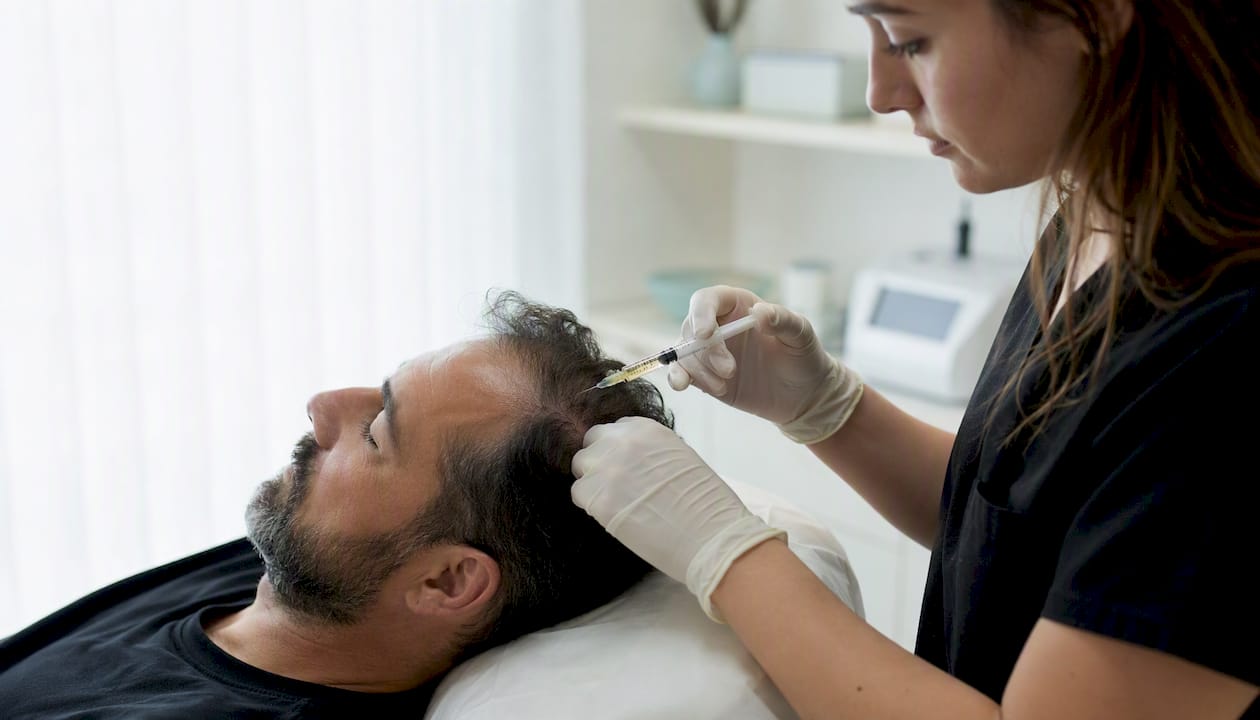
- Liquid PRF is injected in a grid pattern across thinning areas, sometimes paired with microneedling to help distribution.
- You get brief aftercare instructions and head home the same day.
Pro Tip: Mild scalp tenderness and small bruises at injection sites are normal for a day or two. Ice and avoiding hair products for 24 hours usually resolves both without any special treatment.
Does the Clinical Evidence Support PRF for Hair Loss?
The strongest evidence to date favors i-PRF over PRP for hair regrowth, and it comes from a mix of small case series and one recent randomized trial large enough to carry real weight.
That 2026 prospective multicenter randomized trial, run in women with female pattern hair loss, measured target-area hair count at 24 weeks. CGF and i-PRF both beat PRP by a wide margin, and i-PRF also had the lowest rate of adverse events among the three groups. VEGF levels in the injected material correlated with how much hair count improved, hinting that growth-factor concentration may partly explain who responds and who does not.
A separate case series of 11 women treated with i-PRF+ across three monthly sessions reported statistically significant gains in follicle density and hair thickness at both 12 and 24 weeks, with adverse effects limited to transient bruising.
A clinical review of PRF methods concluded the treatment shows real promise through sustained growth-factor release and preserved cellular content, but cautioned that protocols across published studies remain inconsistent and that larger, standardized trials are still needed to confirm long-term outcomes.
- CGF: a notable average target-area hair count increase at 24 weeks.
- i-PRF: 26.5% average increase, with the fewest adverse events.
- PRP: a moderate average increase.
The honest caveat: most PRF studies, including several cited above, involve small samples and follow-up windows under a year. That is proof-of-concept evidence, not decades of long-term data.
How Long Does It Take to See Results and Can You Combine PRF With Other Treatments?
Most protocols call for 3 to 6 initial PRF sessions spaced 4 to 6 weeks apart, followed by maintenance treatments every 6 to 12 months. Results build gradually rather than appearing all at once.
- Weeks 2 to 4: Reduced shedding is usually the first sign something is working.
- Months 2 to 3: Hair texture and thickness typically start to improve.
- Months 3 to 6: Visible density changes become apparent to most patients.
- Ongoing: Maintenance sessions preserve gains, since PRF supports follicles rather than permanently altering them.
PRF pairs well with existing standard-of-care treatments. Clinic guides commonly pair an initial course of PRF with topical minoxidil or oral finasteride rather than using it as a replacement, and some surgeons use PRF around transplant grafts to support healing. Complementary approaches, including peptide-based research on hair growth and red light therapy, are also gaining attention as adjuncts, though the evidence base behind them is thinner than what exists for PRF itself.
Low-dose oral minoxidil requires medical supervision: it can cause fluid retention, a faster heart rate, and lowered blood pressure, so clinicians typically monitor blood pressure and ask about heart conditions before prescribing. It is not recommended during pregnancy or breastfeeding. Discuss these risks with a physician before starting.
Finasteride is FDA-indicated for men only. Women who are or may become pregnant must not handle crushed or broken finasteride tablets, due to the risk of harm to a male fetus. It can also cause sexual side effects (reduced libido, erectile dysfunction) in a minority of men, which usually resolve after stopping treatment. Discuss these risks with a physician before starting.
Is PRF Safe, and Who Should Avoid It?
PRF is generally well tolerated. Because it uses your own blood, allergic reaction is not a realistic concern the way it can be with synthetic fillers. Reported side effects are mild and short lived: injection-site bruising, tenderness, and mild swelling that resolves within a few days.
Some people should skip PRF or discuss it carefully first:
- Active scalp infection or skin disease at the injection site
- Diagnosed blood disorders or clotting abnormalities
- Current use of anticoagulant medications
- Pregnancy, where many clinics advise caution as a precaution
- Immunosuppressant therapy, which may blunt the regenerative response
Tell your provider about every medication and health condition during screening. This is standard practice for any injectable procedure, not a PRF-specific quirk.
How Much Does PRF Hair Treatment Cost?
PRF hair treatments typically run a few hundred dollars per session in the United States, with a full initial course costing more, depending on how many sessions your provider recommends. Since regenerative injections like PRF are not FDA-approved hair-regrowth drugs, they are elective and almost always paid out of pocket rather than covered by insurance.
- Provider credentials and experience influence pricing
- Equipment matters: i-PRF+ tubes and calibrated centrifuges cost more to maintain than basic setups
- Bundled packages covering an initial course plus maintenance often cost less per session than paying one at a time
Ask any clinic for per-course pricing up front, not just a per-session number, so you can compare total cost across providers fairly.
How Do You Choose a Provider for PRF Hair Restoration?
Choose a provider who can describe their exact protocol without hesitation. Vague answers about centrifuge speed or tube type usually signal inconsistent results.
- What centrifuge speed and spin time do you use, and why?
- Do you prepare standard i-PRF or the i-PRF+ protocol?
- How many sessions do you recommend for my degree of thinning, and how did you arrive at that number?
- Can you show before-and-after photos alongside objective measures like hair counts?
- Who performs the injection: a physician, physician assistant, or registered nurse?
- What is the total cost for a full course, and what does maintenance cost after that?
Walk away from any provider who pushes a large prepaid package before doing a scalp assessment, or who cannot produce a written consent form outlining risks.
How Does a Clinic Like evoyouthful Deliver PRF Treatment?
A well-run PRF program follows a clear sequence: medical assessment, informed consent, blood draw and preparation, injection, then a follow-up plan to track progress over months, not weeks.
Trust signals worth confirming before booking include a credentialed injector, a documented and consistent centrifuge protocol, objective outcome tracking rather than guesswork, before-and-after imaging, and transparent pricing before treatment begins. Ask about the provider’s approach to regenerative therapy generally, not just PRF specifically. How a clinic explains its broader regenerative protocols tells you a lot about how carefully it will handle your scalp.
When Is PRF Actually the Right Tool?
PRF earns its place as a regenerative adjunct for patients who still have living, miniaturized follicles. It is not a rescue plan for scalp that has been bald for years. Anyone expecting a single visit to erase a decade of thinning is going to be disappointed, no matter how good the provider is.
The realistic approach treats PRF as one piece of a broader plan: paired with topical or oral therapy when appropriate, scheduled as a real course of sessions, and evaluated with honest before-and-after tracking rather than optimism alone.
How Does evoyouthful Approach PRF Hair Restoration?
evoyouthful treats PRF as a medically supervised regenerative protocol, not a walk-in add-on. Every course starts with a scalp assessment to confirm you have follicles worth supporting, followed by an evidence-informed injection protocol and a documented follow-up plan so you can actually see whether treatment is working, not just hope it is.

Bring a list of current medications and a rough timeline of your hair thinning to your first visit. It helps the team build a realistic session plan instead of guessing. If PRF is not the right fit, or if hormonal shifts are part of what is driving your hair changes, the same visit can open a conversation about bioidentical hormone replacement therapy, since hormone imbalance is a common, underdiagnosed contributor to thinning hair in both men and women.
Ready to find out if you are a good candidate? Visit the PRF injections page to review the protocol in detail and request a scalp evaluation at the Wayzata clinic.
Sources
- Comparative efficacy and safety of platelet-rich plasma (PRP), injectable platelet-rich fibrin (i-PRF) and concentrated growth factors (CGF) for female pattern hair loss (FPHL): a prospective multicenter randomized clinical trial
- Injectable platelet-rich fibrin for treatment of female pattern hair loss
- Injectable-Platelet-Rich Fibrin-Smart Blood with Stem Cells for the Treatment of Alopecia: A Report of Three Patients
- Platelet-rich fibrin: a review of its role as a new treatment
Recommended
- PRF Injections | Harness your body’s own healing power | evoyouthful Wayzata, MN
- Exion Fractional RF Microneedling | Advanced skin remodeling from within | evoyouthful Wayzata, MN
- High-End Anti-Aging Treatment Types: A Clinical Guide | evoyouthful Blog
- Facial Volume Loss | Treatments in Wayzata, MN | evoyouthful Wayzata, MN
Ready to Start?
Schedule a Consultation
Have questions about what you just read? Our team is here to help.