
When Pelvic Floor Biofeedback Helps: Lessons From a BMJ Trial of 600 Women
Elizabeth Vogstrom, PA-C
evoyouthful Clinical Team
Patient centered clinical guide showing when pelvic floor biofeedback helps, what large trials report, and how clinics use it as a selective adjunct to...
When Pelvic Floor Biofeedback Helps: Lessons From a BMJ Trial of 600 Women
Pelvic floor biofeedback is a clinic-based technique that uses sensors to show you, in real time, whether you are contracting and relaxing your pelvic floor muscles correctly. It works best as a selective adjunct to supervised pelvic floor muscle training (PFMT), not a routine add-on for everyone with incontinence or pelvic pain. For patients who cannot feel or isolate the right muscles, it accelerates learning; for those who already contract well, plain PFMT often does the same job.
TL;DR:
- Biofeedback offers the most benefit for patients with pelvic floor muscle awareness issues, dyssynergic defecation, or muscle relaxation problems, rather than routine incontinence.
- Clinic-based biofeedback sessions typically involve internal or external sensors, real-time visual feedback, and a structured program spanning about six visits over 12 to 16 weeks.
- Recent research shows biofeedback does not significantly improve long-term incontinence outcomes compared to standard pelvic floor muscle training alone, but it helps motivate and guide select patients.
- Combining biofeedback with other therapies like electrical stimulation or vaginal cones is common, especially for those needing both strength and coordination training.
- Home devices support adherence but cannot replace the precision and coaching of clinic-assisted biofeedback, and proper assessment remains essential before starting treatment.
Table of Contents
- How Pelvic Floor Biofeedback Works
- Who Benefits Most From Biofeedback Training
- What Happens During a Biofeedback Session
- What the Research Actually Shows About Biofeedback
- PFMT, Vaginal Cones, and Electrical Stimulation Compared
- How to Choose a Pelvic Floor Therapist
- Home Biofeedback Devices: What They Can and Cannot Do
- When to Expect Results
- The evoyouthful Approach to Pelvic Floor Health
- When Biofeedback Actually Earns a Spot in Treatment
- Ready to Talk to Someone About Your Pelvic Floor?
- Sources
- FAQ
How Pelvic Floor Biofeedback Works
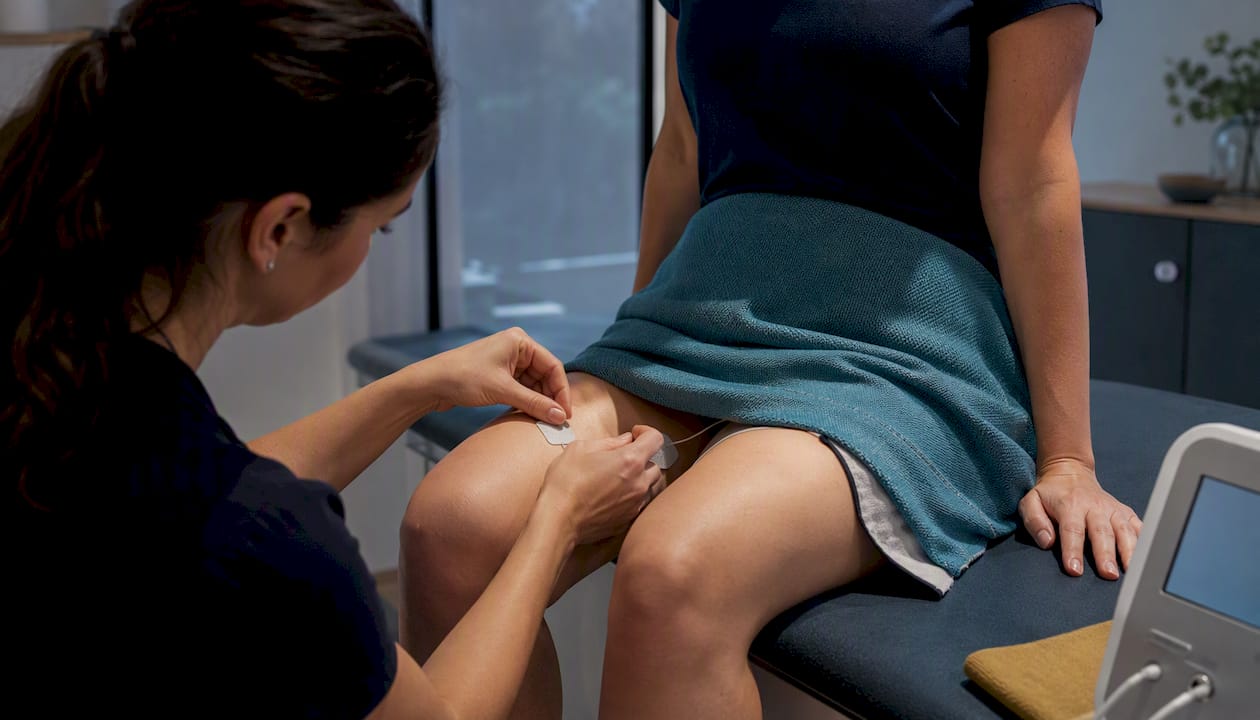
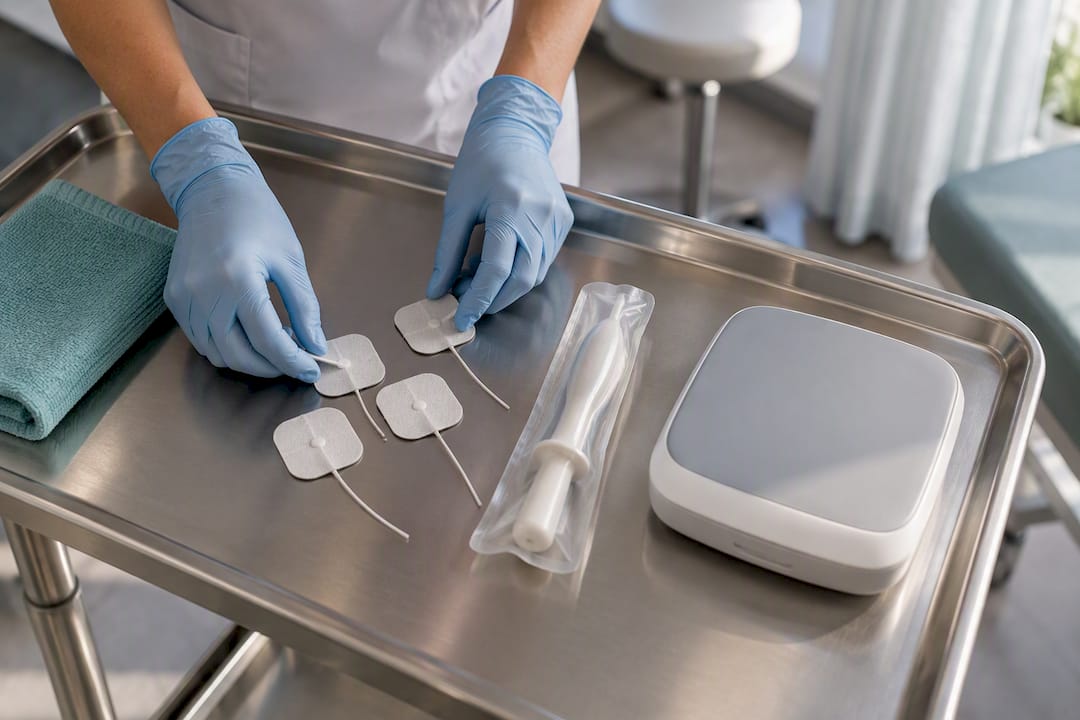
Biofeedback translates a hidden muscle action into something you can see or hear. Most clinics use surface electromyography (sEMG), either through skin patches or a small intravaginal or anal probe, to detect the electrical activity your pelvic floor muscles produce when they contract. Some systems instead use pressure sensors or a perineometer, which measure squeeze pressure inside the vagina or rectum rather than electrical signal.
The signal shows up on a screen as a moving line, bar graph, or game-like display. When you contract correctly, the line rises; when you relax, it falls back to baseline. That immediate visual cue matters because a surprising number of people, especially those newly diagnosed with pelvic floor dysfunction, contract the wrong muscles entirely. A clinical review of biofeedback for pelvic floor disorders notes that patients with weak pelvic floor muscles often substitute abdominal or gluteal muscles during attempted contractions, and biofeedback helps unmask that substitution pattern so a therapist can correct it on the spot.
A typical first session includes:
- A pelvic floor assessment, sometimes with a brief internal exam to check baseline strength and coordination
- Probe or sensor placement and a short calibration period to establish your resting and contracted readings
- Guided practice contractions while watching the feedback display, with real-time coaching on technique
- A home exercise program built around what your muscles actually did during the session, not a generic handout
Sensor-based training like this is part of why biofeedback-assisted pelvic floor muscle training combines clinic-guided sessions with home practice rather than replacing one with the other.
Comfort is a fair concern, and clinics that do this work regularly follow strict probe cleaning and single-use cover protocols between patients. If internal probes make you uneasy, ask upfront. Surface sEMG patches placed near the perineum are a reasonable alternative that avoids internal placement entirely, though they tend to give a less precise signal.
Pro Tip: Ask your provider whether the feedback display shows you contracting the correct muscle group before your first home session. If you cannot repeat the movement at home without watching the screen, ask for one more supervised visit before going it alone.
Who Benefits Most From Biofeedback Training
Biofeedback is not equally useful across every pelvic floor complaint. The evidence is strongest for anorectal conditions, and weaker, more conditional, for the urinary symptoms that drive most people to search for it.
Conditions with solid evidence:
- Dyssynergic defecation (difficulty coordinating the muscles needed for a bowel movement) shows clear benefit versus laxatives or sham treatment, and clinical guidelines from bodies like ANMS-ESNM support biofeedback as a recommended approach.
- Fecal incontinence responds well in patients who can engage in supervised training.
- Selected cases of pelvic pain, particularly where muscle guarding or an inability to relax the pelvic floor is part of the problem.
For urinary incontinence, the picture is more nuanced. PFMT alone remains the first-line treatment, and biofeedback’s real value shows up in a specific subgroup: people who cannot reliably find or feel an isolated pelvic floor contraction on their own. If you have tried Kegel exercises and genuinely are not sure whether you are doing them correctly, biofeedback gives you an objective answer instead of a guess.
Patient factors linked to better outcomes:
- Willingness to attend multiple supervised sessions rather than a single visit
- Motivation to keep up a home practice routine between appointments
- A clear symptom target (leakage during specific activities, straining with bowel movements) rather than vague pelvic discomfort
Evidence is thinner for chronic pelvic pain unrelated to muscle coordination, for men with post-prostatectomy incontinence who have good baseline muscle awareness, and for anyone expecting biofeedback alone to substitute for a broader pelvic health therapy plan that might include lifestyle changes, bladder training, or medical evaluation.
What Happens During a Biofeedback Session
A biofeedback visit follows a fairly consistent structure across most pelvic health clinics, though who runs the session varies. It might be a pelvic health physical therapist, a continence nurse specialist, or, in a medical aesthetics and wellness setting, a physician assistant trained in pelvic floor therapy.
- Intake and assessment. You discuss symptoms, bladder or bowel diary information if you have kept one, and any prior pelvic surgery or childbirth history.
- Sensor or probe placement. The clinician places the internal probe or external patches and confirms a clean baseline reading before starting.
- Guided contraction practice. You perform a series of contractions and relaxations while watching the feedback display, with corrections from the clinician in real time.
- Home program assignment. You leave with a specific rep and set schedule, often mirroring what worked well on the screen that day.
- Follow-up scheduling. Programs studied in trials often run around six visits spread across 12 to 16 weeks, spaced to let home practice consolidate between sessions.
Sessions themselves typically run 30 to 45 minutes, with the first visit running longer to accommodate assessment. Some clinics offer home biofeedback device loans between visits so you can practice with feedback rather than guessing whether you’re doing the exercise correctly at home. Privacy is standard practice: draping, private rooms, and clear communication before any internal placement are baseline expectations, not extras you need to request.
What the Research Actually Shows About Biofeedback
The honest answer to “does biofeedback work” depends heavily on which condition and which outcome measure you’re asking about. This is where the evidence gets interesting, and where a lot of marketing oversimplifies.
The most rigorous test of biofeedback for urinary incontinence is the OPAL trial, a multicenter randomized controlled trial published in the BMJ. Researchers enrolled 600 women, gave everyone six appointments over 16 weeks, and randomized them to standard PFMT alone or PFMT plus EMG-biofeedback. At 24 months, there was no significant difference in incontinence severity scores between groups. Routinely bolting biofeedback onto a well-run PFMT program did not improve long-term continence outcomes.
That single finding surprises a lot of people, so here’s the nuance:
- A 2026 systematic review and meta-analysis pooling 8 randomized trials (1,045 women) found EMG-biofeedback added to PFMT produced a small reduction in incontinence severity and a moderate improvement in pelvic floor muscle strength.
- Trial results vary partly because of real differences in device type, supervision intensity, and how much one-on-one therapist contact time each protocol built in.
- Some researchers behind the OPAL trial’s own analysis point out that intensive coaching and behavior-change techniques embedded in a protocol can themselves drive results, meaning some of the benefit credited to biofeedback in older, smaller studies may really reflect more therapist attention.
The strength-versus-symptom gap: The Frontiers meta-analysis found a moderate strength gain (standardized mean difference of 0.56) alongside only a small severity improvement (standardized mean difference of −0.17). Getting stronger pelvic floor muscles on a screen does not automatically translate into a proportional drop in leakage episodes.
The practical takeaway lines up with how most pelvic health specialists already use the tool: biofeedback is not a routine upgrade to PFMT for the average patient with straightforward stress incontinence. It earns its place as a selective adjunct for people who struggle with muscle awareness, have dyssynergic defecation, or need objective proof they’re doing the exercise correctly. Reported adverse events across these trials are minimal. Mild probe discomfort and occasional session fatigue are the most common complaints, with no signal of serious harm in the RCT data.
PFMT, Vaginal Cones, and Electrical Stimulation Compared
Biofeedback is one tool among several for strengthening pelvic muscles, and it is rarely the only one a good clinician reaches for.
- Supervised PFMT is the first-line treatment for most pelvic floor dysfunction. It involves a clinician teaching correct contraction technique, then progressing sets and reps over weeks, with periodic checks on form.
- Vaginal cones and weighted devices work on a simple resistance principle: you hold a weighted cone in place using pelvic floor contraction, increasing weight as strength improves. Evidence supports them as roughly comparable to standard PFMT for motivated patients, though they require confidence inserting a device and are less useful for people who need coordination training rather than just strength.
- Electrical stimulation passively triggers a muscle contraction using a mild current, which clinicians use for patients with very weak muscles who cannot yet generate a voluntary contraction strong enough to feel or measure.
In practice, a combined approach makes sense for patients who need both strength and awareness, using electrical stimulation to kick-start a weak muscle, biofeedback to confirm the contraction is happening correctly, and PFMT to build it into a durable habit.
How to Choose a Pelvic Floor Therapist
Not every provider offering biofeedback has the same training or equipment, so a short conversation before booking saves you time and money.
Look for a licensed pelvic health physical therapist, a continence nurse specialist, or a clinician with documented training in pelvic floor biofeedback, rather than a general trainer offering it as an add-on service.
- Ask what device they use. sEMG, pressure-based, or a combination, and whether it’s clinic-grade or consumer equipment.
- Ask about their internal exam policy. Some conditions genuinely need an internal assessment; you should understand why before agreeing to one.
- Ask how many sessions they recommend and why. A number pulled from thin air is a red flag; a number tied to your specific symptoms is not.
- Ask about insurance coverage for pelvic floor therapy visits, since coverage varies widely by plan and diagnosis code.
- Ask how probes are cleaned between patients. A confident, specific answer here tells you a lot about the practice generally.
Be cautious of any provider who skips a real assessment, makes vague promises about “fixing” your pelvic floor in a fixed number of visits regardless of your condition, or pushes you toward buying a home device before they’ve even evaluated you.
Pro Tip: If a therapist can’t clearly explain what your biofeedback screen showed during your session, either the technology isn’t being used well or the explanation isn’t reaching you. Ask them to walk you through your own readout before you leave.
Home Biofeedback Devices: What They Can and Cannot Do
Consumer biofeedback devices, connected apps, and home probes have gotten genuinely better, and they can help you practice consistently between clinic visits. What they generally cannot match is the signal precision and live coaching correction of a clinic-grade system, since a screen at home can’t tell you that you’re subtly recruiting your glutes instead of your pelvic floor the way a trained therapist watching the same readout can.
Skip home devices entirely if you have an active pelvic infection, are in the early postoperative period after pelvic surgery, or haven’t had any professional assessment yet. Follow the manufacturer’s cleaning instructions for any internal probe exactly, and replace disposable covers or components on schedule rather than stretching their use.
The most effective setup pairs the two: a proper assessment and a few supervised sessions to confirm correct technique, then a home device to keep practice frequency up between visits. Used that way, home devices support adherence without replacing the coaching that actually teaches the skill.
When to Expect Results
Most pelvic floor exercise programs, biofeedback-assisted or not, follow a similar dosing pattern: roughly three sets of 10 to 15 repetitions daily. Early signs of progress, better muscle awareness, slightly less urgency, tend to show up around 4 to 6 weeks in. Meaningful, measurable change in strength or symptom scores usually takes 3 to 6 months of consistent practice.
Clinical trials like OPAL followed patients out to 24 months precisely because short-term gains don’t always hold. “Improvement” in this context usually means fewer leakage episodes or easier bowel movements, not complete symptom elimination. If you’ve done several months of consistent, correctly performed exercise without any change, that’s the point to go back to your provider and reassess the plan rather than push through longer on the same routine.
The evoyouthful Approach to Pelvic Floor Health
Pelvic floor therapy is one of the services offered in a regenerative and wellness care setting for adults dealing with the physical changes that come with aging, childbirth recovery, or hormonal shifts. The clinic builds personalized treatment plans, including for pelvic floor concerns that intersect with hormonal health.
Patients who come in for pelvic floor evaluation can expect a detailed assessment before any treatment plan is proposed, not a one-size-fits-all protocol. Because pelvic floor symptoms often overlap with hormonal transitions, a comprehensive approach considers the whole picture rather than treating muscle weakness in isolation. That combination of aesthetic and regenerative medicine shapes how pelvic floor care is sequenced alongside other services patients may already be exploring.
When Biofeedback Actually Earns a Spot in Treatment
I recommend biofeedback selectively, not as a default add-on to every pelvic floor referral. It earns its place when a patient genuinely cannot locate or isolate the right muscles after basic instruction, when dyssynergic defecation is on the table, or when someone needs objective proof they’re improving to stay motivated through months of practice.
For everyone else, supervised PFMT done well and done consistently is the foundation, and it should be tried first. The practical next step is a real assessment, a trial of supervised training, and biofeedback added only if progress stalls.
— Elizabeth Vogstrom, PA-C
Ready to Talk to Someone About Your Pelvic Floor?
If you’ve read this far wondering whether your own symptoms fit the “selective adjunct” category, the fastest way to find out is a real assessment rather than another article. Pelvic floor therapy is offered as part of a broader wellness approach, evaluating muscle function alongside hormonal factors that often go unaddressed in a standard PFMT referral.

A first visit starts with a conversation about your symptoms, history, and goals, followed by a hands-on assessment to determine whether biofeedback, straightforward pelvic floor exercises, or a combined approach fits your situation best. For patients whose pelvic floor symptoms overlap with hormonal changes, the clinic can also evaluate whether bioidentical hormone replacement therapy belongs in the conversation. If urinary leakage is your main concern, you can review evoyouthful’s approach to urinary incontinence treatment before booking. Visit evoyouthful to schedule a consultation and get a plan built around your actual assessment results, not a generic protocol.
This article is general information, not a substitute for advice from a qualified doctor. Consult a qualified healthcare professional about your own circumstances before acting on anything here.
Sources
- Effectiveness of pelvic floor muscle training with and without electromyographic biofeedback for urinary incontinence in women: multicentre randomised controlled trial
- Biofeedback for Pelvic Floor Disorders - PMC
- Electromyographic biofeedback-assisted pelvic floor muscle training for female stress urinary incontinence: a systematic review and meta-analysis
- Pelvic muscle strengthening exercises (patient instructions) - MedlinePlus
FAQ
How Is Pelvic Floor Biofeedback Done?
A clinician places a small sensor, either an external patch or an internal vaginal or anal probe, that detects your pelvic floor muscle activity and displays it on a screen. You then practice contracting and relaxing while watching the feedback, with real-time coaching to correct technique before you’re sent home with a matching exercise program.
Do They Use an Internal Probe in Pelvic Floor Therapy?
Some sessions use an internal vaginal or anal probe to get a precise muscle activity reading, but it’s not required for every patient or every technique. External surface sEMG patches are a valid alternative if internal placement isn’t something you’re comfortable with, and a good clinician will discuss options with you before starting.
Can You Do Pelvic Floor Biofeedback at Home?
Yes, consumer biofeedback devices exist and can help you keep up practice frequency between clinic visits, but they generally lack the signal precision and live coaching of a clinic-grade system. The most effective approach uses a home device to support the technique a therapist has already confirmed you’re doing correctly, not as a substitute for that initial supervised assessment.
How Much Does a Biofeedback Session Typically Cost?
Costs vary by clinic, insurance coverage, and how many sessions your treatment plan includes, so there’s no single universal price. evoyouthful’s current pricing for pelvic floor therapy and related services is available directly on its treatment pages, and many insurance plans cover a portion of supervised pelvic floor therapy when it’s medically indicated.
Recommended
Ready to Start?
Schedule a Consultation
Have questions about what you just read? Our team is here to help.