

Pelvic Floor: Clinic Steps and PT Timeline for Adults With Back Pain
Elizabeth Vogstrom, PA-C
evoyouthful Clinical Team
How pelvic floor dysfunction can cause unexplained lower back pain in adults, how clinics evaluate it, and what pelvic floor PT can achieve in 6–12 weeks.
Yes. Pelvic floor dysfunction is a well-documented, often-overlooked contributor to unexplained lower back pain in adults. Two clues point toward it: back pain paired with urinary, bowel, or sexual symptoms, and back pain that will not budge despite standard physical therapy. If either sounds familiar, a pelvic-floor-aware evaluation, ideally with a pelvic floor physical therapist, is the next right step.
TL;DR:
- Pelvic floor dysfunction often causes low back pain when muscles are hypertonic or weak, disrupting core pressure regulation and spinal support.
- Symptoms including urinary issues, bowel problems, sexual pain, and back pain worsened by sitting can indicate pelvic floor involvement.
- Self-checks like tracking pain with bladder activity or testing voluntary pelvic muscle contraction can help identify possible pelvic floor causes.
- Diagnosis involves multidisciplinary evaluation, including pelvic floor physical therapy, imaging, and ruling out other conditions like disc disease or sacroiliac joint dysfunction.
- Effective treatment centers on targeted pelvic floor physical therapy, diaphragmatic breathing, behavioral strategies, and gradual core and pelvic muscle retraining over 6 to 12 weeks.
Table of Contents
- How Does the Pelvic Floor Cause Low Back Pain?
- What Symptoms Suggest the Pelvic Floor Is Involved?
- What Self-Checks Can You Try Before Seeing a Clinician?
- How Is Pelvic Floor-Related Back Pain Diagnosed?
- What Treatments Actually Work for This Kind of Pain?
- What Does a Pelvic Floor PT Program Actually Look Like?
- When Should You See a Specialist Instead of Waiting?
- How evoyouthful Approaches Pelvic Floor-Related Back Pain
- What Should You Realistically Expect From Treatment?
- Get a Real Evaluation for Unexplained Back Pain in Wayzata
- Sources
- FAQ
How Does the Pelvic Floor Cause Low Back Pain?
The pelvic floor is not a separate structure tucked away from your spine. It is, as Harvard Health puts it, the bottom of your core, working with the diaphragm, transversus abdominis, and lumbar multifidus to manage pressure inside your trunk every time you breathe, lift, or shift positions. When those muscles fire out of sync, the spine loses its base of support.
A pelvic floor that is too tight (hypertonic) or too weak changes how pressure moves through your abdomen and pelvis. That shift forces your lower back to compensate, often through altered posture or guarding patterns that build tension over weeks or months.
A pelvic floor that cannot regulate trunk pressure properly does not just affect the pelvis. It shows up as chronic tension, stiffness, or pain in the lumbar spine, often without an obvious pelvic complaint.
There is also a direct referred-pain pathway. Trigger points in pelvic floor muscles can radiate pain upward into the sacrum and lower back the same way a knot in your shoulder can radiate into your neck.
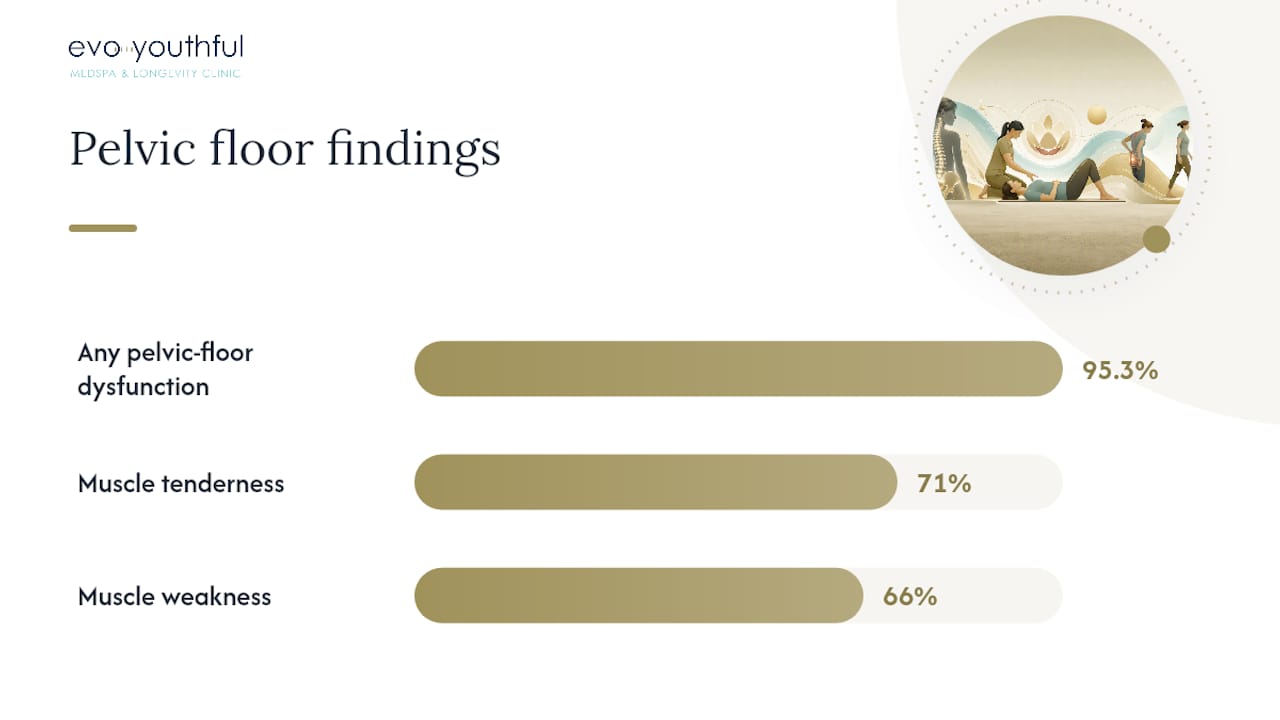
In a cross-sectional study of women with lumbopelvic pain, 95.3% had some form of pelvic floor dysfunction, with 71% showing muscle tenderness and 66% showing weakness. That overlap is far too large to treat as coincidence, and it is a major reason standard back-only treatment plans sometimes stall.
What Symptoms Suggest the Pelvic Floor Is Involved?
Low back pain with no clear injury or mechanical cause deserves a second look, especially when it travels with other signals your back alone would not produce. Pelvic floor dysfunction symptoms tend to cluster together rather than appear in isolation.
Watch for this pattern:
- Urinary urgency, frequency, or leakage alongside back pain
- Constipation, straining, or a sense of incomplete bowel emptying
- Pain during or after sexual activity
- A feeling of pelvic heaviness, pressure, or bulging
- Back pain that worsens with prolonged sitting
- Pain that flares around bladder or bowel movements rather than with lifting or twisting
One more clue matters clinically: if you have done a proper course of back-focused physical therapy and your pain has not moved, that lack of response is itself a signal. It often means the driver sits lower, in the pelvic floor, and not in the lumbar spine itself.
What Self-Checks Can You Try Before Seeing a Clinician?
Three low-risk observations can help you and your clinician connect the dots faster.
- Track timing. Note whether your back pain worsens around urination, bowel movements, or within hours of intercourse.
- Test voluntary contraction. Gently tighten and then fully relax your pelvic floor muscles (the same ones used to stop urine flow) and notice whether your back pain shifts, even slightly.
- Log positional triggers. Write down whether sitting, especially on hard surfaces, consistently reproduces or worsens the pain compared with standing or walking.
During an actual exam, a clinician will check external tenderness, assess muscle tone and symmetry, and run functional tests like asking you to bridge, squat, or bear down.
Pro Tip: Skip any internal self-exam techniques you find online. These self-checks are for screening only. Diagnosing muscle tone accurately requires trained hands, and getting it wrong at home can delay real answers.
How Is Pelvic Floor-Related Back Pain Diagnosed?
Diagnosis usually involves more than one type of clinician, since pelvic floor dysfunction sits at the intersection of orthopedics, gynecology, and neuromuscular medicine.
- Primary care typically screens first and rules out obvious mechanical or systemic causes.
- Physiatry or urogynecology gets involved when symptoms point toward the pelvic floor specifically.
- Pelvic floor physical therapists perform detailed muscle assessments that most primary care visits do not have time for.
- Imaging (ultrasound or MRI) and labs come into play only when red flags exist or the picture stays unclear.
- A key clinical marker, according to Cleveland Clinic, is persistent low back pain combined with urinary or bowel symptoms that has not responded to standard spinal treatment.
Differential diagnoses worth ruling out include lumbar disc disease, sacroiliac joint dysfunction, endometriosis, and interstitial cystitis, since several of these can mimic pelvic floor pain closely.
What Treatments Actually Work for This Kind of Pain?
Pelvic floor physical therapy is the backbone of treatment, and it looks different depending on whether your muscles are too tight or too weak. A skilled therapist uses biofeedback, manual release techniques, and coordination training to retrain the muscles rather than just strengthen them blindly.
A systematic review of randomized trials found that adding pelvic floor muscle training to standard stabilization exercise improved pain intensity, functional disability, and trunk endurance compared with stabilization alone. That is a meaningful jump beyond generic core work.
Other components of a solid treatment plan include:
- Diaphragmatic breathing retraining to reduce excess trunk pressure and support pelvic floor relaxation
- Pain education and cognitive behavioral strategies for cases involving central sensitization
- Trigger-point injections or botulinum toxin for muscle-dominant pain that resists conservative care
- Referral to a pain specialist when symptoms persist despite a full course of PT
Guideline-level clinical resources recommend an interdisciplinary approach combining physical therapy, behavioral therapy, and medication when needed, rather than leaning on any single intervention.
What Does a Pelvic Floor PT Program Actually Look Like?
A first visit typically involves a detailed history, an external and sometimes internal muscle assessment, and specific goals tied to your symptoms, not a generic exercise handout.
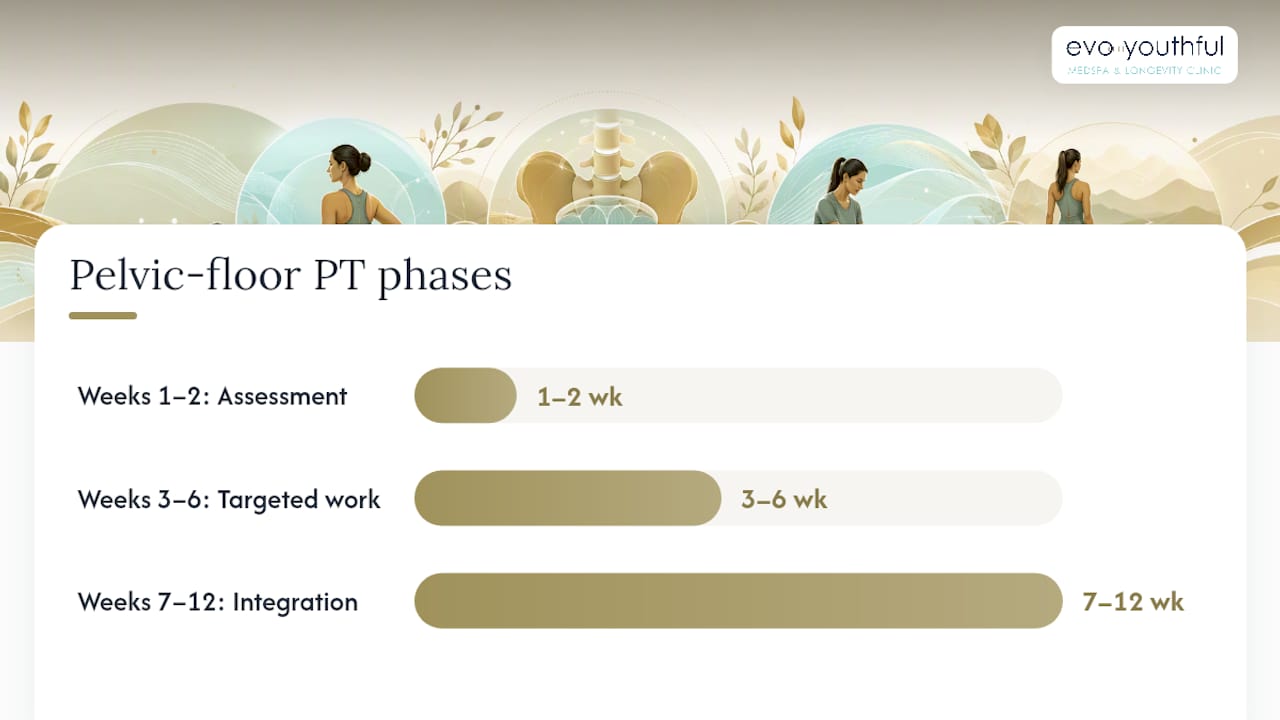
- Weeks 1 to 2: Assessment, education, and often breathing retraining to start reducing baseline tension.
- Weeks 3 to 6: Targeted work begins. Hypertonic muscles get manual release and relaxation training; weak muscles get graded strengthening, often paired with core stabilization.
- Weeks 7 to 12: Integration into daily movement, with progress tracked through pain during sitting, urinary symptom frequency, and general function rather than pain alone.
One study on sedentary women with low back pain found that combining pelvic floor muscle training with core training improved both trunk endurance and pain outcomes.
Pro Tip: Consistency matters more than intensity here. Two or three short home sessions a week, done correctly, tend to outperform occasional long sessions. Access and cost are real barriers, so ask your clinic about telehealth check-ins if in-person visits are hard to schedule regularly.
When Should You See a Specialist Instead of Waiting?
Start with a pelvic floor physical therapist or your primary care provider if symptoms are mild to moderate and have been present for a few weeks. Escalate to urogynecology, physiatry, or a pain clinic if PT is not helping after several weeks or if symptoms are more complex.
Seek urgent care immediately if you notice:
- Fever combined with pelvic or back pain
- Progressive weakness, numbness, or loss of bladder/bowel control
- New urinary retention
- Severe, unexplained systemic symptoms like unintended weight loss
Bring a symptom log, any prior imaging, and a list of treatments you have already tried. It saves time and helps your clinician avoid repeating steps you have already covered.
How evoyouthful Approaches Pelvic Floor-Related Back Pain
At evoyouthful, evaluation for unexplained low back pain includes screening for pelvic floor involvement rather than treating the spine in isolation. Physician Assistant Elizabeth Vogstrom, PA-C brings clinical experience in pelvic floor therapy and pain management to that evaluation process, looking at how urinary, bowel, and musculoskeletal symptoms connect before recommending a plan.
Patients typically move through an initial evaluation, a referral into pelvic floor therapy or urinary incontinence treatment when indicated, and coordinated pain management for cases that need more than exercise alone. The goal is a plan built around what your body is actually doing, not a generic back-pain protocol applied to everyone who walks in.
What Should You Realistically Expect From Treatment?
Most patients see meaningful change within 6 to 12 weeks of consistent, guided pelvic floor rehabilitation, though timelines vary based on how long symptoms have been present. Interdisciplinary care, pelvic floor PT paired with core work and behavioral strategies, tends to outperform any single intervention, because chronic pain rarely has one cause. Progress is usually gradual, and sticking with the guided plan matters more than chasing a faster fix elsewhere.
— Elizabeth Vogstrom, PA-C
Get a Real Evaluation for Unexplained Back Pain in Wayzata
If standard back care has not touched your symptoms, a more thorough look at pelvic floor involvement, urinary patterns, and pain triggers can uncover what generic treatment misses. evoyouthful, located in Wayzata, MN, offers pelvic floor therapy, urinary incontinence care, and coordinated pain management under one clinical team instead of bouncing you between disconnected providers.

An initial appointment typically includes a detailed symptom history and a targeted physical assessment to determine whether back pain has a pelvic floor component, a purely mechanical one, or both. This approach fits best for readers who want clinician-led, interdisciplinary treatment rather than another round of generic stretches. If pain management or hormonal factors are also part of your picture, evoyouthful’s bioidentical hormone replacement therapy services are available as part of a broader wellness plan. Schedule an evaluation to find out what is actually driving your pain.
FAQ
What does pelvic floor back pain feel like?
It often feels like a deep, achy tightness in the lower back or sacrum that does not respond to typical stretching or rest, and it frequently worsens with prolonged sitting.
What could be causing pelvic pain that radiates to my back?
Pelvic floor muscle tension or weakness, endometriosis, sacroiliac joint dysfunction, and referred trigger-point pain are among the most common causes, and a pelvic floor evaluation can help narrow it down.
What are the symptoms of pelvic floor dysfunction?
Common symptoms include urinary urgency or leakage, constipation, pain during sex, a sense of pelvic heaviness, and lower back pain that does not improve with standard treatment.
Do pelvic floor exercises help with lower back pain?
Yes, but only when matched to your specific dysfunction. Research shows that pelvic floor muscle training added to core stabilization improves pain and function, though a hypertonic pelvic floor needs relaxation work rather than generic Kegel exercises.
Recommended
Ready to Start?
Schedule a Consultation
Have questions about what you just read? Our team is here to help.