
14 Day Lip Filler Swelling Stages: Clinician Led Day by Day Aftercare
Elizabeth Vogstrom, PA-C
evoyouthful Clinical Team
Clinician led day by day timeline for lip filler swelling with stage specific aftercare, a 2 week reassessment plan and clear emergency red flags.
14 Day Lip Filler Swelling Stages: Clinician Led Day by Day Aftercare
Most lip filler swelling peaks within the first few days, then improves substantially within the first week. Your provider will likely schedule a follow-up around two weeks to judge results, with full tissue integration continuing for several weeks. Seek immediate medical care for severe or worsening pain, skin that turns pale or dusky, or any change in vision.
TL;DR:
- Swelling typically peaks between days 2 and 3 due to inflammation and bruising, with asymmetry often noticeable during this period.
- Most swelling begins to improve quickly from days 4 to 7, as lips soften and bruising shifts from purple to yellow-green.
- Factors like blood thinners, filler amount, injection technique, and post-treatment behaviors can delay swelling resolution or increase bruising.
- Immediate aftercare includes cold compresses, sleep with elevated head, and avoiding alcohol, heat, or strenuous activity to reduce swelling.
- Severe pain, skin discoloration, worsening swelling, or vision changes require urgent medical evaluation and potentially hyaluronidase treatment.
Table of Contents
- The Lip Filler Swelling Timeline, Day by Day
- Why Lips Swell and Bruise After Filler
- What Makes Swelling Last Longer or Shorter
- How to Manage Swelling at Each Stage
- Warning Signs That Need Urgent Attention
- A Clinician’s View on Patience and Proper Reassessment
- Get a Professional Follow-Up Assessment at a medical aesthetics clinic
- Sources
- FAQ
The Lip Filler Swelling Timeline, Day by Day
Recovery follows a fairly predictable arc, though your own timeline may run a day or two faster or slower depending on your body and your injector’s technique.
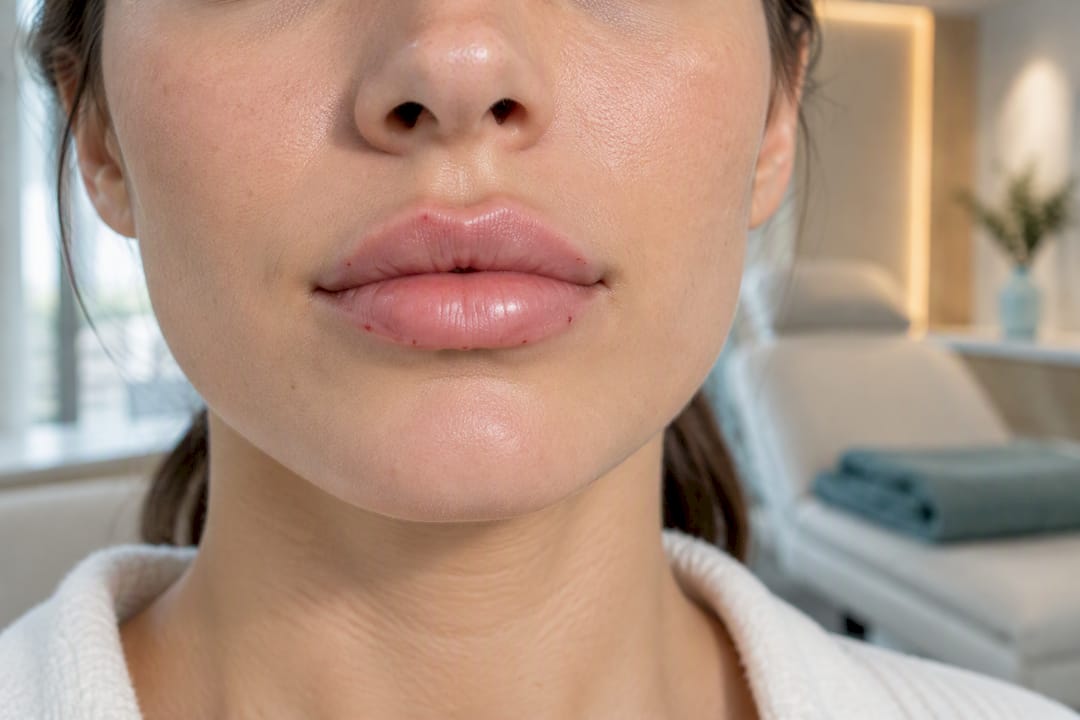
The first few hours. Local anesthetic keeps things numb at first, so tenderness and tightness usually creep in as it wears off. Mild puffiness shows up almost immediately, along with small red marks at each injection point. This is your tissue’s initial reaction to the needle, not a sign anything went wrong.
Day 1. Lips typically look and feel their biggest here, which surprises a lot of first-time patients. The combination of injected volume plus early inflammatory fluid can make lips appear larger and firmer than the final result will be. Avoid touching the area more than necessary, skip lipstick or lip balm for 24 hours, and resist the urge to judge the shape yet.
Days 2 to 3. This is peak swelling territory, and often peak bruising too. Cleveland Clinic notes that swelling commonly peaks in this window before starting to improve. Expect noticeable asymmetry. One side may swell more than the other simply because of injection angle or individual blood vessel patterns, and that unevenness is normal at this stage, not a preview of your final outcome.
Days 4 to 7. Swelling drops off fairly quickly here for most people. Lips soften, movement feels more natural, and any bruising starts shifting from purple to yellow-green as it fades. By the end of this week, most patients are back to feeling normal in day-to-day life, even if their lips are not yet at their true final shape.
Weeks 2 to 4. Residual firmness, if any remains, generally resolves during this stretch. Filler continues integrating with surrounding tissue, which is why providers wait until around the two-week mark before evaluating the result and discussing any touch-ups. If you received hyaluronic acid filler and something looks off, hyaluronidase can dissolve it under clinician supervision, though full dissolving can take up to two weeks itself, and reinjection usually waits at least 14 days after that.
- Immediate hours: numbness fading, mild puffiness, pinpoint redness at injection sites
- Day 1: peak apparent size, firmness, tenderness
- Days 2 to 3: peak swelling and bruising, visible asymmetry
- Days 4 to 7: rapid improvement, softening, bruising fades
- Weeks 2 to 4: residual firmness resolves, final shape emerges
Why Lips Swell and Bruise After Filler
Swelling is your body’s inflammatory response to needle trauma. Fluid rushes to the injection site to begin repair, which is exactly why lips look their fullest on day 1 rather than immediately after treatment. Bruising happens for a different reason: small blood vessels near the injection site get disrupted, leaking blood under the skin. This shows up as the yellow, green, or purple discoloration separate from swelling itself. Injection technique and instrument choice measurably affect how much bruising occurs, which is part of why two people getting the same filler can have very different bruising experiences.
What Makes Swelling Last Longer or Shorter
Several factors shift your personal timeline. Blood thinners and certain supplements, including aspirin, NSAIDs, fish oil, and vitamin E, increase bruising risk and can extend visible recovery. The amount of filler injected and the technique used matter too: cannula injections with fewer entry points tend to bruise less than needle injections with multiple passes, and careful attention to vessel anatomy reduces adverse reactions overall.
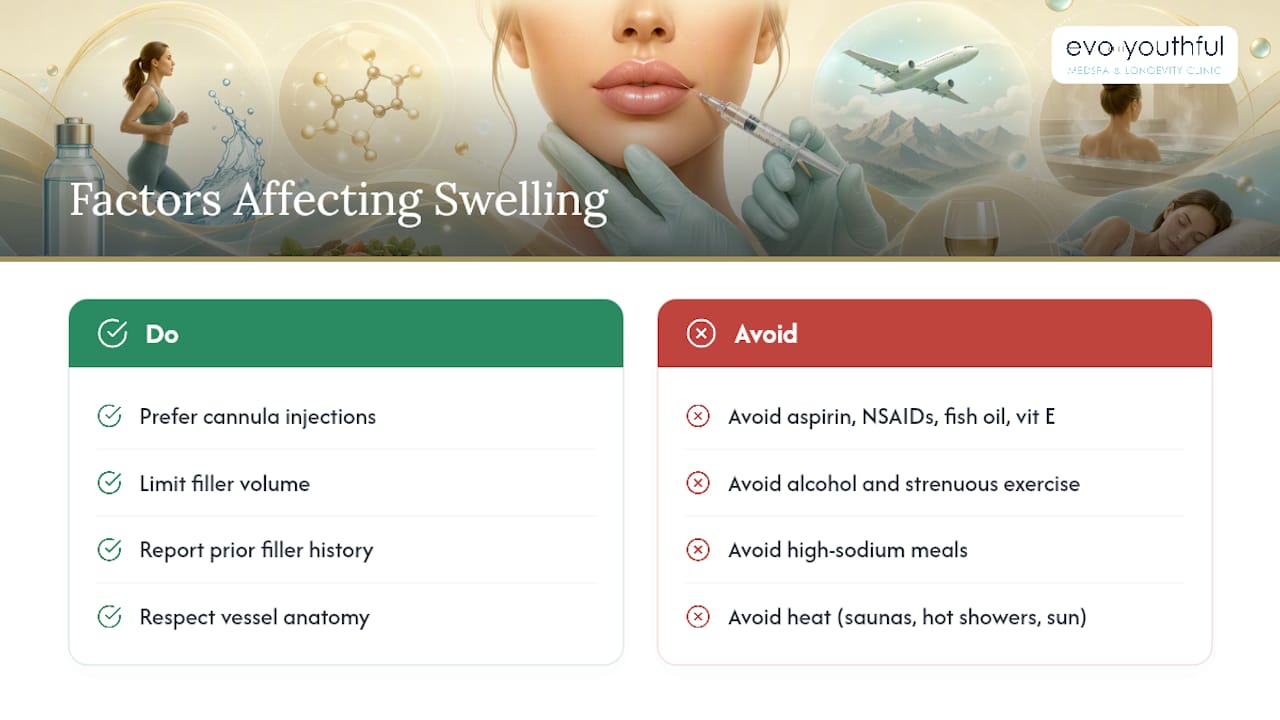
Your own tissue plays a role as well. Thinner or more delicate lip tissue, prior filler history, and even age can affect how quickly swelling resolves. Behavior after treatment matters just as much: alcohol, strenuous exercise, high sodium meals, and heat exposure (saunas, hot showers, direct sun) all tend to prolong puffiness.
How to Manage Swelling at Each Stage
Aftercare works best when it matches where you are in the timeline, not a generic one-size-fits-all list.
- Immediately after treatment: Apply a wrapped ice pack for 10 minutes on, 10 minutes off, avoiding direct pressure on the lips. Skip lipstick, lip gloss, and other lip products for at least 24 hours.
- Days 1 to 3: Sleep with your head slightly elevated to limit fluid pooling overnight. Avoid alcohol, intense exercise, and heat exposure, since Cleveland Clinic recommends these precautions specifically to reduce swelling and bruising. Use acetaminophen for discomfort rather than NSAIDs, unless your clinician clears you otherwise. Don’t massage the area unless specifically instructed.
- Days 4 to 7: Gentle lip movement is generally fine, but hold off on any active massage or manipulation unless your provider recommended it. Wear sunscreen and protect lips from sun exposure, which can worsen inflammation and irritate healing skin.
- Weeks 2 and beyond: Wait for your scheduled reassessment before deciding anything looks wrong or needs fixing. If hyaluronidase is recommended to dissolve hyaluronic acid filler, know that the enzyme itself can cause temporary swelling and bruising as it works.
Pro Tip: Take a photo on day 1, day 7, and day 14 in the same lighting and angle. Comparing the trend across those three points tells you far more than obsessing over the mirror on day 2, when swelling is at its most misleading.
Warning Signs That Need Urgent Attention
Most swelling is a normal part of healing, but a small set of symptoms are not. The FDA warns that accidental injection into a blood vessel can cause tissue damage, vision loss, or stroke, and the warning signs are specific: severe or rapidly increasing pain, skin that turns pale, white, or dusky in color, swelling that worsens dramatically rather than gradually improving, or any change in vision. Any of these calls for immediate medical evaluation, not a wait-and-see approach.
Less urgent but still worth a call to your provider: a lump that stays hard and painful for several days, redness that spreads or comes with fever, or bruising that lingers well past the typical one to two week window. When you reach out, bring time-stamped photos and a clear note of when each symptom started. It gives your clinician far more to work with than a description alone.
A Clinician’s View on Patience and Proper Reassessment
The single biggest mistake I see is patients judging their results on day 2 or 3, right at the peak of swelling, and panicking that something went wrong. It hasn’t. I ask patients to wait the full two weeks before we talk about any refinement, because that’s genuinely how long it takes for tissue to settle and for asymmetry from injection trauma to resolve on its own.
Consistent, time-stamped photos tell us more than any single selfie taken in bad lighting on day 1. And if dissolving becomes necessary, that decision and the hyaluronidase itself belong in clinical hands, never a DIY fix. Delayed inflammatory reactions are rare but documented months after treatment, which is exactly why new or unusual swelling later on deserves a real evaluation rather than guesswork at home.
— Elizabeth Vogstrom, PA-C
Get a Professional Follow-Up Assessment at a medical aesthetics clinic
Reading a timeline online only gets you so far when your own lips look uneven on day 3 and you want a real answer. A professional clinic provides a clinician who can evaluate your lips, compare them to your baseline, and assess whether what you’re seeing is normal swelling or something requiring attention. This can include clinician-managed hyaluronidase treatment when appropriate, with a typical two-week reassessment before discussing any refinements.

Before your follow-up, take photos in consistent lighting from day 1 forward, jot down when each symptom started, and list any medications or supplements you’re taking, especially blood thinners. That’s the information your provider needs to give you a straight answer instead of a guess. Explore evoyouthful’s dermal filler treatments or visit the main treatment overview to book a follow-up assessment in Wayzata, MN.
This article is general information, not a substitute for advice from a qualified doctor. Consult a qualified healthcare professional about your own circumstances before acting on anything here.
Sources
- Lip Fillers: What to Expect, Types, Benefits & Side Effects — Cleveland Clinic
- Lip Filler Aftercare — Cleveland Clinic Health Essentials
- Dermal Fillers (Soft Tissue Fillers) | FDA
FAQ
Do Lip Fillers Look Uneven at First?
Yes, temporary asymmetry in the first few days is common and usually not a sign of a problem. Swelling and bruising rarely affect both sides equally, so one lip may look larger or puffier than the other until the tissue settles.
When Will My Lips Look Normal After Fillers?
Most visible swelling resolves substantially within the first week, with providers typically scheduling a two-week follow-up to assess final results. Full tissue integration can continue for up to four weeks, so very subtle changes may still be settling even after you feel back to normal.
What Helps Lip Filler Swelling Go Down?
Wrapped cold compresses, sleeping with your head elevated, and avoiding alcohol, exercise, and heat for the first few days all help speed things along, according to Cleveland Clinic aftercare guidance. Acetaminophen is preferred over NSAIDs for pain unless your clinician says otherwise.
How Many Days Should I Ice My Lips After Fillers?
Icing is most useful in the first 24 to 72 hours, when swelling is climbing toward its peak. Apply it in 10-minutes-on, 10-minutes-off intervals without pressing directly on the lips, and taper off as swelling naturally subsides after day 3.
Recommended
Ready to Start?
Schedule a Consultation
Have questions about what you just read? Our team is here to help.