
Filler Migration: Clinic Led Imaging, Dissolve in 24–48 Hours
Elizabeth Vogstrom, PA-C
evoyouthful Clinical Team
Clinic led, evidence backed guide to why fillers migrate, how imaging pinpoints deposits, and how hyaluronidase can dissolve HA in 24–48 hours.
Filler Migration: Clinic Led Imaging, Dissolve in 24–48 Hours
Yes, dermal fillers can migrate, and it happens more often than most patients expect. The leading causes are overfilling, injecting into the wrong tissue plane, and mechanical forces like muscle movement or pressure on the treated area. If you notice puffiness, lumps, or filler appearing away from the original injection site, contact a qualified injector for an assessment. Most hyaluronic acid (HA) migration responds well to hyaluronidase correction.
TL;DR:
- Most filler migration occurs weeks to months after treatment, especially in high-motion areas like lips and tear troughs, with rates up to 7.7% for tear troughs.
- Injection technique is the most adjustable factor; improper placement, high-pressure boluses, and superficial injections increase migration risk significantly.
- Overfilling and repeated treatments without proper assessment of residual filler can create a cycle that elevates the chances of displacement.
- Correction typically involves ultrasound-guided hyaluronidase injections, with early intervention within a month leading to better outcomes.
- Preventive measures include selecting experienced injectors, starting with conservative volume, confirming residual product before top-ups, and following tailored aftercare instructions.
Table of Contents
- What Does Filler Migration Actually Look Like?
- What Mechanisms Actually Drive Filler Migration?
- Which Areas Are Most Prone to Filler Migration?
- How Can You Lower Your Risk Before Your Next Appointment?
- How Do Clinicians Correct Filler That Has Migrated?
- When Should You Seek Immediate Care?
- How Evo Youthful Approaches Migration Assessment
- An Injector’s Case for Restraint
- Get an Assessment Before Migration Gets Worse
- Sources
- FAQ
What Does Filler Migration Actually Look Like?
Filler migration happens when injected material moves away from its original placement site, spreading into surrounding tissue or settling in an unintended location. It’s a distinct problem from normal post-procedure swelling or the water-binding behavior of HA gels, both of which resolve within days to a couple of weeks. Migration, by contrast, tends to persist or worsen over time.
The classic presentation in the lips is often called “duck lip”: filler drifting past the vermilion border, blurring the crisp line between lip and skin, and creating an overextended, flattened profile instead of natural definition. In the tear trough, migration typically shows up as a soft bulge or puffiness under the eyes that looks worse in the morning and doesn’t fully settle, sometimes called “malar edema” when fluid retention gets involved.
Here’s how to tell the difference between migration and expected changes:
- Normal swelling peaks in the first 48 to 72 hours and fades steadily over one to two weeks.
- Hydration-related fullness occurs because degrading HA molecules bind more water as they break down, creating a temporary illusion of added volume without true displacement.
- True migration shows up weeks to months after treatment, often worsens with facial movement, and does not respond to time alone.
- Persistent lumps or firm nodules that don’t shift with massage may indicate migration, granuloma formation, or both, and warrant a clinical exam.
If a change in appearance shows up more than a month after your appointment and keeps progressing, that’s a signal to get evaluated rather than wait it out.
What Mechanisms Actually Drive Filler Migration?
Filler migration causes fall into a few overlapping categories: how the product was injected, what the product is made of, how much was used, and what your face physically does to it afterward. Understanding each one helps you ask sharper questions before your next appointment.

Injection technique is the most correctable variable. Placing filler in the wrong tissue plane, whether too superficial or too deep for the intended effect, gives the product room to travel along fascial planes instead of staying put. High-pressure bolus injections (pushing a large amount of product through a single point) can force material into surrounding tissue rather than allowing controlled, even distribution. Superficial placement near the lips or under the eyes is particularly risky because thin skin offers less structural resistance to lateral spread.
Product properties matter as much as placement. Not all HA fillers behave the same way once inside tissue. Gel rheology, meaning a filler’s elastic modulus (G′) and cohesivity, determines how well a product resists deformation and stays where it’s placed. Low-cohesivity gels spread more easily under mechanical stress. HA’s hydrophilic nature adds another layer of complexity, since these molecules attract and bind water over time, which a 2024 review in Diagnostics links to apparent volume changes that can be mistaken for true displacement.
Volume and timing compound the risk. Overfilling in a single session, or stacking treatments without checking how much product remains from a previous visit, creates a cumulative burden that tissue simply cannot contain. Clinical experience shows that repeatedly “topping up” an area assumed to have faded, when residual filler is actually still present, sets off a chasing cycle that can lead to Facial Overfilled Syndrome
Mechanical forces do the rest. Constant muscle activity around the mouth, gravity acting on facial compartments over years, and even habitual pressure from sleeping position or glasses can nudge filler gradually off target. Facial anatomy isn’t a single contained space. It’s divided into compartments with fascial boundaries, and filler placed near a boundary can slowly cross it.
Delayed immune reactions can mimic migration. Granulomas and biofilm formation sometimes appear months after treatment and cause swelling or nodules that look like displaced filler but stem from an inflammatory response instead.
Pro Tip: Ask your injector directly whether they assess residual product before adding more filler to an area. If the answer is vague, that’s worth a second opinion before you book.
Which Areas Are Most Prone to Filler Migration?
Lips and tear troughs top the list of high-risk zones for filler migration, largely because of anatomy. Lips move constantly through speaking, eating, and expression, and that repetitive motion works filler outward over time. The under-eye area has some of the thinnest skin on the face, offering little resistance against gel that isn’t a perfect rheological match for the space.
A narrative review of facial filler complications found migration rates of about 7.7% in tear trough treatments compared to roughly 0.5% in nasolabial fold treatments, a meaningful gap that reflects how much anatomy influences outcome.
| Treatment area | Reported migration rate | Why it’s more or less prone |
|---|---|---|
| Tear trough | 7.7% | Thin skin, minimal fat padding, constant blinking motion |
| Nasolabial fold | 0.5% | Thicker tissue, more structural support, less mobility |
| Cheek and midface | Not separately quantified in available data | Lower motion but higher cumulative volume over multiple sessions |
| Jawline | Not separately quantified in available data | Muscle activity from chewing and talking increases mechanical stress |
Migration can show up almost immediately after a poorly placed injection, or it can take months to years to become noticeable, particularly with delayed immunologic causes. Cumulative volume across repeated treatments in the same area raises risk regardless of location, which is a strong argument for tracking exactly how much product has gone into a given zone over time.
How Can You Lower Your Risk Before Your Next Appointment?
Preventing filler migration starts before the needle ever touches your skin. The choices you and your injector make at the consultation stage matter as much as anything done in the treatment room.
- Vet your injector’s credentials and experience. Ask about board certification, how many years they’ve specifically practiced facial injectables, and whether they can show a portfolio of tear trough or lip cases specifically, since these areas demand more precision than cheeks or jawline.
- Start conservative on volume. A smaller first treatment that gets built up gradually over subsequent visits carries less migration risk than an aggressive single session, and it gives both you and your injector a clearer read on how your tissue responds.
- Confirm residual product gets checked before any top-up. A visual and physical exam, sometimes with ultrasound, should precede adding more filler to an area you were previously treated.
- Ask what product they’re using and why. Rheology should match the job: firmer, more cohesive gels for structural areas like the jawline, softer and more pliable formulations for thin-skinned, mobile areas like lips.
- Confirm correct injection plane and technique. Slow, low-pressure injection technique reduces the odds of forcing product into unintended tissue, and cannula use (a blunt-tipped instrument) over needle injection is often preferred in higher-risk zones because it reduces trauma and allows more controlled placement.
- Follow aftercare instructions precisely. Avoid vigorous massage, high heat, and pressure on the treated area for the timeframe your injector specifies, typically the first one to two weeks.
- Set realistic retreatment intervals. Returning too soon, before swelling has fully resolved and the product has settled, makes it harder to judge whether you actually need more filler or are just seeing normal transitional puffiness. A reassessment window of two to four weeks gives a much clearer picture.
Pro Tip: Bring a written log of every filler treatment you’ve had, including product name, amount, and date, to any new consultation. It helps your injector make an informed decision instead of guessing at what’s already in your tissue.
Injector selection resources, like the anatomy-first safety checklist for jawline filler, can also give you a sense of what a thorough pre-treatment protocol should include.
How Do Clinicians Correct Filler That Has Migrated?
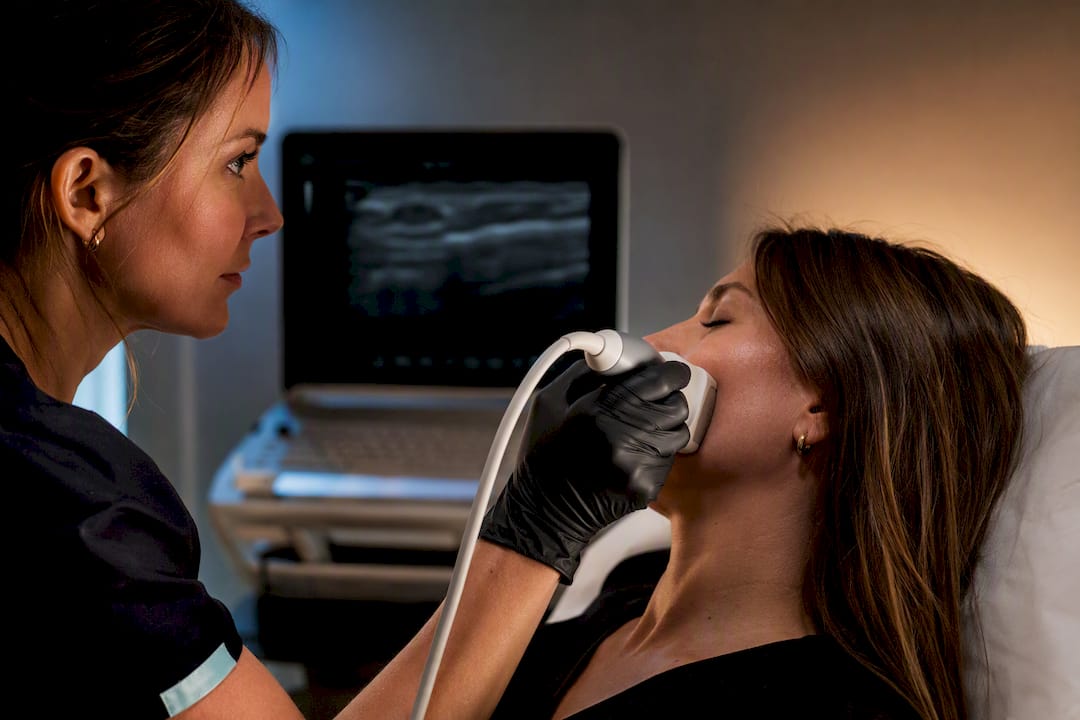
Correcting migrated filler starts with locating exactly where the product sits, not guessing based on where it was originally injected. Ultrasound mapping has become the standard for this step, since it reveals deposits that a visual exam alone would miss and identifies nearby blood vessels an injector needs to avoid during dissolving. Ultrasound-guided assessment substantially improves targeting accuracy compared to blind treatment approaches.
Hyaluronidase remains the primary correction tool for HA filler migration. This enzyme breaks down hyaluronic acid molecules, dissolving the gel so the body can clear it naturally. A typical course involves one injection session, with results visible within 24 to 48 hours, though some cases require a repeat session about a week later if dissolution is incomplete. Risks are generally mild, including temporary swelling or bruising at the injection site, though allergic reactions are possible and should be discussed with your provider beforehand.
- Ultrasound-guided dissolving is preferred for lip and tear trough migration specifically, where anatomy is complex and blind injection risks missing deposits or hitting vessels.
- Blind dissolving may still be appropriate for straightforward, superficial, well-localized cases where imaging adds little.
- Excision or specialist referral becomes necessary for firm, longstanding nodules that don’t respond to hyaluronidase, which sometimes indicates granuloma formation rather than pure filler displacement.
- Case reports document filler surfacing years after the original treatment. Sometimes these cases require surgical removal when hyaluronidase alone isn’t sufficient.
Pro Tip: Never let a provider add fresh filler to an area with suspected migration before that migration is fully resolved. Layering new product onto old, displaced material only compounds the problem.
When Should You Seek Immediate Care?
Certain signs after filler treatment mean you should call your injector or seek emergency care right away, not wait for a routine follow-up.
- Blanching (skin turning white), severe pain, or sudden vision changes signal possible vascular compromise and require immediate emergency attention.
- Rapid swelling, fever, or spreading redness suggest infection and need urgent clinic contact, ideally the same day.
- Persistent lumps or visible distortion that doesn’t improve after two to three weeks should prompt a scheduled assessment, potentially with imaging.
- Bring the product name, treatment date, and photos of the area over time to speed up evaluation at any visit.
How Evo Youthful Approaches Migration Assessment
evoyouthful’s clinical documentation, including 48 published cases on under-eye filler risks and safety protocols for jawline contouring, reflects an imaging-first philosophy. The typical pathway runs consult, ultrasound imaging, staged hyaluronidase dissolving, reassessment, then conservative retreatment only if warranted. If you suspect migration, working with a qualified clinical provider gives you a far safer path than attempting to manage it yourself.
An Injector’s Case for Restraint
Overfilling is the mistake I see behind more migration cases than any single technique error. Patients often return for a “quick top-up” without anyone checking whether the last treatment ever fully resolved, and that habit is exactly what drives Facial Overfilled Syndrome over a few years.
Conservative dosing and imaging-guided correction protect tissue health far better than chasing an ideal in a single visit. Most migrations, when caught and treated properly, are reversible. That should be reassuring, not a reason to delay care.
— Elizabeth Vogstrom, PA-C
Get an Assessment Before Migration Gets Worse
If you’ve noticed puffiness under your eyes that won’t settle or lips that look less defined than they used to, waiting rarely improves things on its own. Dermal filler assessments may include a detailed treatment history conversation, ultrasound-guided mapping if migration is suspected, and staged hyaluronidase dissolving if correction is needed.

Initial visits often include a review of previous injections, a physical and imaging exam, followed by a treatment plan tailored around individual anatomy rather than defaulting to additional product. If you’re also curious about how dermal fillers can restore volume the right way once any existing migration is resolved, that conversation happens at the same visit. Reach out to schedule an assessment and get a clear answer on what your face actually needs next.
Sources
For deeper clinical detail, the narrative review of facial filler migration covers mechanisms and area-specific rates in full. The Diagnostics review on filler complications goes further into nodules and granulomas, while the American Society of Plastic Surgeons offers general patient guidance on filler materials and risks.
This article is general information, not a substitute for advice from a qualified doctor. Consult a qualified healthcare professional about your own circumstances before acting on anything here.
- Filler Migration after Facial Injection—A Narrative Review
- Review of the Adverse Effects Associated with Dermal Filler Treatments: Part I Nodules, Granuloma, and Migration
- Case reports and literature review on filler migration (PubMed record)
- Lip fillers — Cleveland Clinic patient information
FAQ
Is It Common for Fillers to Migrate?
Migration isn’t rare, but rates vary sharply by area. Studies show migration rates of about 7.7% for tear trough treatments and about 0.5% for nasolabial folds, meaning risk depends heavily on where the filler goes.
Can Fillers Migrate Years After Treatment?
Yes. Case reports document filler surfacing in unintended locations months to even years after the original injection, particularly with delayed immunologic reactions or gradual mechanical displacement.
Which Filler Is Most Likely to Migrate?
No single brand is definitively “most likely,” but softer, less cohesive HA gels placed in high-motion areas like lips or thin-skinned zones like tear troughs show higher migration tendencies than firmer products used in structural areas.
How Can I Prevent Filler From Migrating?
Choose an experienced injector, start with conservative volume, confirm your provider checks for residual product before any top-up, and follow aftercare instructions that avoid pressure on the treated area during early healing.
Recommended
Ready to Start?
Schedule a Consultation
Have questions about what you just read? Our team is here to help.